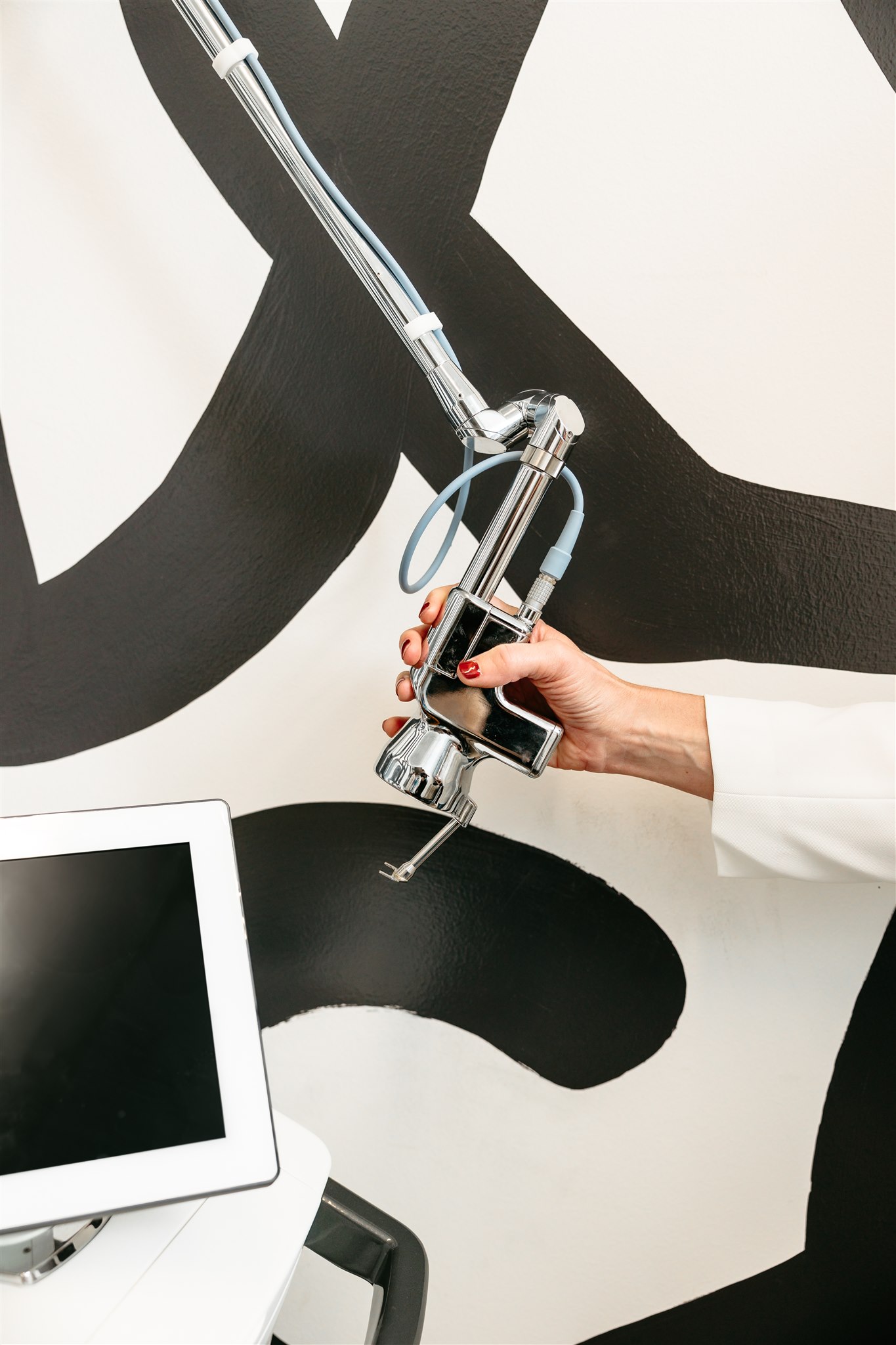
Introduction
Not every laser conversation
starts the same way.
When patients come to Youthful Magnolia asking about advanced laser resurfacing, the first thing Amy Robbins does is slow down. Not because the question is complicated — but because it deserves a real answer rather than a reflexive one.
Sciton TriBrid is one of the most capable laser systems available for patients with layered skin concerns — visible photodamage alongside texture, tone alongside early scarring, surface dullness alongside the kind of structural collagen change that lighter treatments cannot meaningfully address. But "most capable" does not mean "right for everyone." The question is always: right for this patient, at this point in their skin journey, with these specific goals.
This guide is designed to help you understand what TriBrid actually is, what it can and cannot do, who tends to benefit most, and what the treatment experience looks like in a practice that prioritizes long-term skin strategy over one-time corrective procedures.
The Technology
What makes TriBrid
different from other lasers?
Most laser treatments address one concern at one tissue depth. A BBL session corrects surface pigment and redness. A MOXI session stimulates mid-dermal collagen. A ProFractional session resurfacing deeper into the dermis for significant texture and scar correction. Each is valuable. Each operates in a specific lane.
Sciton TriBrid layers three of these modalities — typically MOXI, ProFractional, and BroadBand Light — into a single coordinated session. The result is a treatment that works across multiple tissue depths simultaneously: correcting surface pigmentation and tone with BBL, stimulating non-ablative collagen with MOXI, and delivering ablative fractional resurfacing with ProFractional to address deeper texture, pores, and scarring.
This is the clinical distinction that makes TriBrid relevant for a specific type of patient — one whose skin concerns exist at multiple levels and who would otherwise need to sequence multiple separate procedures to achieve comparable results.
Surface
BBL Component
Targets melanin and vascular chromophores — correcting sun damage, brown spots, redness, and uneven tone at the surface level.
Mid-Dermal
MOXI Component
Non-ablative fractional stimulation — building collagen and improving skin quality without open ablative channels.
Deep Dermal
ProFractional Component
Ablative fractional resurfacing — creating controlled channels that stimulate intensive collagen remodeling for texture, scars, and lines.
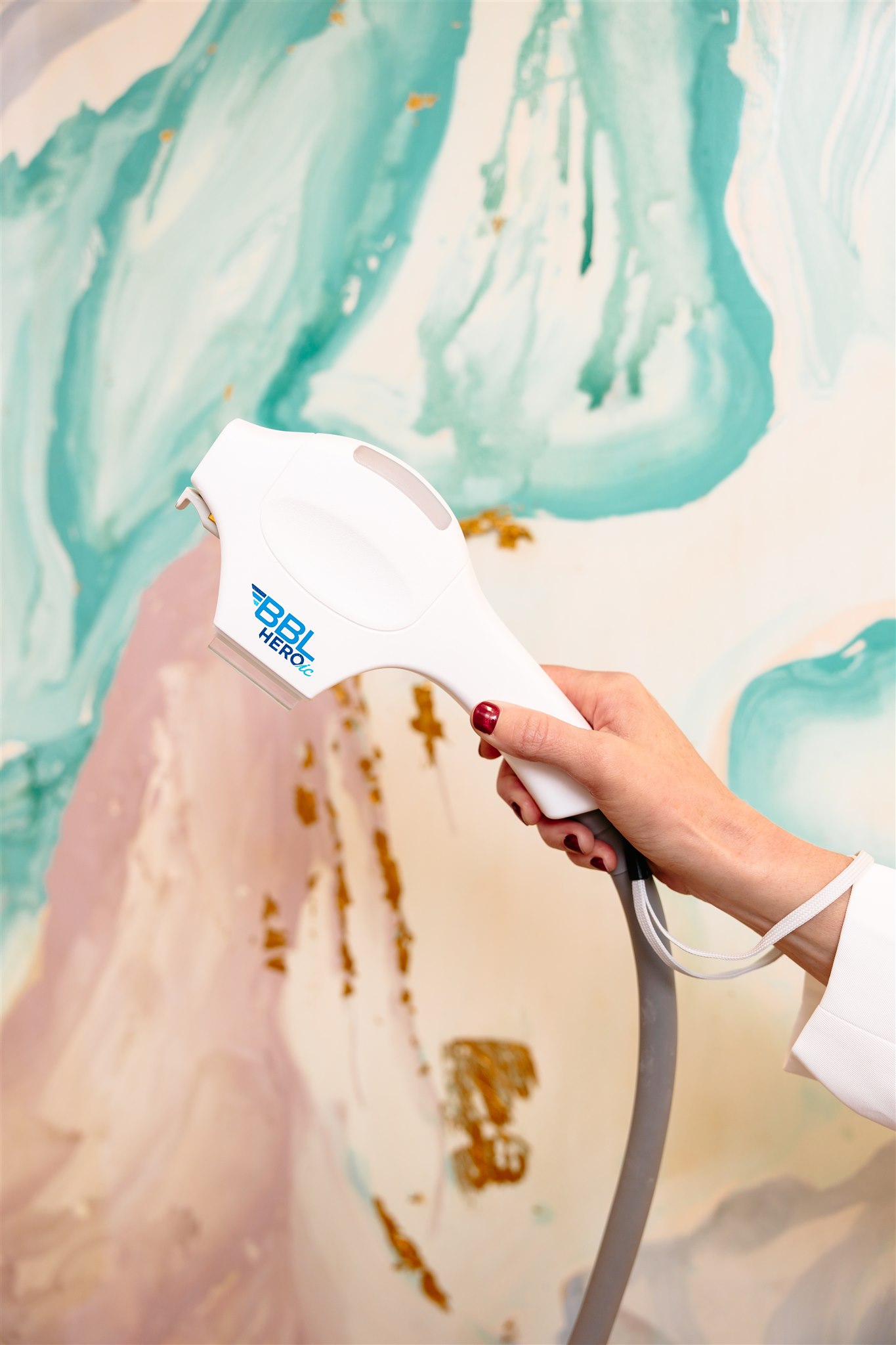
Advanced laser planning at Youthful Magnolia — treatment decisions are made after thorough skin assessment and goal review.
What It Addresses
Concerns TriBrid
may help improve.
TriBrid's multi-layered approach means it can be appropriate for a wider range of skin concerns than any single-modality treatment. That said, candidacy is always determined individually — not every concern benefits from this level of intervention, and not every skin type is appropriate for all three components at full intensity.
Visible Sun Damage & Photodamage
Accumulated brown spots, solar lentigines, freckles, and the diffuse discoloration of years of UV exposure in Fort Worth's high-sun environment — addressed through the BBL component.
Skin Tone & Redness
Diffuse facial redness, visible capillaries, and uneven tone — corrected at the surface level through BBL's vascular and pigment targeting.
Skin Texture & Pore Size
Enlarged pores, rough texture, and the surface-level quality changes that accompany aging and photodamage — addressed through both MOXI and ProFractional.
Fine Lines & Early Wrinkles
Superficial to mid-depth lines, particularly around the eyes and mouth — improved through collagen stimulation across multiple dermal depths.
Acne Scarring
Atrophic and rolling acne scars — one of TriBrid's most compelling applications, given the ProFractional component's established effectiveness for dermal remodeling.
Overall Skin Quality & Rejuvenation
For patients with a complex picture of photodamage, textural change, and early structural aging — TriBrid can address all of these in a single coordinated treatment.
Clinical Strategy
Why a layered resurfacing
strategy can matter.
Skin aging does not happen at a single depth, and the concerns most patients want to address rarely exist at only one tissue level. By the time a patient is asking about advanced resurfacing, they typically have a picture that includes surface pigmentation and tone issues, textural changes in the mid-dermis, and early structural collagen changes deeper in the skin.
Treating only the surface — with light-energy treatments like BBL or gentle options like MOXI — improves tone and early texture. But it does not address more established textural change, enlarged pores, or the kind of scarring that has developed over years. Adding ProFractional resurfacing addresses those deeper concerns — but ProFractional alone does not correct surface pigment or redness.
TriBrid's value is that it addresses all of these layers in a single session — with settings that can be calibrated specifically to the depth and intensity appropriate for each patient's concerns and skin type. For the right patient, this is a meaningful clinical advantage.
This is also why TriBrid is not a reflexive recommendation. For patients with primarily surface concerns, BBL or a HALO session may be more appropriate. The conversation always starts with an honest assessment of where your skin actually is and what would make the most clinical sense.

Amy's Philosophy
Amy
Robbins
"Advanced resurfacing is not about using the most powerful tool available. It is about matching the depth and intensity of the intervention to what the skin actually needs — and making sure the patient understands what the recovery asks of them and what the outcome realistically delivers."
— Amy Robbins, Founder · Youthful Magnolia
Amy approaches every TriBrid consultation the same way she approaches all resurfacing decisions — by understanding the full picture of the patient's skin, goals, timeline, and lifestyle before recommending anything. Advanced resurfacing requires real commitment, and that commitment should be made with full information.
Book a ConsultationClinical Thinking
When TriBrid may be a better choice
than lighter laser options.
Lighter laser treatments — MOXI, BBL, ClearSilk — are excellent for a broad range of patients and concerns. They require minimal downtime, can be done in short cycles, and are ideal for prevention, maintenance, and patients with early or primarily surface-level photodamage. If this describes your situation, TriBrid is likely not where your conversation starts.
TriBrid becomes the more compelling option when a patient's picture includes multiple layers of concern that lighter treatments cannot adequately address in a realistic timeframe. Examples:
Significant accumulated photodamage + texture concerns
BBL alone corrects the surface. But if there is also meaningful textural change from years of sun exposure, ProFractional depth is needed. TriBrid addresses both in one session.
Atrophic acne scarring + post-acne discoloration
The ProFractional component remodels dermal scar tissue. BBL addresses post-inflammatory pigmentation. Treating both in sequence separately would take months; TriBrid can address both at once.
Patient with limited downtime windows
For a patient who can only commit to one significant recovery period, TriBrid's comprehensive single-session approach may deliver more net improvement per downtime investment than multiple lighter treatments over time.
Patients who have plateaued with lighter lasers
Some patients have done multiple MOXI or BBL sessions and feel their results have leveled off. TriBrid may offer a meaningful step forward by reaching tissue depths that lighter options cannot.

"The right laser for the right patient changes everything."
TriBrid is not for everyone — and that is exactly the point. The value of advanced resurfacing lies in matching the depth and intensity of treatment to what the skin genuinely needs. At Youthful Magnolia, that assessment is never rushed.
— Amy Robbins, Founder
Recovery Expectations
What downtime
can actually look like.
This is the section of any advanced resurfacing article that deserves the most honesty — and receives the least from most practices. Let's be direct.
TriBrid recovery varies significantly based on the settings selected for each component. A lower-intensity TriBrid session — conservative ProFractional depth, moderate MOXI, lighter BBL fluence — may involve 4–6 days of visible recovery: redness, swelling, and the bronze-to-peeling process that follows fractional ablation. Most patients describe this level as manageable and socially acceptable after about 5–7 days.
A more intensive TriBrid session — deeper ProFractional settings, higher energy across components — can involve 7–10+ days of more significant visible healing. Skin will appear red and bronzed, then darker and textured as treated tissue exfoliates. This is a real commitment, and it deserves real preparation.
Post-treatment care is not optional. Consistent gentle cleansing, prescribed healing products, vigilant sun avoidance, and patience are all part of the process. Patients who are not prepared for this level of post-care are not ideal candidates for aggressive TriBrid protocols — and Amy will say so directly at your consultation.
Amy Robbins · Founder
I would rather have a patient walk out of a consultation with a more conservative recommendation and a realistic plan than book an aggressive treatment they are not prepared for. Downtime is real. Post-care matters. The outcome reflects both.
Regenerative Support
How Youthful Magnolia
supports healing.
One of the areas where Youthful Magnolia's approach to advanced resurfacing differs is in the regenerative support layer we bring to patients preparing for and recovering from treatments like TriBrid.
Healing from significant fractional ablation is an active biological process — collagen remodeling, cellular repair, angiogenesis. Optimizing the conditions for that process is not ancillary to the treatment; it is part of the treatment. At Youthful Magnolia, this can include:
Peptide Protocols
Certain regenerative peptides may support collagen synthesis, tissue repair, and the angiogenic response that underpins post-resurfacing healing. We assess whether peptide support is appropriate and practical for your situation.
Learn MoreIV Nutritional Support
Nutrient optimization — particularly antioxidant and amino acid support — can help position the body for more efficient healing around intensive treatments.
Learn MoreSkincare Protocol Preparation
Pre-treatment preparation with appropriate skincare — including retinoid optimization, antioxidant layering, and barrier support — is discussed at your consultation and calibrated to your starting skin condition.
Post-Treatment Care Plan
A clear, specific post-care protocol is provided for every TriBrid patient — including product recommendations, sun protection strategy, and guidance on what healing signs are normal versus worth communicating about.
Before You Book
Questions to ask
before booking TriBrid.
Advanced resurfacing is a commitment. Before booking any TriBrid consultation, these are the questions worth asking yourself — and the ones Amy will ask you directly:
Do I have layered concerns — tone and texture, pigment and scarring — or primarily surface issues?
Am I realistically able to commit to 5–10 days of visible recovery and strict post-care?
Is my timeline flexible enough to avoid sun exposure and social commitments during healing?
Have I tried lighter laser options and found them insufficient for my goals?
Am I genuinely motivated by long-term skin quality improvement — not immediate results?
Have I been honest with myself about what advanced resurfacing can and cannot deliver?
The Honest Answer
Is TriBrid
worth it?
For the right patient — yes, significantly.
For a patient with layered concerns who has been through lighter laser options without achieving the improvement they were hoping for, or who wants to address multiple levels of skin change in a single meaningful treatment cycle, TriBrid can deliver outcomes that genuinely move the needle in ways that are not possible with surface-level approaches.
The patients who tend to have the most satisfying experiences with advanced resurfacing are those who went into it informed — who understood what recovery would involve, prepared accordingly, followed post-care rigorously, and had realistic expectations about the timeline for final results (collagen remodeling continues for months after the visible healing is complete).
The patients who are less satisfied are typically those who underestimated the recovery, expected faster results, or chose the treatment based on its positioning rather than a genuine assessment of whether it was the right tool for their skin. This is exactly why the consultation matters — and why a good provider is one who will tell you if TriBrid is not the right answer for where you are right now.
Amy Robbins · Founder
The goal is never to sell the most advanced treatment. The goal is to recommend the most appropriate one — and to be honest when that means something lighter, simpler, or more staged.
The premium treatment environment at Youthful Magnolia — where advanced resurfacing is approached with clinical precision and genuine care.
Why Us
Why Fort Worth patients choose
Youthful Magnolia.
Choosing a provider for advanced resurfacing is a fundamentally different decision than booking a routine aesthetic treatment. The stakes are higher, the recovery is real, and the quality of the consultation matters as much as the quality of the treatment itself.
Founder-Led Planning
Amy Robbins personally leads every TriBrid consultation. Patients benefit from her depth of clinical judgment, her regenerative medicine background, and her genuinely patient-centered approach to treatment planning.
Honest Expectation-Setting
Amy will tell you if TriBrid is not the right recommendation for your skin or timing. She is more interested in building a plan that actually works than in booking the most advanced treatment available.
Regenerative Integration
Youthful Magnolia's regenerative medicine framework means TriBrid is never delivered in isolation. Healing support, peptide protocols, and long-term maintenance are considered as part of the full treatment plan.
Long-Term Skin Strategy
Advanced resurfacing is a chapter in a longer story. We help patients understand where TriBrid fits in their overall skin health journey — before, during, and well after the treatment itself.
Common Questions
TriBrid in Fort Worth —
answered honestly.
What is Sciton TriBrid Laser?
Is TriBrid the same as HALO?
How much downtime does TriBrid require?
Who is TriBrid best suited for?
Can TriBrid help with acne scars?
Is TriBrid appropriate for all skin tones?
How does TriBrid differ from a standard laser peel?
How many TriBrid treatments will I need?
Can I combine TriBrid with other treatments?
Where can I get TriBrid Laser in Fort Worth?
Related Treatments
Continue Reading
Best Laser for Sun Damage in Fort Worth
A clinical breakdown of BBL, HALO, MOXI, and resurfacing options for photodamaged skin in Fort Worth.
BBL vs IPL in Fort Worth: Why BroadBand Light Is Different
Understanding the clinical and technological difference between Sciton BBL and standard IPL devices.
What Is Forever Young BBL? A Fort Worth Guide
The research-backed protocol for long-term skin maintenance with regular BroadBand Light treatments.
How Often Should You Get BBL in Fort Worth?
A practical guide to BBL frequency, maintenance planning, and long-term skin investment.