
Picofy by InMode in Fort Worth: Picosecond Laser for Pigment, Tattoos, Acne Scars, and Skin Renewal
An advanced picosecond laser platform for pigment, tattoos, acne scars, and skin renewal — approached with strategy, customization, and clinical precision at Youthful Magnolia in Fort Worth.
 Amy Robbins, MSNA APRN CRNA FNP-BC 16 min read June 2026Picosecond Laser
Not every laser conversation is the same — and the patients who get the best outcomes are the ones whose treatment begins with the right questions, not the right device name.
If you are exploring laser treatment for pigment, tattoos, acne scars, or skin renewal in Fort Worth, you have likely encountered an overwhelming amount of information — much of it device-focused, much of it marketing-driven, and very little of it personalized to your actual skin. Picofy by InMode is one of the advanced picosecond laser platforms we may consider as part of your treatment plan. But the decision to use it — or not — always follows a thorough assessment of what is actually in your skin and what you are trying to achieve.
Picofy is a picosecond laser platform, which means it delivers energy in ultra-short pulses measured in trillionths of a second. This technology is particularly relevant for patients dealing with unwanted tattoos, benign pigmented lesions, certain acne scarring, fine lines, and broader skin-renewal goals. It uses two wavelengths — 1064 nm and 532 nm — and multiple handpieces that allow treatment to be customized depending on the concern.
This page is designed to give you an honest, medically grounded understanding of what Picofy is, what it may help with, and how we think about it at Youthful Magnolia — where technology is always matched to the patient, never the other way around.
Section 01
What is Picofy? —
and what makes it different.
Picofy is a picosecond laser platform manufactured by InMode, a respected leader in aesthetic medical technology. It is built around a high-performance Nd:YAG picosecond engine — meaning the laser generates energy using a neodymium-doped yttrium aluminum garnet crystal and delivers that energy in pulses measured in picoseconds, or trillionths of a second.
What distinguishes picosecond technology from older laser platforms is the pulse duration. Traditional Q-switched lasers deliver energy in nanoseconds — billionths of a second. Picosecond lasers deliver energy roughly a thousand times faster. This matters because the way energy interacts with pigment and ink particles changes dramatically at these speeds: instead of primarily heating the target, the ultra-short pulse creates a photoacoustic effect — a mechanical shockwave that fragments the target into smaller pieces with potentially less heat transferred to surrounding tissue.
Picofy is designed to be customizable. It offers two wavelengths (1064 nm and 532 nm), multiple handpieces, and adjustable treatment parameters — which means the platform can be configured differently depending on whether we are treating a tattoo, a pigmented lesion, an acne scar, or a broader skin-renewal concern. This flexibility is not just a feature; it is the foundation of how we use the platform to match treatment to the individual.
It is important to understand that Picofy is a tool, not a result. The same platform that produces excellent outcomes in the right hands can produce poor outcomes when applied with generic parameters. At Youthful Magnolia, we approach Picofy the way we approach every technology: as one option within a larger treatment ecosystem, selected only when it is genuinely the best fit for your specific concern.
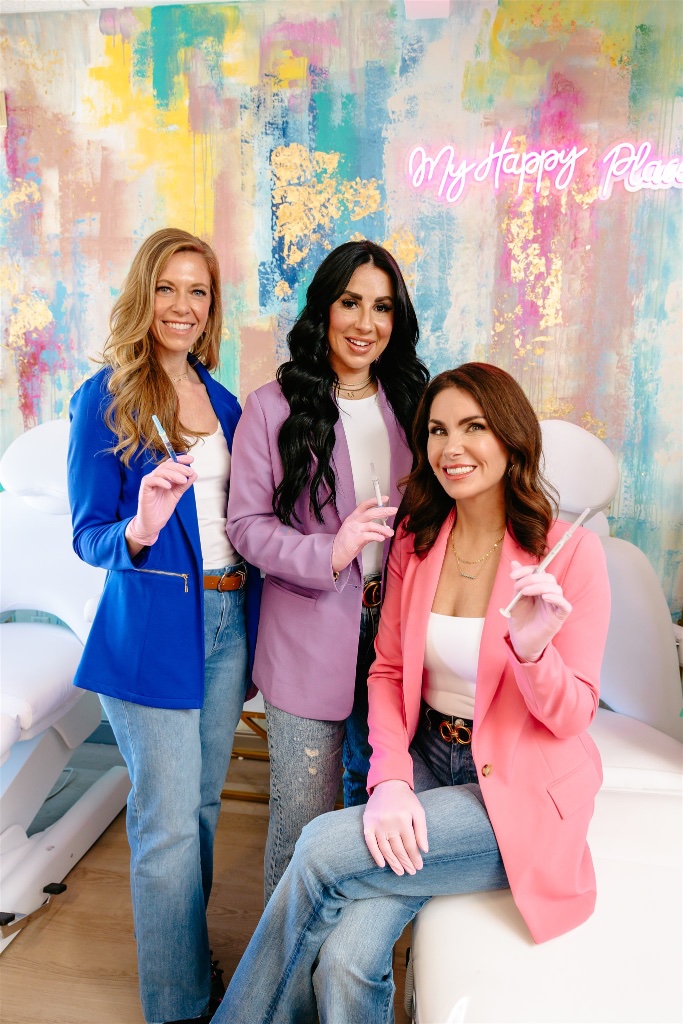
The platform is only as effective as the planning behind it. Every Picofy treatment at Youthful Magnolia begins with understanding what is actually in the skin.
Section 02
What does Picofy treat? —
six concerns, each approached differently.
Picofy is indicated for multiple concerns — but each requires its own treatment logic, its own parameters, and its own expectations. These are not interchangeable.
Unwanted tattoos
Picosecond energy fragments tattoo ink into smaller particles than older Q-switched platforms, which may support more efficient fading — particularly for dark ink colors. Multi-color and resistant inks require careful wavelength matching and realistic expectations.
Benign pigmented lesions
Sun spots, age spots, and certain freckling-type pigment may respond to targeted picosecond energy. The approach is always calibrated to your skin tone and the specific character of the pigment — never applied generically.
Stubborn pigment concerns
Some pigment presentations — including post-inflammatory pigmentation and certain forms of stubborn discoloration — require a more nuanced, restraint-first strategy. Picofy may be part of that conversation, but it is rarely the whole answer.
Acne scars
Acne scarring involves both texture and pigment. Picosecond technology may contribute to skin renewal and collagen support in selected patients, often as part of a broader, layered treatment plan rather than a standalone solution.
Fine lines & wrinkles
Picosecond energy may support skin renewal and texture improvement in areas showing fine lines and early wrinkling. Outcomes depend on the depth of concern, skin quality, and how the treatment is sequenced with other modalities.
Skin renewal & texture
For patients seeking overall skin-quality improvement, Picofy may play a role in a renewal plan that supports smoother, more even-looking skin — always matched to individual skin biology and treatment goals.
An important distinction
These concerns are not all treated the same way — even on the same platform. A tattoo requires different parameters than a sun spot — and our guide to tattoo removal in Fort Worth explains why. Acne scarring may benefit from Picofy as part of a layered plan, not as a standalone solution. Stubborn pigment, particularly melasma, may require restraint rather than aggressive treatment. Understanding these distinctions is the difference between a treatment plan and a treatment guess.
Section 03
Why picosecond technology
actually matters.
To understand why picosecond laser technology generates so much attention, it helps to understand what happens when laser energy meets pigment or tattoo ink — and why the speed of energy delivery changes the outcome.
When a laser pulse hits a pigment particle or ink particle, the particle absorbs the light energy. In older Q-switched platforms, that energy is delivered over nanoseconds — long enough that a significant portion of the energy becomes heat. The particle heats up, expands, and eventually shatters. But the heat also spreads to surrounding tissue, which is why older platforms sometimes cause more collateral irritation, particularly in darker skin types.
Picosecond technology changes the physics. By delivering energy in trillionths of a second, the pulse is so fast that the particle fractures from mechanical shock — the photoacoustic effect — before heat has time to spread. The result: pigment and ink particles may be broken into smaller fragments, with potentially less thermal damage to surrounding skin.
Why this matters in practice: smaller pigment fragments may be cleared more efficiently by the body immune system, which can influence both the number of sessions needed and how the skin tolerates each treatment. For tattoos — particularly dark inks that have historically been the most responsive — picosecond platforms may support more efficient fading. For pigment concerns, the photoacoustic approach may offer a more precise way to target discoloration while respecting surrounding skin.
But picosecond technology is not a magic button. It is a different way of delivering energy — and its value is realized only when the platform is matched to the right concern, the right patient, and the right treatment plan by a provider who understands pigment biology, skin safety, and realistic sequencing. The technology matters most when it is used with intelligence.
Nanosecond vs picosecond — at a glance
Pulse duration
Q-switched: Nanoseconds (billionths of a second)
Picosecond: Picoseconds (trillionths of a second) — roughly 1,000x shorter
Primary mechanism
Q-switched: Photothermal — energy becomes heat, particle expands and shatters
Picosecond: Photoacoustic — mechanical shockwave fragments particle before heat spreads
Fragment size
Q-switched: Larger particles — may require more sessions for clearance
Picosecond: Smaller particles — may support more efficient immune clearance
Thermal impact on skin
Q-switched: More heat transferred to surrounding tissue
Picosecond: Potentially less heat — may improve tolerability, particularly for darker skin
Directional comparison for educational purposes — actual treatment outcomes depend on individual skin biology, concern type, and provider expertise.
Section 04
Wavelengths & customization —
the right tool for the right concern.
Picofy operates with two wavelengths: 1064 nm and 532 nm. If you are not a laser physicist, that may sound technical — but the concept is straightforward. Different wavelengths of light reach different depths in the skin and are absorbed by different colors of pigment and ink. Having both wavelengths available on one platform means we can match the treatment to the specific concern rather than forcing one approach onto every patient.
The platform also includes multiple handpieces — each designed for a different treatment application. Some deliver focused energy for precise targeting of individual lesions. Others spread energy across a broader area for skin-renewal treatments. The choice of handpiece, wavelength, energy settings, and treatment pattern is all part of how we customize the procedure to your skin.
This is what we mean when we talk about customization at Youthful Magnolia. It is not a marketing word. It is the practical reality that the same platform, configured differently, treats a black tattoo, a sun spot, an acne scar, and a fine line — each with the appropriate parameters for that specific concern, that specific skin tone, and that specific location on the body.
Two wavelengths, one platform
How 1064 nm and 532 nm work together
Different wavelengths reach different depths and target different pigment and ink colors. The choice between them — and the handpiece used — is part of how we customize your treatment.
1064 nm
Deeper penetration
The 1064 nm wavelength penetrates more deeply into the skin. It is typically selected for darker tattoo inks — black, dark blue, dark grey — and for deeper pigment concerns. It is also the more appropriate wavelength for patients with higher Fitzpatrick skin types, as it poses less risk to surface pigmentation.
532 nm
Superficial pigment
The 532 nm wavelength targets more superficial pigment and is used for certain ink colors — particularly reds and warm tones — as well as sun spots and surface discoloration. It is selected when the concern is closer to the skin surface, and parameters are adjusted based on skin tone and sensitivity.
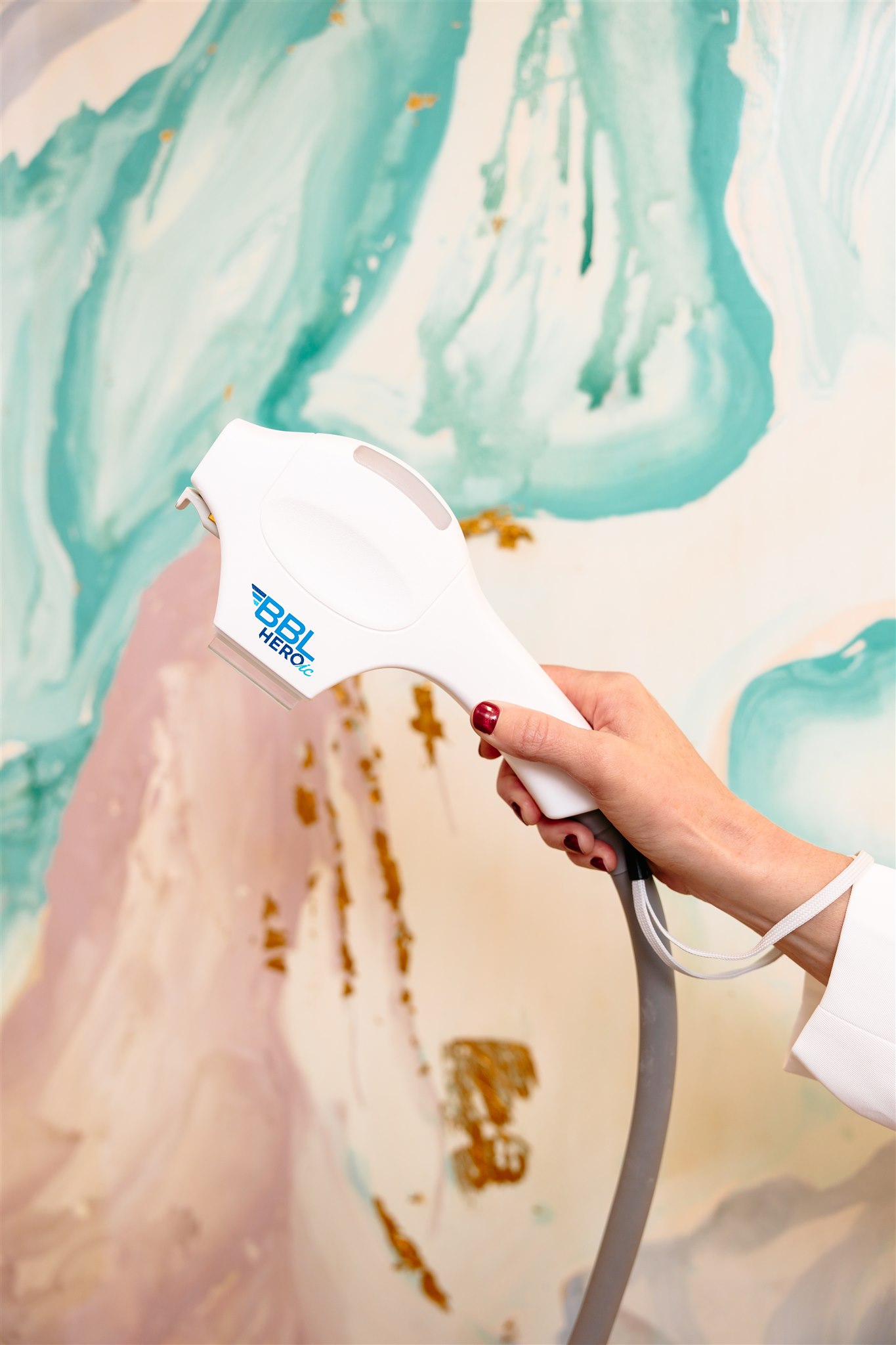
Two wavelengths, multiple handpieces, infinite permutations. Customization is not a feature — it is the standard.
Clinical Gallery
Picofy handpieces & clinical results —
see what each tool actually does.
Each Picofy handpiece is engineered for a different purpose — focused energy for tattoos, fractional arrays for pigment, and specialized lenses for skin renewal. The clinical images below are from InMode's official Picofy gallery and illustrate the kinds of results these handpieces may produce. Drag the divider on each image to compare before and after.
Handpiece 01

ZOOM
Tattoo Removal
Focused, high-energy delivery for precise targeting of individual ink particles. The Zoom handpiece is the workhorse for tattoo removal and focused pigment treatment — delivering concentrated picosecond energy exactly where it is needed.

Handpiece 02

ARRAY MLA 110
Pigmented Lesions
A fractional micro-lens array that distributes energy across a broader treatment area. The Array MLA 110 is designed for skin renewal, pigment correction, and broader texture improvement — treating more surface area in each pass.

Handpiece 03

PEAK MLA 60
Skin Renewal & Scars
A specialized fractional handpiece with a distinctive lime-green grip and caged aperture, designed for deeper collagen remodeling and skin renewal. The Peak MLA 60 supports treatment of acne scars, texture, and stretch marks.

More Clinical Results
Additional before & after imagery
from the InMode Picofy clinical gallery.


Clinical images courtesy of InMode and credited to the treating practitioners as noted. Individual treatment results may vary. These images are shown for educational purposes to illustrate the types of concerns Picofy is designed to address — they are not a guarantee of outcome. At Youthful Magnolia, your results will depend on your specific skin, concern, treatment plan, and biology. A consultation is the only way to discuss realistic expectations for your individual case.
Section 05
Amy Robbins on Picofy —
and how to think about it more intelligently.
One of the most common things I hear from patients is: I read about this new laser — is it the best one? The honest answer is that there is no best laser. There is the right laser for your specific concern, your specific skin, and your specific goals — and that is a very different thing.
Picofy is an excellent platform. Picosecond technology represents a meaningful evolution in how we approach pigment and tattoo treatment. But the best laser is not the newest laser. The best laser is the one that is matched to what is actually being treated — by a provider who understands the difference between a tattoo that needs 1064 nm energy, a pigmented lesion that needs 532 nm, an acne scar that may benefit from a broader renewal approach, and a wrinkle concern that might be better served by a different modality entirely.
What I want patients to understand is that pigment, tattoos, texture, and acne-scar concerns are not all the same. They live at different depths, involve different biology, and respond to different energy. A picosecond platform like Picofy gives us a powerful tool for several of these concerns — but the value of that tool is realized only when it is matched to the right patient, with the right parameters, in the right sequence.
Better outcomes come from customization, not hype. When a patient comes in asking about a specific device, my first question is always: what are we actually trying to fix? That conversation — not the device name — is where the real treatment plan begins.
Technology matters, but good outcomes still depend on choosing the right treatment for the right concern. With pigment, tattoos, acne scars, and skin renewal, the planning is just as important as the platform.
Amy Robbins
MSNA · APRN · CRNA · FNP-BC · Founder, Youthful Magnolia
Section 06
Who may be a good candidate
for Picofy?
Picofy may be worth exploring if you are dealing with one or more of the following concerns. A consultation is the only way to determine whether it is the right fit — or whether a different approach would serve you better.
Unwanted tattoos
You have a tattoo — professional or amateur — that you want faded or removed. You understand that tattoo removal is a process requiring multiple sessions and that outcomes depend on ink color, density, and individual biology.
Benign pigmented lesions
You have sun spots, age spots, or certain types of freckling that you would like addressed. The lesions have been evaluated and are confirmed benign before any laser treatment begins.
Acne scar support
You have acne scarring and are looking for skin-renewal options. You understand that acne scarring is complex and may benefit from a layered approach rather than a single treatment.
Fine lines & wrinkles
You are noticing early signs of aging — fine lines, texture changes — and are interested in non-invasive skin renewal that supports a natural-looking improvement.
Exploring advanced laser options
You are not sure which laser is right for you. You want a consultation where the recommendation is based on your skin, not on which device is newest or most marketed.
Section 07
What a consultation
at Youthful Magnolia may include.
A consultation is never a sales conversation. It is an assessment — a thoughtful, individualized evaluation of your skin, your concerns, and your goals, with honest guidance about what is actually achievable.
Skin and concern assessment
We examine your skin in person — evaluating tone, texture, the specific character of your concern, and your overall skin health. This is not done from a photo. Direct visual assessment is the foundation of any responsible laser plan.
Tattoo or pigment evaluation
If your concern involves a tattoo or pigmented lesion, we evaluate its specific characteristics — ink color, density, depth, lesion type, and any prior treatment history. For pigment, we confirm that the lesion is benign and appropriate for laser treatment.
Fitzpatrick skin type classification
Your skin tone is formally assessed — not estimated — before any treatment plan is developed. Treatment parameters must be calibrated to your Fitzpatrick type to ensure safety, particularly for patients with higher skin types.
Review of goals and expectations
We discuss what you are trying to achieve and whether those goals are realistic for your specific concern. If complete removal is unlikely, we tell you. If significant fading is the more honest target, we frame the plan around that.
Treatment timeline discussion
We walk through a realistic treatment calendar — estimated session count, spacing, and rationale. We discuss what happens if the skin responds differently than anticipated and how the plan evolves.
Whether Picofy is the right fit
Sometimes the most valuable thing a consultation provides is the recommendation that a different treatment — or combination of treatments — would serve you better. We do not force one platform onto every concern. If another laser treatment or skin treatment is more appropriate, that is what we recommend.
Personalized planning
The outcome of the consultation is a plan — not a prescription. A plan that accounts for your skin, your schedule, your budget, and your goals. One that may include Picofy, another modality, or a combination — sequenced in the right order for the best possible outcome.
Section 08
Why Fort Worth patients
choose Youthful Magnolia.
Fort Worth patients choose Youthful Magnolia because we approach aesthetic medicine differently. We are not a volume practice. We are not device-driven. We are a founder-led clinic where every treatment plan begins with understanding the person in front of us — their skin, their concerns, their goals, and their life.
Amy Robbins built Youthful Magnolia on a simple principle: that advanced technology is only as good as the thinking behind it. That principle guides every consultation, every treatment plan, and every follow-up. When we recommend Picofy — or any treatment — it is because we have assessed your skin, considered the alternatives, and determined that this is genuinely the right approach for you.
Our patients value the experience as much as the outcomes: a calm, unhurried environment where questions are welcomed, expectations are set honestly, and the focus is always on natural-looking, strategic results. We do not chase trends. We do not overpromise. We build plans that are designed to age well — literally and figuratively.
If you are in Fort Worth and exploring picosecond laser treatment — or simply trying to understand which laser is right for your concern — we would welcome the conversation.
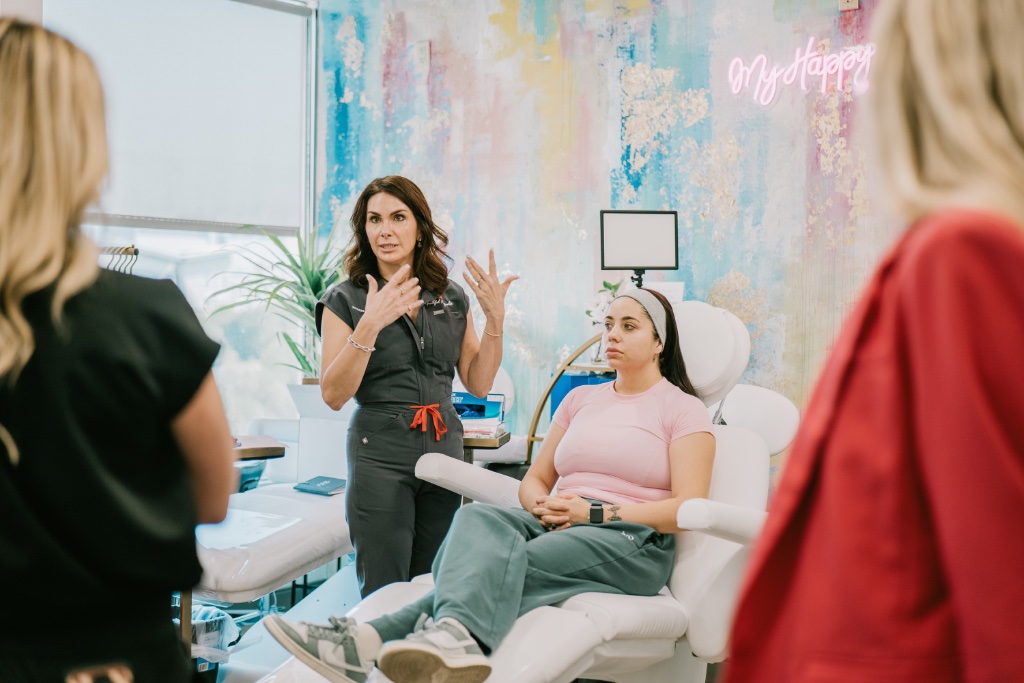
The best outcomes come from matching the right technology to the right concern — with the right plan behind it.
Common Questions
Picofy questions —
answered honestly.
What is Picofy?
Is Picofy a picosecond laser?
What does Picofy treat?
Can Picofy help with tattoos?
Can Picofy treat benign pigmented lesions?
Can Picofy help acne scars?
Can Picofy help wrinkles?
What wavelengths does Picofy use?
How do I know if Picofy is right for me?
Where can I get Picofy in Fort Worth?
Is Picofy safe for darker skin tones?
How many sessions will I need?
Related Treatments
Laser Treatments
Explore our full Sciton-based laser platform — the foundation of light-based skin treatment at Youthful Magnolia.
MOXI Laser
Non-ablative fractional resurfacing for prevention, texture, and early skin-quality maintenance.
HALO Laser
Hybrid fractional laser for deeper texture, tone, and pigment correction in a single platform.
Sciton TriBrid
Triple-wavelength resurfacing for comprehensive skin renewal — the most advanced Sciton platform.
BioRePeel
A medical-grade chemical peel that complements laser treatment for pigment and texture support.
Microneedling
Collagen-stimulating treatment often sequenced alongside laser for acne scar and texture plans.
Book a Consultation
Begin the conversation. A consultation is always the right first step toward a personalized plan.
Related Articles
Your Provider
Amy
Robbins
MSNA · APRN · CRNA · FNP-BC
Begin the ConversationThe best laser is not the newest laser. The best laser is the one matched to your skin, your concern, and your goals — by someone who knows the difference.
Amy Robbins, Founder · Youthful Magnolia
Youthful Magnolia · Fort Worth, TX
Ready to find out if Picofy is
the right laser for your concern?
If you are exploring treatment options for pigment, tattoos, acne scars, or skin renewal, our team can help you decide whether Picofy fits your goals and your skin.