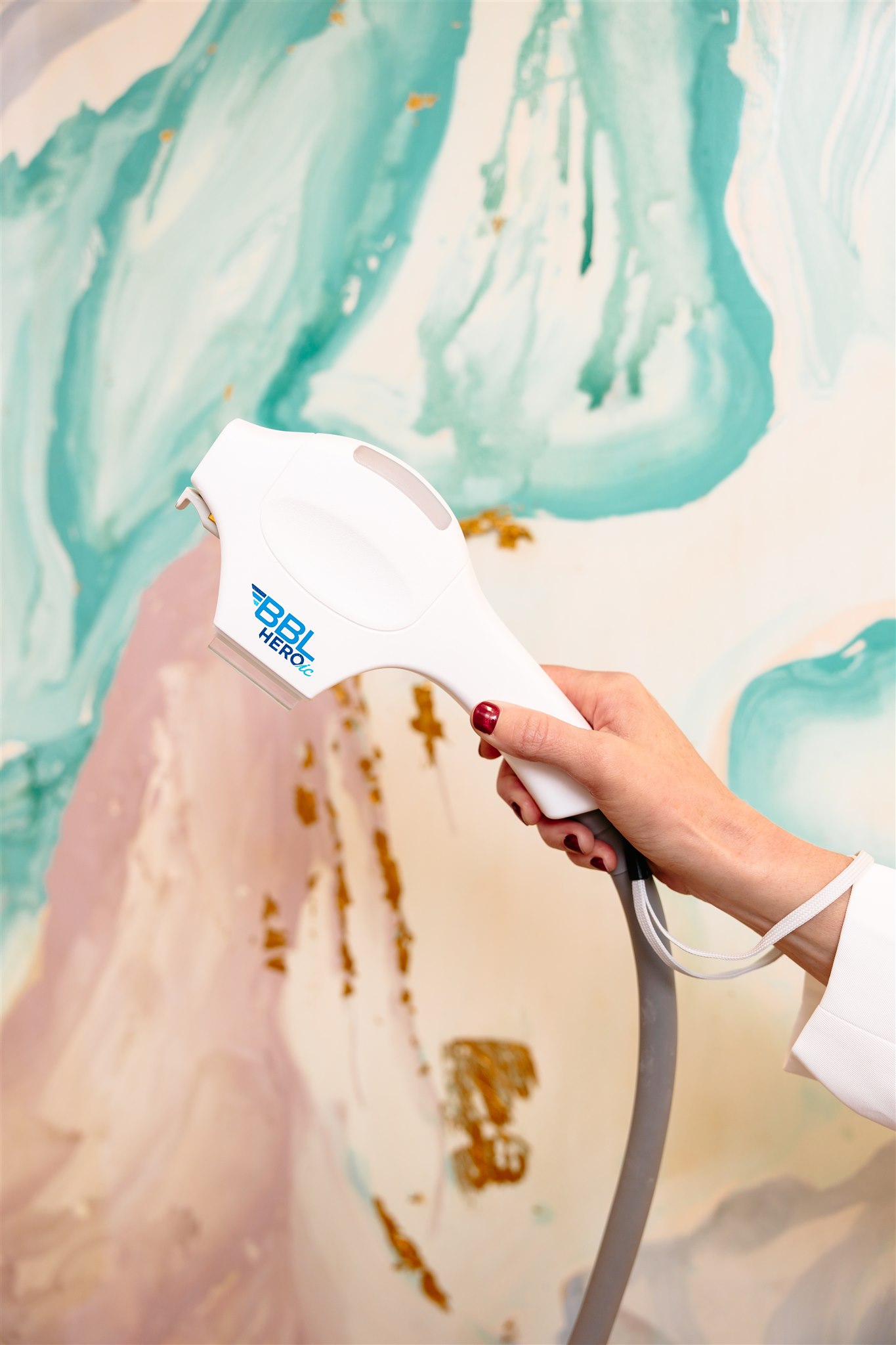
Is XERF Good for Crepey Skin in Fort Worth? A Smarter Guide to Tightening the Face, Neck, and Lower Face
A modern Fort Worth guide to understanding crepey skin, when XERF may fit into the treatment plan, and how to think more strategically about tightening and skin quality.
 Amy Robbins, MSNA APRN CRNA FNP-BC 15 min read June 2026Skin Tightening
Many patients describe their skin as "crepey" — but that word can mean several different things, and the best treatment depends on which one applies to you.
Some patients are noticing fine textural wrinkling in the neck or under the chin. Some are seeing lower-face skin that looks thinner, less smooth, or slightly looser than it used to. Some are experiencing all three at once, layered on top of early volume changes and hormonal skin shifts. The word "crepey" covers a range of concerns — and the best treatment path depends on what is actually driving the change.
At Youthful Magnolia, we approach crepey skin through treatment fit and honest anatomy evaluation — not a default device recommendation. XERF may be part of the right conversation for many patients with neck and lower-face crepiness. For others, a different approach — or a combination — will serve the anatomy better. This article is designed to help you understand which category you might be in before your consultation.
Section 01
What crepey skin
actually means.
"Crepey" is a patient-generated term, not a clinical diagnosis — but it describes something real and specific: skin that has developed a thin, finely wrinkled, less elastic quality that resembles the texture of crepe paper. It is distinct from the deeper lines and folds associated with more advanced aging, and it is distinct from the structural sagging that comes with significant tissue descent.
Crepey skin reflects a change in the structural quality of the skin itself — a decline in the collagen and elastin density that gives skin its firmness, plumpness, and resilience. When those structural proteins are reduced, the skin loses its ability to spring back, hold its position, and maintain a smooth, continuous surface. The result is a fine, slightly papery or loosely draped appearance — most often visible in areas where the skin is thinner, more exposed, and subject to more movement.
On the face and neck, crepey skin most commonly appears in the neck and under-chin area, the lower face and jawline, the perioral area, and sometimes the cheek skin. These are areas where the combination of thinner baseline skin, sun exposure, movement, and gravitational change over time creates the most visible effect.
Section 02
Why crepey skin develops
on the face and neck.
Crepey skin rarely has a single cause. It is typically the result of several converging factors that progressively reduce the structural quality of the skin over time.
Collagen and elastin decline
Collagen provides the structural framework that gives skin its firmness and thickness. Elastin provides the resilience that allows skin to bounce back after stretching or movement. Both decline gradually with age — at a rate that varies by genetics, lifestyle, and skin care — and their reduction is the primary biological driver of crepey skin texture.
Skin thinning
As skin ages, the epidermal and dermal layers both become thinner. Thinner skin is more transparent, less supported, and more prone to the fine wrinkling associated with crepey texture. This process is gradual and can be accelerated by sun exposure, certain medications, and hormonal transitions.
Cumulative UV exposure
Sun damage is one of the most significant accelerants of collagen degradation — and in Fort Worth's high-UV climate, cumulative sun exposure over time creates meaningful structural changes in facial and neck skin. UV radiation directly degrades collagen fibers and impairs the skin's ability to produce new collagen, accelerating the crepey-texture timeline.
Hormonal transitions
Perimenopause and menopause are associated with a significant and relatively rapid reduction in collagen production and skin thickness, driven by declining estrogen levels. Many patients notice that crepey skin changes they had been seeing slowly suddenly accelerated during this period — and this is a direct biological consequence of the hormonal shift.
Neck-specific patterns
The neck is particularly vulnerable to crepey skin changes for several reasons: the skin is thinner than facial skin, it is often less protected from sun exposure, it is subject to considerable movement, and it has less sebaceous gland density that would support hydration and barrier function. The neck's anatomy makes it one of the first and most visible areas for crepey texture to develop.
Skin hydration and barrier health
Chronically dehydrated or barrier-compromised skin tends to show crepey texture more prominently — not because the structural changes are more severe, but because the skin's surface appearance is less smooth when its hydration and lipid content are insufficient. Barrier support and consistent hydration are meaningful parts of a comprehensive approach to crepey skin.

Understanding what is driving crepey skin — collagen loss, thinning, sun damage, hormonal changes — shapes every treatment conversation at Youthful Magnolia.
Section 03
Crepey skin, sagging, and volume loss —
are they the same concern?
This distinction is one of the most important in the non-surgical rejuvenation conversation — because choosing treatment based on the wrong category often produces disappointing results, regardless of treatment quality. Crepey skin, sagging, and volume loss are related but distinct concerns, and they often require different approaches.
Crepey skin
A change in the surface and structural quality of the skin itself — thin, finely wrinkled, less elastic. The primary driver is collagen and elastin reduction. Tightening treatments that stimulate collagen renewal may address this directly. Some surface-level cases may also benefit from resurfacing.
Sagging
Downward movement or structural descent of tissue — jowling, ptosis, loss of facial architecture. The driver may be deeper laxity, ligament laxity, or tissue descent over time. Tightening treatments may help early sagging; more advanced sagging may need deeper structural support or surgical intervention.
Volume loss
Deflation of specific areas — hollowing of the midface, temples, perioral area, or under-eyes. The driver is loss of fat compartments and soft tissue. Volume loss is not primarily a tightening concern — it requires structural support through facial balancing, regenerative restoration, or both.
Why this matters for treatment planning
Most patients over 40 have some degree of all three — but the relative contribution of each to the visible concern varies enormously from person to person. A plan built around crepey skin alone, without accounting for early sagging or volume shifts, may underperform. A plan built around volume support, without addressing tissue quality, may produce an overfull appearance. The consultation is designed to map this territory honestly — and build a plan that addresses the full picture, not just one word of the description.
Section 04
Where XERF may fit
into the crepey-skin conversation.
XERF's mechanism — radiofrequency energy delivered into the tissue to stimulate collagen and elastin remodeling from within — is specifically relevant to the structural-quality changes that drive crepey skin. Here are the scenarios where XERF may be part of the most appropriate treatment plan.
Crepey neck skin
The neck is one of the areas where XERF's mechanism may be most meaningfully relevant for crepey skin. Neck crepiness is frequently driven by collagen and elastin loss and tissue laxity — the structural mechanisms that radiofrequency is designed to address. For patients with mild to moderate crepey neck texture where laxity is the primary driver, XERF may initiate the collagen renewal process that gradually improves the structural quality and appearance of the skin.
Provider note
Results develop over weeks to months as collagen remodeling progresses. See the full XERF recovery guide for what the treatment process involves.
Lower-face skin laxity with fine texture changes
The lower face — the area from the mid-cheek to the jawline — is another zone where crepey skin and tissue laxity often converge. When the skin appears both looser and finely textured in this area, the concern spans structural quality and early laxity. XERF's tightening mechanism may address the laxity component; depending on the degree of surface-level texture, a resurfacing conversation may also be relevant.
Provider note
Lower-face concerns often involve multiple contributing factors. A direct evaluation determines which approach — tightening, resurfacing, facial balancing, or a combination — is most appropriate.
Early to moderate skin-quality decline
Patients who are in the earlier stages of crepey skin development — where the skin quality has declined but structural sagging is not yet significant — often find that tightening-focused treatments produce the most meaningful support. Intervening earlier in the progression tends to produce better-maintained outcomes than waiting until the changes are more advanced.
Provider note
Earlier intervention is generally more effective for non-surgical tightening approaches than treatment after significant structural descent has occurred.
Non-surgical tightening as a primary goal
Patients who are genuinely committed to a non-surgical path — for preference or practical reasons — and whose crepey skin concern is primarily in the laxity and tissue-quality category rather than the volume or deep-sagging category are often well-positioned for the XERF conversation. The treatment's non-ablative mechanism allows for meaningful collagen stimulation without the surface disruption or recovery of more aggressive resurfacing approaches.
Provider note
For a comparison of how XERF relates to Ultherapy as non-surgical tightening options, see our Ultherapy vs XERF comparison.
Collagen-supportive skin renewal alongside other treatments
Some patients pursue XERF not as a standalone crepey-skin solution, but as a collagen-supporting component of a broader skin-health strategy. Paired with resurfacing treatments that address surface texture, or with regenerative approaches that support systemic skin quality, XERF's tissue-remodeling effect may contribute to a more comprehensive improvement than any single treatment alone.
Provider note
If crepey skin is accompanied by surface texture concerns, a resurfacing conversation — MOXI, HALO, or ProFractional — may be relevant alongside or instead of XERF. Explore the full laser treatment options at Youthful Magnolia.
Section 05
Amy Robbins' expert
perspective on crepey skin.
When someone comes to me describing crepey skin — especially on the neck or lower face — the first question I ask myself is: what changed in this skin that is producing what I am looking at? Because the answer to that question determines everything that follows.
If the crepiness is primarily structural — driven by collagen loss, elastin reduction, and a general decline in tissue quality — then a collagen-stimulating approach like XERF may fit that concern very directly. The radiofrequency energy initiates the tissue's own remodeling response, which over weeks and months can meaningfully improve the firmness, smoothness, and overall quality of the skin in the treated area.
If the crepiness is more surface-driven — with significant fine-wrinkling that lives in the outer skin layers — then a resurfacing conversation may be more directly relevant, with or without a tightening component. If volume changes are contributing to how the skin appears loose or thin, then a facial balancing conversation may be needed as part of the plan.
The most useful thing I can do for a patient describing crepey skin is give them a clear explanation of what is actually happening in their skin — and what approach makes the most clinical sense given what I see. That is a different service than recommending the most popular device. And for patients who have been through generic treatment recommendations elsewhere, that clarity often makes a significant difference in their experience and their outcomes.
"When someone says their skin feels crepey, the first question is why. The best treatment is the one that matches what changed in the skin — not just the one that sounds the strongest."
Amy Robbins
MSNA · APRN · CRNA · FNP-BC · Founder, Youthful Magnolia
The most valuable part of the consultation is the question it answers: what is this skin actually doing, and what approach addresses that most precisely?
Section 06
Which areas may respond best
to a tightening-focused approach.
Neck and under-chin
The neck is the area where a tightening-focused conversation most consistently applies to crepey skin. Neck crepiness driven by laxity and collagen decline is directly in the lane of radiofrequency treatment. See our Fort Worth neck tightening guide for more context.
Lower face and jawline
The lower face — particularly where fine skin texture and early laxity converge — may respond well to a tightening approach, especially when the concern is primarily tissue quality and laxity rather than deeper structural change or volume loss.
Early to moderate laxity stages
Tightening-focused treatments tend to produce the most meaningful outcomes for patients earlier in the laxity progression. The body's collagen-remodeling response is more productive when tissue quality is still relatively intact and has not advanced to significant structural descent.
Patients wanting non-surgical support
For patients who are not yet ready for or interested in more invasive approaches, a non-surgical tightening conversation may be a meaningful bridge — providing genuine tissue support and quality improvement within a more comfortable recovery and risk profile.
Section 07
When another treatment
may be a better fit.
Good treatment planning is equally about knowing when a treatment does not fit a concern as well as it might appear to. Not every crepey skin presentation is a XERF concern — and not every XERF concern is best addressed by tightening alone.
Primarily surface-level texture and wrinkling
May consider instead
Resurfacing: MOXI, HALO, ProFractional
Clinical rationale
When crepey skin is presenting primarily as fine wrinkling that lives at the skin's surface — in the epidermis and upper dermis — resurfacing-based treatments may address it more directly than a tightening approach. The surface-renewal mechanism of ablative or fractional resurfacing targets the outer layers where fine surface wrinkling lives most prominently.
Significant volume loss as primary driver
May consider instead
Facial balancing, PRF, volume restoration
Clinical rationale
When the "crepey" appearance is being driven primarily by volume deflation rather than structural laxity — a hollowed look that makes the skin appear loose because of the absence of underlying support — a tightening treatment does not address the root cause. A conversation about facial balancing or regenerative restoration may be more central.
Advanced structural sagging
May consider instead
Surgical consultation, deeper tissue approaches
Clinical rationale
When crepey skin is accompanied by significant structural descent — deep jowling, substantial ptosis, or major facial tissue changes — non-surgical tightening alone is unlikely to produce outcomes that match the patient's goals. Honest communication about the realistic limits of non-surgical approaches is a necessary part of the consultation.
Concerns primarily about systemic skin health
May consider instead
Peptides, wellness support, skincare optimization
Clinical rationale
Some patients' crepey skin is significantly influenced by systemic factors — dehydration, nutritional deficiency, hormonal changes, barrier dysfunction. For these patients, addressing the systemic drivers through peptide support, skincare optimization, and wellness care may produce meaningful improvement that device treatment alone cannot fully replicate.
Amy Robbins · Founder, Youthful Magnolia
"Not every crepey skin concern needs the same treatment — and choosing based on one word can lead to the wrong conversation entirely. A good consultation maps the actual anatomy, identifies what is driving the visible change, and builds a plan that fits the concern — not just the device."

Treatment planning that matches the concern — not the device — consistently produces more meaningful and more natural outcomes.
Section 08
What a consultation at Youthful Magnolia
may include.
Facial and neck skin assessment
Amy evaluates the skin of the neck, lower face, and jawline directly — assessing the degree and type of crepey texture, laxity, volume change, and surface-level concerns that are contributing to the visible presentation.
Concern driver identification
A structured conversation and direct evaluation to determine whether the concern is primarily structural laxity, surface texture, volume loss, systemic skin quality, or a combination of these factors.
Treatment fit evaluation
Whether XERF is the most appropriate primary approach, whether it should be combined with resurfacing or volume support, or whether a different path better fits the actual anatomy and concern pattern.
Comparison to other available options
For patients whose concerns may also be addressed by Ultherapy, laser resurfacing, or facial balancing, Amy will explain the differences and why the specific recommendation was made for your anatomy.
Realistic expectations and result timeline
A clear, grounded explanation of what the treatment can realistically deliver, what the result arc looks like, and what the healing or treatment experience will involve — so nothing is left to assumption.
Recovery and aftercare discussion
What the post-treatment experience may involve and how to plan for it. For detailed information in advance, see our XERF downtime and recovery guide.
Section 09
Why Fort Worth patients choose
Youthful Magnolia.
Amy Robbins evaluates every patient's anatomy personally — treatment fit is never delegated
Deep expertise across tightening, resurfacing, and regenerative care — for a truly comprehensive approach
Honest treatment fit evaluation — not inventory-driven recommendations
Anatomy-aware planning that separates laxity, volume, texture, and skin quality as distinct concerns
Long-view skin strategy: rejuvenation as a sustained investment, not a one-time event
Regenerative philosophy that may pair tightening with systemic skin-health support
Premium boutique experience in Fort Worth's most thoughtful aesthetics practice
Natural-looking outcomes rooted in clinical precision and honest restraint
Common Questions
XERF and crepey skin —
answered honestly.
Is XERF good for crepey skin?
Can XERF help crepey neck skin?
What causes crepey skin on the neck and lower face?
Is crepey skin the same as sagging?
Can tightening help skin that looks thin and wrinkled?
What if I have crepey skin plus volume loss?
Is XERF good for early neck aging?
How do I know if XERF is right for my crepey skin?
What if I need more than tightening?
Where can I get XERF for crepey skin in Fort Worth?
Related Services
XERF Laser Tightening
The XERF radiofrequency skin-tightening treatment at Youthful Magnolia.
Laser Treatments
Explore the full Sciton-based laser and energy treatment menu.
Ultherapy
Ultrasound-based tightening — a common comparison to XERF.
Weight & Body
Non-surgical tightening and body treatment options.
Full Facial Balancing
Injectable restoration — often paired with tightening for volume concerns.
PRF Under Eyes
Regenerative platelet-rich fibrin for periocular restoration.
Book a Consultation
Begin with a personalized evaluation of your skin and treatment goals.
Your Provider
Amy
Robbins
MSNA · APRN · CRNA · FNP-BC
Book a Consultation"Crepey skin on the neck and lower face is a real and addressable concern — but the most meaningful outcomes come from understanding what is driving it, not just choosing the treatment that sounds most powerful."
— Amy Robbins, Founder · Youthful Magnolia
Youthful Magnolia · Fort Worth, TX
Ready to find out whether XERF
fits your skin concerns?
If you're dealing with crepey skin on the neck, lower face, or jawline and want a more thoughtful non-surgical tightening conversation, our team can help you decide what makes the most sense for your skin and goals.