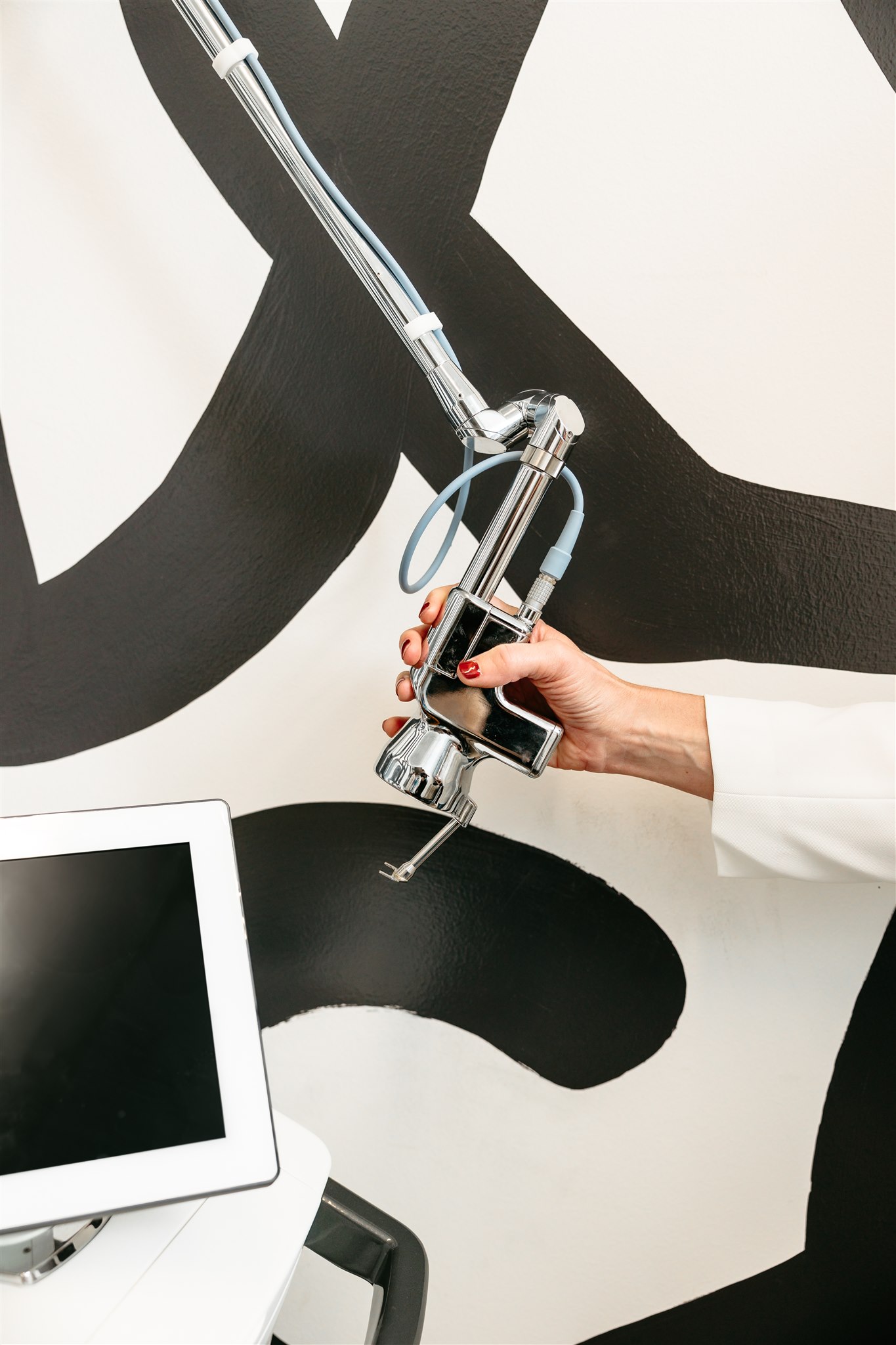
HALO® TRIBRID™ in Fort Worth: Everything You Need to Know About Sciton's New Triple-Wavelength Resurfacing Laser
A modern Fort Worth guide to Sciton's HALO TRIBRID — how triple-wavelength resurfacing works, what it may treat, and why personalized planning matters more than any device name.
 Amy Robbins, MSNA APRN CRNA FNP-BC 17 min read May 2026Laser & Light
Advanced resurfacing is one of the areas where the gap between what patients hear and what they actually need to understand is widest.
Patients see a new device name and ask, reasonably: what does this actually mean for my skin? Is this meaningfully better than what was available before? Is it right for me specifically? What does treatment involve, and is the downtime worth it?
HALO TRIBRID is Sciton's newest addition to the resurfacing platform — a triple-wavelength laser that combines technologies associated with HALO, MOXI, and erbium resurfacing in one system. When it is used thoughtfully and matched to the right patient, it represents a genuinely different resurfacing approach. When it is over-hyped as a universal upgrade or a name to be sold rather than a tool to be planned, it is no different from any other device being misapplied.
At Youthful Magnolia, we are a Sciton-based practice with deep clinical experience across the full Sciton laser platform — HALO, MOXI, BBL, ProFractional, and more. We do not chase treatments because they are new. We understand them, evaluate whether they expand what we can offer patients, and plan their use carefully.
This article is a complete guide to what HALO TRIBRID is, how it works, what it may treat, who it may be appropriate for, and how we think about it at Youthful Magnolia.
Section 01
What HALO TRIBRID
actually is.
HALO TRIBRID is Sciton's triple-wavelength resurfacing platform — the newest evolution of their fractional resurfacing line. Where previous HALO systems combined two wavelengths (ablative and non-ablative) in a hybrid approach, HALO TRIBRID adds a third, creating a broader, more layered resurfacing system in one handpiece.
In practical terms: HALO TRIBRID integrates three distinct laser energies that correspond to the technologies found across Sciton's HALO, MOXI, and erbium resurfacing platforms. The intention is to allow providers to address multiple layers and types of skin concern in a single, coordinated resurfacing session — rather than treating each concern in isolation or across separate appointments.
What makes this meaningful is not the novelty. It is the conceptual shift. Traditional resurfacing often asks patients to choose a concern — texture or tone, surface or depth, maintenance or correction. HALO TRIBRID is designed to make that choice less binary, because the platform is structured to reach more of the skin's layers in a single treatment approach.
Whether that scope is right for a given patient is a different question — one that should only be answered after a direct evaluation of their skin, goals, and recovery tolerance.

Technology without strategy is just equipment. Every HALO TRIBRID consultation begins with understanding the skin and the patient's goals before any treatment plan is made.
Section 02
Why HALO TRIBRID is different from
traditional resurfacing.
Most resurfacing treatments are designed around a single mode of action: ablative treatments remove the outer skin layer to drive surface renewal. Non-ablative treatments deliver energy beneath the surface without fully disrupting the outer layer. Each approach has strengths and limitations — and traditionally, patients had to choose one or layer them across separate sessions.
HALO changed that by combining ablative and non-ablative wavelengths in a single pass. HALO TRIBRID extends this further by adding a third wavelength that specifically addresses the superficial tone and pigment layer — the domain where MOXI has been most effective for early sun damage, dyschromia, and overall radiance support.
The difference, practically speaking, is one of range and customization. Where a single-modality resurfacing treatment is focused and precise within its lane, HALO TRIBRID is designed to cover more of the skin's resurfacing story in one coordinated approach. That broader range can be valuable for patients who have multiple concerns or who want more comprehensive correction. It also requires more careful planning — because the broader the treatment, the more consequential the individual parameter choices become.
Section 03
How the three wavelengths
work together.
According to Sciton's official post-care guidance, HALO TRIBRID utilizes three wavelengths: 2940 nm, 1927 nm, and 1470 nm. Here is what each of those means in terms the skin can understand.
Ablative Erbium
Surface Renewal
The ablative erbium wavelength removes controlled amounts of the outermost skin layer — the epidermis — to drive direct surface renewal. This is the resurfacing workhorse: responsible for texture refinement, surface irregularity improvement, and the "fresh layer" effect associated with erbium treatments. It is the most immediate and visible component of the system.
Non-Ablative (MOXI)
Tone & Pigment
The 1927 nm wavelength corresponds to the MOXI technology, which targets the superficial dermis and epidermis to address early sun damage, dyschromia, uneven tone, and pre-pigmentation changes. It works without fully removing the outer layer — making it suitable for tone correction and overall radiance support, even in patients with more sensitive skin profiles.
Non-Ablative (HALO)
Depth & Renewal
The 1470 nm wavelength delivers energy into the dermis — the deeper structural layer of the skin — to stimulate collagen and elastin production and promote skin renewal from within. This is the depth component: addressing the fine lines, pore quality, and structural skin changes that surface resurfacing alone cannot reach.
Clinical Context
Together, these three wavelengths create a resurfacing system that spans the full depth spectrum: surface renewal through ablative erbium, tone and pigment support through the 1927 nm MOXI energy, and structural collagen stimulation through the 1470 nm non-ablative depth component. The integration of all three in a single platform — rather than three separate appointments — is the defining clinical proposition of HALO TRIBRID.
Section 04
What HALO TRIBRID
may help improve.
Based on Sciton's official positioning and the clinical range of the wavelengths involved, HALO TRIBRID may be used in conversations around the following concerns. Each depends on specific treatment parameters and individual patient anatomy — and should always be discussed with a provider who has evaluated your skin directly.
Fine lines and wrinkles
The depth component (1470 nm) targets the dermis to stimulate collagen renewal — the mechanism that addresses fine lines and early wrinkling from the inside out. The surface component refines the skin's texture simultaneously.
Sun damage
Decades of UV exposure accumulate in both the surface pigment layer and the dermis. The triple-wavelength approach may address sun damage at both levels — tone and texture together.
Dyschromia and uneven skin tone
The 1927 nm MOXI energy is specifically positioned for superficial tone correction — early discoloration, post-inflammatory changes, and the subtle unevenness that makes skin look less uniform and less radiant.
Rough or uneven texture
The ablative erbium component removes the outermost skin layer and drives surface renewal — directly addressing the textural irregularities that make skin feel and appear rough or uneven.
Enlarged pores
Pore quality improves both through surface resurfacing and through the collagen-renewal response stimulated by the deeper non-ablative wavelength. Both mechanisms contribute to a refined skin surface.
Acne scars
Shallow to moderate acne scarring is often part of the resurfacing conversation. The ablative surface renewal combined with deeper collagen stimulation may support improvement in the textural and structural changes left by acne.
Surface irregularities
Beyond acne scars, the skin accumulates years of surface irregularities — rough patches, uneven zones, minor scarring. The comprehensive multi-layer approach of HALO TRIBRID addresses these at multiple levels simultaneously.
Broader skin renewal
For patients who want a comprehensive annual or bi-annual correction — improving tone, texture, pores, early lines, and overall skin quality in a single coordinated approach — HALO TRIBRID may offer a more complete reset than single-modality options.
Important: The concerns listed above reflect Sciton's official product positioning and the known clinical range of the wavelengths involved. Individual results vary significantly based on treatment parameters, patient skin type, provider expertise, and post-care adherence. A direct consultation is always the most reliable way to assess whether HALO TRIBRID is likely to be useful for your specific skin.
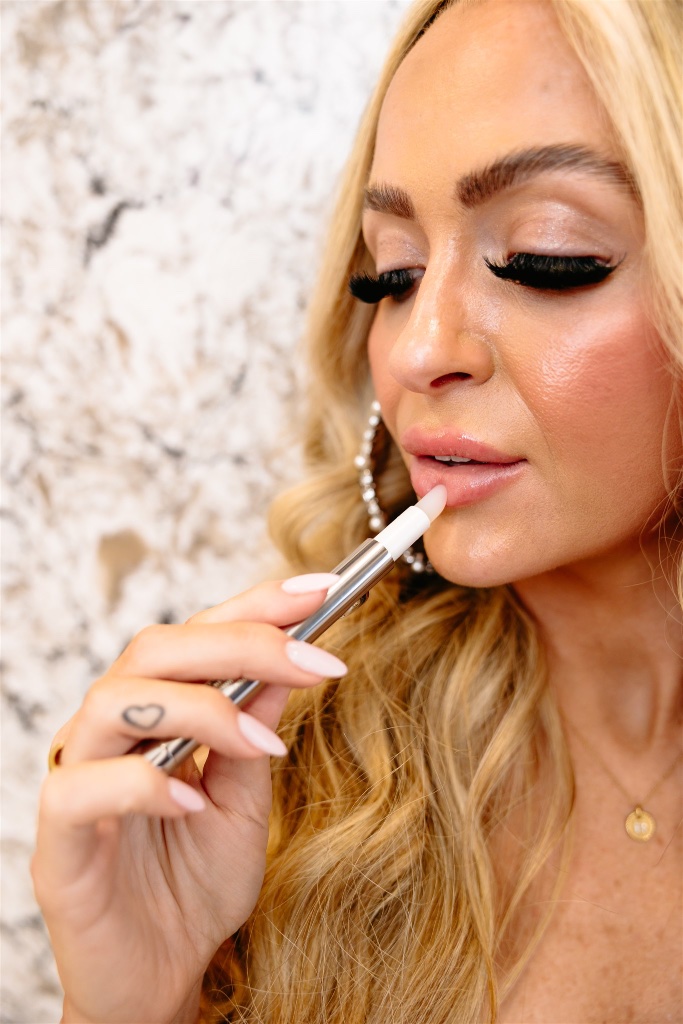
The specific concerns HALO TRIBRID can address depend entirely on how it is calibrated — which is why the consultation matters as much as the technology.
Section 05
An expert perspective
from Amy Robbins.
When a new resurfacing platform launches, there are always two conversations happening in parallel. One is among providers: how does this change what we can offer, who does it suit, and what does it add to the treatment planning toolkit? The other is among patients: is this the right thing for me, and should I ask for it?
The most important thing I can say about HALO TRIBRID is this: the technology is genuinely interesting, but the treatment is only as good as the planning behind it. A triple-wavelength resurfacing system in the hands of a provider who is calibrating it thoughtfully for the specific patient — their skin type, their concern depth, their downtime tolerance, their goals — is a powerful tool. The same system applied generically is not.
What I find valuable about HALO TRIBRID as a clinical tool is the increased flexibility it provides in building a resurfacing approach that is more comprehensive in a single session. For patients who have been working through a series of separate treatments to address different concerns — MOXI for tone here, HALO for texture there, a deeper resurfacing pass for acne scars — the ability to coordinate those modalities in one treatment planning conversation is genuinely useful.
But I also want to be direct about what HALO TRIBRID is not: it is not the right answer for every patient who walks in wanting to "do something about their skin." The patients who benefit most are those whose concerns span multiple concerns simultaneously, who have the recovery tolerance for a more intensive resurfacing session, and who are ready for a strategic, longer-term skin renewal plan — not a single appointment.
"What makes a technology like HALO TRIBRID exciting is not just that it's new. It's that it gives us a more layered way to think about resurfacing — but only when it's used thoughtfully and for the right patient."
Amy Robbins
Founder · Youthful Magnolia
Section 06
Who may be a good candidate
for HALO TRIBRID.
HALO TRIBRID is not a universal resurfacing solution. The patients who tend to benefit most are those who share a few specific characteristics:
Multiple simultaneous skin concerns
Patients who are dealing with a combination of concerns — tone and texture, pores and wrinkles, sun damage and scarring — rather than a single isolated issue. HALO TRIBRID's multi-layer approach adds the most value when the concern is broad.
Readiness for a meaningful recovery window
Because HALO TRIBRID includes an ablative component, it requires a real recovery commitment. Patients who are not willing or able to manage several days of visible healing are generally better served by non-ablative or gentler options.
Patients seeking significant correction
Those who have accumulated meaningful sun damage, texture changes, or acne scarring and want more comprehensive correction — rather than gradual maintenance — may find HALO TRIBRID a better fit than MOXI or a single HALO session.
Patients who have already tried lighter options
Those who have done MOXI or gentler resurfacing and want to step up to a more corrective treatment may be natural candidates for HALO TRIBRID as the next phase of their skin plan.
Patients with appropriate skin type for resurfacing
Not all skin types respond equally to resurfacing. Fitzpatrick skin type, baseline pigmentation, and history of post-inflammatory hyperpigmentation are all factors evaluated in the consultation.
Patients who want a provider-guided approach
The best HALO TRIBRID candidates are not self-diagnosing by device name. They are patients who want a provider to evaluate their skin, explain the options clearly, and build the plan — rather than simply accommodating a specific device request.
Section 07
HALO TRIBRID vs HALO, MOXI,
and traditional resurfacing.
Understanding how HALO TRIBRID relates to other Sciton platforms — and when simpler options may still be the smarter choice — is part of any honest evaluation.
HALO TRIBRID vs standard HALO
Standard HALO combines two wavelengths — ablative erbium (2940 nm) and non-ablative depth (1470 nm) — in a single fractional resurfacing pass. HALO TRIBRID adds the 1927 nm MOXI wavelength, extending the platform's reach into the tone and superficial pigment layer. For patients who already respond well to HALO and want broader coverage of their skin concerns — particularly tone and dyschromia alongside their existing texture and wrinkle goals — HALO TRIBRID represents a natural evolution. For patients whose primary concern is texture and lines without significant tone or pigment issues, standard HALO may remain the cleaner, more focused choice.
HALO TRIBRID vs MOXI
MOXI is a non-ablative, lower-downtime treatment designed for gradual tone improvement, early sun-damage support, and skin quality maintenance. It is particularly well-suited for younger patients building preventive skin health, or for those who want consistent upkeep with minimal recovery. HALO TRIBRID is significantly more intensive — it adds ablative resurfacing and deeper collagen stimulation to the MOXI-range wavelength, creating a more corrective treatment with a correspondingly longer recovery. The patients who should consider MOXI versus HALO TRIBRID are often at very different stages of their skin health conversation.
HALO TRIBRID vs traditional erbium resurfacing
Traditional erbium resurfacing — whether full-field or fractional (as in ProFractional) — focuses on ablative surface renewal as its primary mechanism. It can produce dramatic correction of texture, scars, and surface irregularities, but does not include the non-ablative tone or depth components that HALO TRIBRID integrates. For patients whose primary concern is deep acne scarring or significant texture, ProFractional or a more aggressive erbium approach may still provide more targeted depth. For patients with a broader array of concerns across surface, tone, and depth, HALO TRIBRID's integrated approach may provide more comprehensive coverage in one session.
When simpler options may still be the right choice
Not every patient should choose the most comprehensive option. A patient with early sun damage and no significant texture concern is well-served by MOXI — adding HALO TRIBRID's ablative and depth components would be more downtime and recovery than their skin profile warrants. A patient who is new to resurfacing may benefit from a staged approach — beginning with MOXI, progressing to HALO, and considering HALO TRIBRID after a baseline of skin health has been established. The technology is a tool. The plan is the treatment. Bigger is not always better.
Section 08
What downtime and recovery
may look like.
Recovery from HALO TRIBRID is one of the most important parts of the pre-treatment conversation — and one where patient expectations need to be grounded in reality, not in what a brief online search suggests.
Sciton's official post-care materials indicate that mild swelling and redness in treated areas may subside in approximately 3 to 4 days. That is the manufacturer's general range — and it reflects a generalized treatment experience. In practice, individual recovery depends on several variables:
Treatment intensity and depth
HALO TRIBRID can be calibrated to different levels of aggressiveness. A more conservative setting produces less downtime. A more corrective approach produces more. Your provider will set parameters specifically for your treatment goals — not a default protocol.
Individual skin response
Patients respond differently to resurfacing. Skin type, baseline sensitivity, and individual healing rate all influence how visible and how long the recovery period is — regardless of what the device's average suggests.
Areas treated
Facial resurfacing tends to heal more quickly than other areas. Specific treatment zones and coverage density affect the overall recovery experience.
Post-care adherence
Aftercare is not optional in resurfacing. Patients who follow post-care instructions carefully — including appropriate moisturization, SPF protection, and avoiding active exfoliants — consistently have smoother and faster recoveries than those who do not.
Amy Robbins · Founder, Youthful Magnolia
"Downtime conversations are not about scaring patients away from resurfacing — they are about making sure patients can actually commit to the recovery their treatment requires. A patient who cannot take three to four days away from certain obligations should not begin an intensive resurfacing session. That is not a judgment. It is planning."
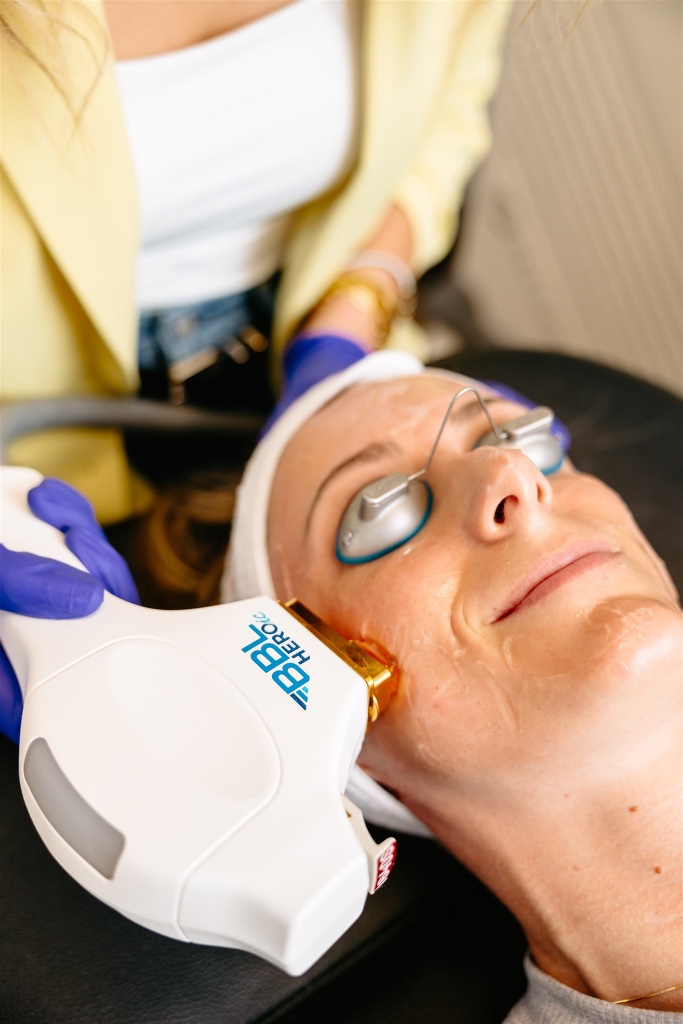
Recovery planning is part of treatment planning. The right resurfacing choice depends as much on your schedule and life as on your skin.
Section 09
What a consultation at Youthful Magnolia
may include.
Every resurfacing conversation at Youthful Magnolia begins with a direct evaluation — not a menu of device options and a preference question. Here is what a typical consultation for a patient exploring HALO TRIBRID may include:
Skin evaluation
Amy evaluates the skin directly — texture, tone, pore quality, existing sun damage, scarring pattern, skin type, and Fitzpatrick classification. What she observes drives the treatment conversation, not what the patient came in requesting.
Goal clarification
A clear discussion of what the patient wants to address — and what realistic improvement looks like for their specific skin. Not every concern listed on a device brochure will be meaningfully improved in a single session for every patient.
Downtime tolerance assessment
How much recovery can the patient realistically manage? This is a constraint that shapes the entire treatment plan. A patient who cannot commit to a four-day recovery window needs a different approach than one who can schedule a full week.
Comparison to other treatment options
For some patients, MOXI is the more appropriate entry point. For others, standard HALO is more targeted. For patients who have already worked through those options, HALO TRIBRID may represent a meaningful next step. The consultation clarifies where on that spectrum the patient sits.
Personalized treatment sequencing
Advanced skin rejuvenation rarely happens in a single appointment. A strategic plan may involve a series of HALO TRIBRID sessions, or may combine HALO TRIBRID with complementary treatments — BBL for vascular support, PRF for regenerative healing, or peptide therapy as systemic skin support.
Realistic expectations
The most important outcome of any consultation is that the patient leaves understanding what their treatment can realistically deliver — not a marketed promise, but an honest clinical projection based on their actual skin.
Section 10
Why Fort Worth patients choose
Youthful Magnolia.
Founder-led consultations — Amy Robbins evaluates every patient personally
Deep Sciton platform expertise across HALO, MOXI, BBL, ProFractional, and TriBrid
Personalized laser planning — not preset protocols or device-driven decisions
Long-view skin strategy that considers sequencing, staging, and cumulative outcomes
Regenerative philosophy that complements resurfacing with broader skin-health support
Honest expectation-setting — including what treatment cannot deliver
Premium patient experience in a boutique Fort Worth practice
Clinical rigor applied to every treatment parameter decision
Common Questions
HALO TRIBRID — answered
honestly.
What is HALO TRIBRID?
How is HALO TRIBRID different from HALO?
Is HALO TRIBRID a laser resurfacing treatment?
What does HALO TRIBRID treat?
Can HALO TRIBRID help acne scars?
Can HALO TRIBRID help sun damage and uneven tone?
How much downtime does HALO TRIBRID have?
Is HALO TRIBRID more intensive than MOXI?
How do I know if HALO TRIBRID is right for me?
Where can I get HALO TRIBRID in Fort Worth?
How does HALO TRIBRID compare to ProFractional resurfacing?
Related Services
Laser Treatments
Explore the full Sciton-based laser menu at Youthful Magnolia.
HALO Laser
Hybrid fractional resurfacing for texture, tone, and skin renewal.
MOXI
Non-ablative tone and maintenance resurfacing for all skin types.
Sciton TriBrid
Learn more about the full TriBrid resurfacing platform.
ProFractional
Ablative fractional erbium for deep correction and acne scars.
BBL
BroadBand Light for pigment, redness, and long-term skin maintenance.
Facials & Skin
Non-laser skin treatments to complement your resurfacing plan.
Book a Consultation
Begin with a personalized evaluation from Amy Robbins.
Related Articles
Your Provider
Amy
Robbins
MSNA · APRN · CRNA · FNP-BC
Book a Consultation"The best resurfacing outcome is not the one that used the most wavelengths. It is the one that used the right wavelengths, at the right depth, for the right patient — and left them looking like a better version of themselves."
— Amy Robbins, Founder · Youthful Magnolia
Youthful Magnolia · Fort Worth, TX
Ready to find out if HALO TRIBRID
is right for your skin?
If you're exploring advanced resurfacing in Fort Worth, our team can help you understand whether HALO TRIBRID fits your skin, your goals, and your ideal recovery path.