
Melasma and Stubborn Pigment in Fort Worth: Why Treatment Has to Be Smarter Than “Just a Laser”
A modern Fort Worth guide to understanding melasma, stubborn pigment, and why smarter treatment planning matters more than chasing the strongest laser.
 By Amy Robbins, MSNA APRN CRNA FNP-BC 16 min read June 2026Laser & Light
Many patients use the word "pigment" to describe several different skin concerns — but melasma is not the same as every other discoloration issue, and treating it as if it were is where most pigment plans go wrong.
If you have searched for "melasma treatment Fort Worth" or "best laser for pigment," you have probably encountered an overwhelming amount of information — much of it device-focused, much of it marketing-driven, and very little of it personalized to what is actually happening in your skin. The internet is full of pigment advice. Most of it is generic. And most of it is wrong for someone with melasma.
One of the biggest mistakes in aesthetic medicine is treating pigment too aggressively or too simplistically. The question is not "What is the strongest laser?" The question is: What is this pigment, and what is the safest, smartest way to approach it?
That is the question we start with at Youthful Magnolia in Fort Worth. This article is designed to give you an honest, medically grounded understanding of why melasma and stubborn pigment require a more nuanced approach — and why the smartest plan is rarely the most aggressive one.
Section 01
What melasma
actually is.
Melasma is a common pigment condition that presents as patchy, often symmetrical areas of darker skin — most frequently appearing on the cheeks, forehead, upper lip, or jawline. It occurs when pigment-producing cells called melanocytes become overactive, producing excess melanin in response to a combination of triggers that typically include sun exposure, hormonal influence, and genetic predisposition.
What makes melasma different from a simple sun spot is that it is not a static deposit of pigment. It is an active, reactive process. The same cells that created the discoloration can be triggered to produce more pigment by heat, inflammation, hormonal shifts, and even by the very treatments intended to clear it. This reactive nature is what makes melasma one of the most challenging — and most commonly mistreated — pigment concerns in aesthetic medicine.
Melasma is benign. It is not dangerous. But it can be persistent, it can be emotionally frustrating, and it can resist treatment that seems like it should work. Understanding that melasma is a chronic, reactive condition — rather than a one-time problem to be eliminated — is the first and most important step toward managing it successfully.
Understanding what the pigment is — before treating it — is the foundation of every successful plan. Not all discoloration is melasma, and not all pigment should be treated the same way.
Section 02
Why melasma is different
from other pigment concerns.
Not all pigment is created equal. Understanding the differences between melasma and other forms of discoloration is essential — because the treatment approach that works for one type may worsen another.
Benign pigmented lesions
Sun spots, age spots, and certain freckling-type pigment are typically localized and well-defined. They often respond more predictably to targeted treatment because they involve discrete deposits of pigment rather than an active, recurring process. These are generally the most straightforward pigment concerns to address — but they still require proper assessment to confirm they are benign before any treatment begins.
Post-inflammatory pigment
When the skin produces excess pigment in response to inflammation — from acne, injury, rashes, or even aggressive prior treatment — the resulting discoloration can be persistent. Post-inflammatory pigment requires a different approach than sun damage: the inflammation must be settled and the skin barrier supported before any corrective treatment is considered. Treating inflamed skin with aggressive energy can deepen the problem.
Sun-related discoloration
Cumulative sun exposure produces a range of pigment changes — from individual spots to broader areas of uneven tone. While sun-related pigment often responds well to treatment, it is also a signal of long-term sun damage that may benefit from a comprehensive skin-health strategy rather than spot-by-spot correction alone.
Melasma
Melasma presents as patchy, often symmetrical discoloration — frequently on the cheeks, forehead, upper lip, or jawline. It is driven by a complex interplay of pigment-producing cell activity, hormonal influence, and sun exposure. Unlike isolated spots, melasma involves an ongoing, reactive pigment process — which is why it requires the most thoughtful, restraint-first approach of any pigment concern.
Why this distinction matters
The treatment that clears a sun spot may worsen melasma. The approach that fades post-inflammatory pigment may be too aggressive for melasma-prone skin. This is not a minor distinction — it is the difference between improvement and worsening. A responsible pigment plan begins with diagnosis, not with a device.
Section 03
Why treatment has to be smarter
than “just a laser.”
The most common question patients ask about pigment is: "What laser do you use?" It is the wrong first question. The right first question is: "What is this pigment, and what can my skin tolerate?"
Not every pigment issue should automatically be treated with the most aggressive option available. In fact, with melasma and stubborn pigment, aggressive treatment is frequently counterproductive. The energy that is meant to shatter pigment can also trigger inflammation — and inflammation is one of the most powerful drivers of new pigment production. This means that a stronger treatment can actually produce a worse outcome, not a better one.
Treatment planning for pigment may involve multiple categories: skin-supportive care to improve barrier function, gentle treatments to prepare the skin, selective use of technology when appropriate, and a long-term maintenance strategy. It is rarely a single device, a single session, or a single approach.
Skin type matters profoundly. Fitzpatrick skin type — the formal classification of how your skin responds to UV light — is a critical variable in pigment treatment. Patients with higher Fitzpatrick types face increased risk of post-inflammatory hyperpigmentation from aggressive treatment. Without formal skin type assessment, any treatment plan is incomplete.
This is why provider judgment is especially important in pigment cases. The technology is the tool. The thinking behind it — the diagnosis, the timing, the restraint, the sequencing — is what determines the outcome.
Myth vs. Reality
Common pigment myths — and what is actually true.
Melasma is just a type of sun spot, so any laser that treats sun damage will treat melasma.
A stronger laser always produces better, faster results for pigment.
Once the pigment is cleared, the problem is solved.
If the pigment is deep, there is a laser that can reach it safely.
Section 04
What may be part of a
melasma or stubborn-pigment plan.
A thoughtful pigment plan is layered — built from multiple components, sequenced thoughtfully, and customized to your specific skin. No single element is right for every patient. Here is what may enter the conversation.
Careful skin assessment
Before any treatment is discussed, we evaluate your skin tone (Fitzpatrick type), the character and depth of your pigment, your treatment history, and any factors that may influence how your skin responds. This assessment is the foundation of everything that follows.
Treatment timing
Not every pigment concern is ready for active treatment at the same time. Inflamed skin needs to settle. Barrier function needs to be supported. Hormonal triggers may need to be understood. Timing is not a delay — it is a strategy.
Skin-supportive treatments
Gentle facials, medical-grade peels like <Link to="/facials-skin/biorepeel" class="underline underline-offset-4" style="color:SEA">BioRePeel</Link>, and supportive skin treatments may play a role in preparing the skin, improving barrier function, and maintaining results between more targeted sessions.
Sun protection & prevention
No pigment plan succeeds without disciplined sun protection. UV exposure is the single most powerful trigger for pigment recurrence. We discuss SPF strategy, physical protection, and behavioral habits as a core part of every plan — not an afterthought.
Gentle laser conversations
For some patients, gentle laser treatment may be appropriate — but the choice of platform, wavelength, and parameters must account for skin tone and pigment type. Not every laser is suitable for every pigment concern, and the decision is never automatic.
Advanced pigment-targeting technology
For select patients, advanced pigment-focused technologies may become part of the conversation — particularly for stubborn or treatment-resistant cases. Whether and when these tools fit your plan is a decision made during consultation, not assumed at the outset.
The pigment planning framework
How we think about pigment — step by step
Pigment treatment is not a single decision — it is a sequence. Each step informs the next, and skipping steps is where most pigment plans fail.
01
Diagnose
Identify what the pigment actually is — melasma, sun damage, post-inflammatory, or benign lesion. The diagnosis drives everything.
02
Assess skin
Formal Fitzpatrick skin type classification, barrier health, treatment history, and trigger evaluation.
03
Prepare
Support the skin barrier, settle inflammation, establish sun protection. The skin must be ready before active treatment.
04
Treat selectively
Choose the right approach — gentle, targeted, or advanced — based on the diagnosis, not the device.
05
Maintain
Pigment management is ongoing. Maintenance, sun protection, and monitoring prevent recurrence.
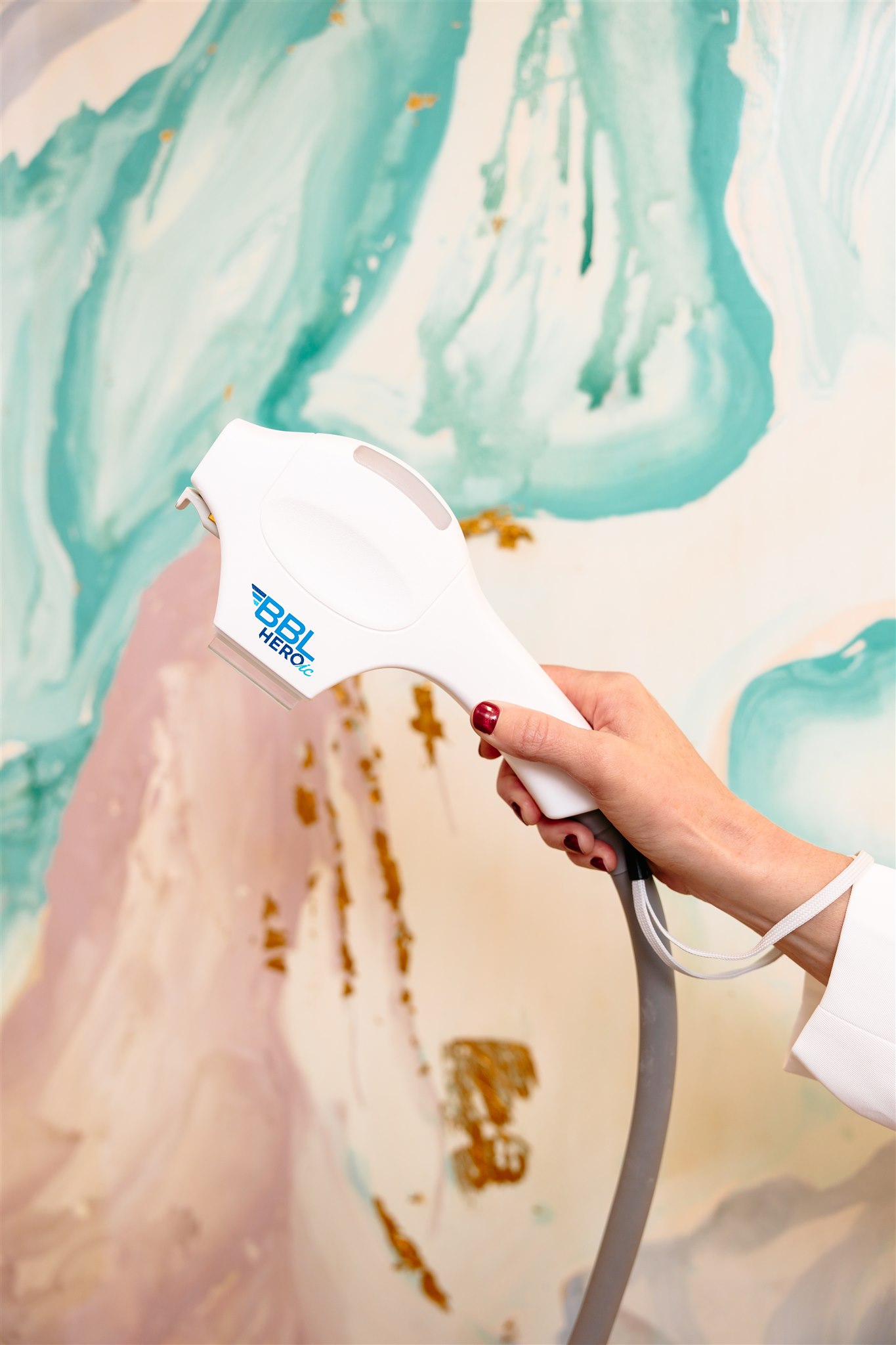
A pigment plan is not a prescription — it is a sequence. Each step informs the next, and the skin must be ready before active treatment begins.
Section 05
Amy Robbins on pigment —
why restraint is a strategy, not a limitation.
Melasma is one of those areas where patience and planning matter more than power. When a patient comes in with melasma or stubborn pigment, the temptation — for both patient and provider — is to do something aggressive. To use the strongest laser, the deepest peel, the most intense treatment. That temptation is exactly what leads to worsening pigment in so many cases.
Not every pigment issue should be treated the same way. A sun spot is not melasma. Post-inflammatory pigment is not sun damage. And the treatment that works beautifully for one can be destructive for another. The most important thing I do in a pigment consultation is slow the conversation down — away from "what laser" and toward "what is this, and what can your skin handle?"
Sometimes restraint is what protects the skin best. There are patients for whom the most appropriate plan begins with skin-supportive care, sun protection, and patience — not with a laser. That can feel frustrating when you want a fast result. But the patients who follow a thoughtful, restraint-first approach tend to have the best long-term outcomes — and the fewest cases of pigment that has been worsened by prior aggressive treatment elsewhere.
Advanced technology matters most when it is used selectively and strategically. A picosecond platform, a fractional laser, a targeted light therapy — these are powerful tools. But their value is realized only when they are matched to the right patient, the right pigment type, and the right moment in the treatment sequence. Technology without judgment produces unpredictable results. Judgment with the right technology produces excellent ones.
“When I am treating melasma or stubborn pigment, the goal is not just to do something powerful. It is to do something appropriate. The smartest plan is the one that respects the skin, the diagnosis, and the long-term outcome.”
Amy Robbins
MSNA · APRN · CRNA · FNP-BC · Founder, Youthful Magnolia
Section 06
When advanced pigment-focused technologies
may enter the conversation.
For some patients, the conversation about pigment treatment eventually includes the question of advanced technology — picosecond lasers, fractional platforms, and pigment-targeting devices that work through different mechanisms than older Q-switched platforms. These tools represent a meaningful evolution in how pigment can be approached, and for the right patients, they may play a role in a broader treatment plan.
Not every patient is an immediate candidate for device-based pigment treatment. For some, the right first step is skin-supportive care and sun protection. For others, gentle treatments prepare the skin for more targeted technology later. The decision about when — or whether — to introduce advanced pigment-focused technology depends on the diagnosis, skin type, pigment depth, treatment history, and how the skin has responded to prior care.
Newer pigment-specific platforms, including picosecond technology, may broaden options for difficult or treatment-resistant discoloration cases. Platforms like Picofy by InMode deliver energy in ultra-short pulses that fragment pigment through a photoacoustic effect rather than relying primarily on heat — which may matter for skin that is sensitive to thermal energy. For select patients, consultation helps determine whether advanced pigment-targeting technology is appropriate for their specific concern.
What matters most is not the device name. It is the thinking behind when, whether, and how it is used. Advanced technology used at the wrong time, on the wrong skin, or with the wrong parameters can worsen pigment. The same technology used with expertise, at the right moment, in the right patient, can produce meaningful improvement. This is why the consultation — not the device — is where the real treatment plan begins.
Technology, in context
Advanced pigment-focused technology is not a starting point — it is a consideration that enters the conversation at the right moment, for the right patient, after the skin has been assessed and the pigment has been understood. At Youthful Magnolia, we are building toward a pigment strategy that includes the most advanced tools available — used with the restraint, customization, and clinical intelligence that pigment demands. Learn more about Picofy by InMode →
Section 07
What a pigment consultation
at Youthful Magnolia may include.
A pigment consultation is never a sales conversation. It is a diagnostic assessment — a thoughtful, individualized evaluation of your skin, your pigment, and your goals, with honest guidance about what is achievable.
Comprehensive skin evaluation
We examine your skin in person — evaluating tone, texture, the specific character of your pigment, and your overall skin health. This is not done from a photograph. Direct visual assessment is the foundation of any responsible pigment plan.
Pigment classification
We determine whether your concern is melasma, sun-related discoloration, post-inflammatory pigment, benign pigmented lesions, or another category entirely. This classification drives every subsequent decision in the plan.
Fitzpatrick skin type assessment
Your skin tone is formally classified — not estimated — before any treatment is discussed. This is non-negotiable for safe pigment treatment, particularly for patients with higher Fitzpatrick types who face increased risk of post-inflammatory hyperpigmentation.
History and trigger discussion
We discuss when the pigment started, what makes it better or worse, hormonal factors, sun exposure patterns, and any prior treatments you have had. Triggers matter — understanding them is part of building a plan that prevents recurrence.
Goals and realistic expectations
We discuss what you are trying to achieve and whether those goals are realistic for your specific pigment concern. If significant improvement is achievable but complete elimination is not, we tell you. If maintenance is the primary strategy, we frame the plan around that.
Treatment plan discussion
We discuss whether your plan may include skin-supportive treatments, gentle laser conversations, advanced pigment-targeting technology, or a combination — sequenced in the right order for your skin. We explain why each element is being considered and what to expect.
Long-term maintenance strategy
Pigment management is ongoing for most patients. We discuss maintenance treatment, sun protection, and monitoring — because the plan that produces improvement is not the same as the plan that prevents recurrence.
Section 08
Why Fort Worth patients
choose Youthful Magnolia.
Fort Worth patients choose Youthful Magnolia because we approach pigment differently. We are not a volume practice. We are not device-driven. We are a founder-led clinic where every treatment plan begins with understanding the person in front of us — their skin, their concerns, their goals, and their life.
Amy Robbins built Youthful Magnolia on a simple principle: that advanced technology is only as good as the thinking behind it. In pigment treatment — where the wrong approach can worsen the very concern you are trying to address — that principle matters more than anywhere else. When we recommend a treatment, it is because we have assessed your skin, understood your pigment, considered the alternatives, and determined that this is genuinely the right approach for you.
Our patients value the experience as much as the outcomes: a calm, unhurried environment where questions are welcomed, expectations are set honestly, and the focus is always on long-term skin health. We do not chase trends. We do not overpromise. We build plans that are designed to produce real, sustainable improvement — and to protect your skin for the years ahead.
If you are in Fort Worth and dealing with melasma, stubborn pigment, or uneven skin tone — and you want a provider who will think carefully about your skin rather than applying a generic protocol — we welcome you to begin with a consultation.
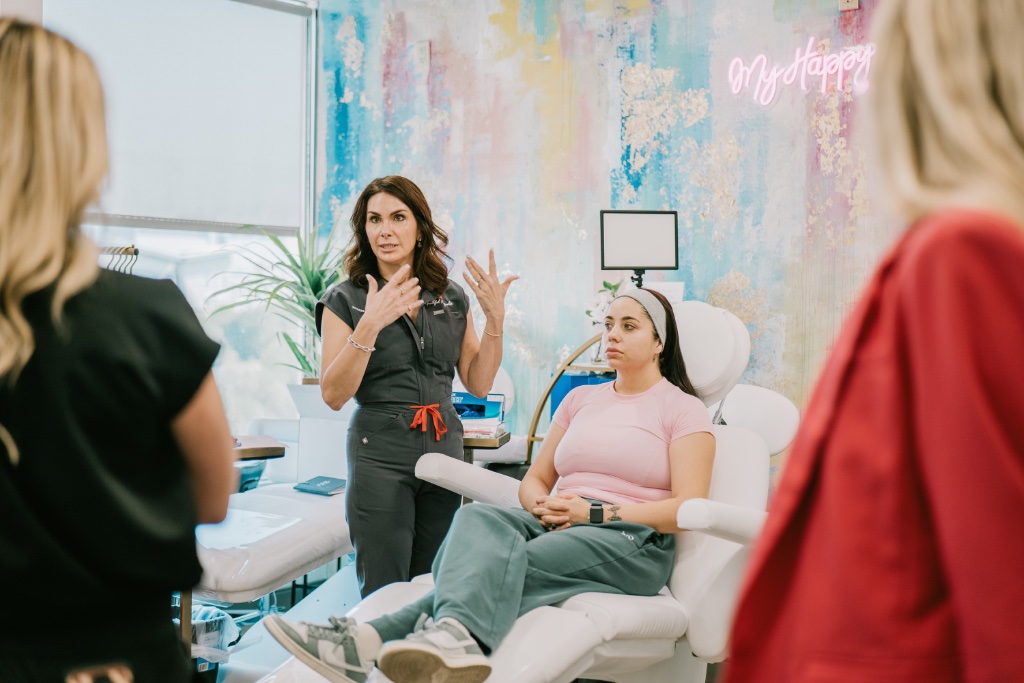
The patients with the best pigment outcomes are the ones whose plan began with the right questions — not the strongest device.
Common Questions
Melasma & pigment questions —
answered honestly.
What is melasma?
Why is melasma hard to treat?
Is melasma the same as sun spots?
What is the best treatment for melasma in Fort Worth?
Can lasers make melasma worse?
What is stubborn pigment?
How do I know if my pigment is melasma?
Are advanced pigment lasers ever used for melasma?
What should a pigment consultation include?
Where can I get melasma treatment in Fort Worth?
Can melasma be cured?
Does melasma go away on its own?
Related Services
Picofy by InMode
An advanced picosecond laser platform for pigment, tattoos, and skin renewal — one of the tools that may enter the conversation for select pigment cases.
Laser Treatments
Our full advanced laser platform — the foundation of light-based skin treatment at Youthful Magnolia.
MOXI Laser
Gentle, non-ablative fractional resurfacing for prevention, texture, and skin-quality maintenance.
BBL Laser
BroadBand Light therapy for pigment, redness, and overall skin tone improvement.
Facials & Skin
Comprehensive skin health treatments to support barrier function and skin quality.
BioRePeel
A medical-grade chemical peel that supports pigment management and skin renewal.
Customized Facial
Personalized skin treatment to support overall skin health and maintenance.
Book a Consultation
Begin the conversation. A pigment consultation is always the right first step.
Your Provider
Amy
Robbins
MSNA · APRN · CRNA · FNP-BC
Begin the ConversationThe smartest pigment plan is not the most aggressive one. It is the one that respects the diagnosis, the skin, and the long-term outcome — and that is the plan we build for every patient.
— Amy Robbins, Founder · Youthful Magnolia
Youthful Magnolia · Fort Worth, TX
Ready for a more thoughtful
pigment conversation?
If you are dealing with melasma, stubborn discoloration, or uneven tone, our team can help you understand what kind of pigment issue you may be dealing with and what a smarter treatment plan could look like.