Best Treatment for Benign Pigmented Lesions in Fort Worth: What to Know About Dark Spots, Precision, and Smarter Laser Planning
A modern Fort Worth guide to understanding isolated pigment, benign pigmented lesions, and why smarter, more selective treatment planning matters.
 By Amy Robbins, MSNA APRN CRNA FNP-BC 15 min read July 2026Laser & Light
Many patients use the phrase dark spots to describe several very different pigment concerns. But isolated benign pigmented lesions are not the same conversation as melasma, freckles, or broader discoloration — and the best treatment depends on which one you are actually seeing.
If you are searching for benign pigmented lesions treatment Fort Worth or dark spot treatment Fort Worth, you have probably encountered a sea of generic advice — much of it treating every dark spot as if it should be handled the same way. It should not. A single, well-defined isolated lesion is a very different conversation from a broad patch of melasma, a cluster of sun-related spots, or diffuse uneven tone. Each of these requires a different treatment mindset.
The most important insight is this: a precise plan usually creates a better result than a broad or overly aggressive one. Isolated pigment often deserves selective, targeted treatment — not a blanket approach that treats skin that does not need treating. Overtreatment is not just unnecessary; it can be the wrong move entirely, potentially creating new concerns while chasing an old one.
At Youthful Magnolia in Fort Worth, we approach isolated pigment with nuance, not one-size-fits-all laser marketing. This article is designed to help you understand what benign pigmented lesions actually are, how they differ from other pigment patterns, why selective treatment matters, and what a precise, thoughtful plan may look like for your specific skin.
Section 01
What benign pigmented lesions
actually are.
Benign pigmented lesions are localized areas of darker pigment that appear as distinct spots or clusters on the skin. The word benign means they are not cancerous or medically harmful — but they are still pigment concerns that patients may want addressed for aesthetic reasons. They are common, they are often age- or sun-related, and they are among the most frequently discussed concerns in aesthetic dermatology.
What makes benign pigmented lesions a distinct conversation is their localized, defined character. Unlike diffuse discoloration — which spreads broadly and unevenly across larger areas — isolated lesions have clear boundaries. You can point to them. They sit in one place. This localized quality is exactly what makes them potentially good candidates for selective, targeted treatment rather than broad, full-area approaches.
Common types include solar lentigines (sun spots that develop from cumulative UV exposure), seborrheic keratoses (benign growths that may appear raised and pigmented), and other well-defined areas of concentrated melanin. Each type has its own characteristics — depth, stability, color, and behavior — that influence what treatment, if any, makes sense. Understanding which type you are seeing is the first step in any honest conversation about pigment.
This is why the treatment conversation can be more selective and targeted than the conversation around broader discoloration. When the pigment is in one place, the plan can be in one place too — at least, that is the ideal. The reality is always more nuanced, which is why evaluation matters before any treatment begins.

Isolated pigment is a different conversation from diffuse discoloration — and understanding the difference is where good treatment begins.
Section 02
How isolated dark spots differ from
melasma, freckles, and broader discoloration.
This is the section that matters most for understanding why not every dark spot should be treated the same way. The word pigment gets used as if it describes one thing. It does not. It describes several different processes that happen to share a visible result: darker skin in a specific area.
Isolated benign lesions are well-defined, localized, and often stable. They sit where they sit, and they tend to stay where they are. This makes them candidates for selective treatment — targeting the spot while respecting the surrounding skin.
Freckles are generally smaller, shallower, and often lighter. They may darken with sun and lighten without it. They are part of a different biological conversation than deeper, more persistent pigmented lesions, and they may not require the same treatment intensity.
Sun-related spots develop from cumulative UV exposure and may appear in clusters across sun-exposed areas. They are often part of a broader pattern of sun damage — meaning the surrounding skin may also need attention, not just the individual spots.
Diffuse discoloration spreads broadly and unevenly across larger areas. It is less about individual spots and more about overall tone — a fundamentally different treatment mindset than isolated lesion correction. This pattern often benefits from broader skin-renewal approaches.
Melasma is its own distinct condition — hormonally or light-triggered, often deeper, and notably prone to recurrence. Melasma calls for restraint and long-term management, not aggressive correction. It is the opposite of a spot you can target and forget. For a deeper understanding of the melasma conversation, see our guide on melasma and stubborn pigment in Fort Worth, and for why pigment may return after treatment, see why pigment comes back.
Pigment patterns — not one conversation
Why the pattern changes the plan
Directional comparison only — every patient’s pigment is unique. Understanding the pattern is the first step in determining whether selective, broad, or maintenance treatment is most appropriate.
Pigment type
Pattern
Typical depth
Treatment mindset
Isolated benign lesions
Distinct, well-defined spots with clear boundaries
Variable — may be superficial or deeper
Selective targeting
Sun-related spots
Spots in sun-exposed areas, often part of a broader pattern
Typically epidermal
Selective + renewal support
Freckles
Smaller, lighter, often clustered in sun-exposed areas
Generally shallow
Lighter or maintenance
Diffuse discoloration
Broad, uneven tone spread across larger areas
Variable, often mixed
Broader skin renewal
Melasma
Patches often on cheeks, forehead, upper lip — reactive to light and hormones
Often deeper (dermal component)
Restraint-first management
Section 03
Why selective treatment
matters.
The instinct of many patients — and, frankly, many providers — is to reach for the most powerful treatment available. For isolated pigment, that instinct is often wrong. Localized pigment frequently benefits from a more precise treatment mindset, not a more aggressive one.
Selective treatment means targeting the specific lesion while minimizing impact on the surrounding skin. For a well-defined isolated spot, this is often the most appropriate approach — you address the concern directly without unnecessarily treating healthy, unaffected skin around it. The advantage is not just efficiency; it is respect for the skin that does not need treatment.
Broader treatment is not always necessary for isolated lesions. A full-area approach that treats the entire cheek or forehead for a single spot is not always the right move. It may be appropriate when the isolated lesion sits within a broader pattern of sun damage — but it is not automatically appropriate just because the technology is available.
Overtreatment can be the wrong move. Treating isolated pigment too aggressively — or treating too large an area — may affect surrounding skin in ways that create new concerns: post-inflammatory darkening, texture changes, or an uneven appearance where the treated area looks different from the rest. The goal is not just to do something powerful; it is to do something appropriate and specific.
This is why the conversation always starts with evaluation. Understanding whether the concern is truly isolated, part of a broader pattern, or somewhere in between determines whether selective, broad, or combined treatment is most appropriate. The plan follows the pigment — not the other way around.
Selective vs broad treatment
Two different mindsets for two different problems
The goal is not just to do something powerful — it is to do something appropriate. Matching the treatment mindset to the pigment pattern is what creates natural-looking results.
Selective — for isolated lesions
Target the specific spot while minimizing impact on surrounding skin. Best for well-defined, isolated lesions where the pigment is localized. The advantage is precision — addressing the concern without treating skin that does not need treatment.
Broad — for diffuse discoloration
Address overall skin tone and renewal across a wider area. Best for diffuse discoloration, melasma, or sun-damage patterns where the pigment is spread out. The advantage is comprehensive improvement, not spot-specific correction.
The most skilled plans often combine both mindsets — selectively targeting specific lesions while supporting broader skin renewal. The right blend depends entirely on what is in your skin.
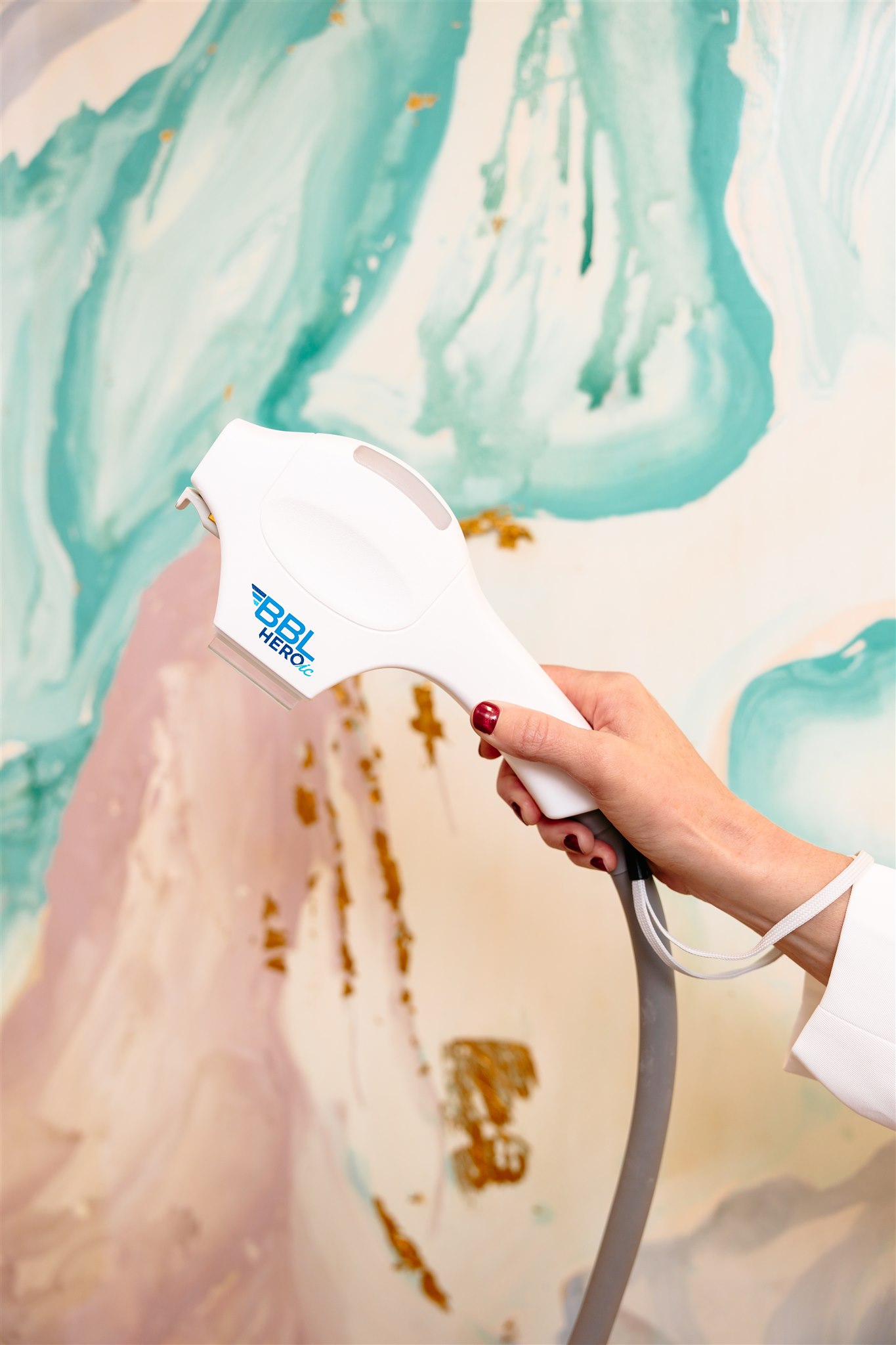
The smartest plan is not always the most aggressive one. Selective treatment respects the skin that does not need treatment.
Section 04
What treatment categories
may fit localized pigment concerns.
Four categories of approach — not a menu of devices, but a framework for thinking about what kind of treatment may make sense for your specific pigment.
Selective pigment-targeting
For well-defined isolated lesions, a more targeted approach may focus energy on the specific spot rather than treating the surrounding skin. This selective mindset can create cleaner results with less disruption to unaffected areas.
Skin-renewal support
When isolated pigment sits alongside broader skin concerns, treatments that support overall skin renewal — like gentle resurfacing or peels — may complement selective targeting. The goal is healthier skin overall, not just one lighter spot.
Lighter maintenance strategies
Some isolated lesions may benefit from maintenance-level treatment — lighter, regular sessions that keep pigment in check without aggressive correction. Maintenance is often the smarter long-term play for stable, non-progressive pigment.
Precision advanced pigment technology
For select patients with difficult isolated lesions or pigment that has not responded to initial approaches, advanced pigment-targeting platforms — including picosecond technology — may broaden treatment options. Not every lesion requires this level of technology.
No single device is the answer
These categories are not a product list — they are a way of thinking. The right category depends on what kind of pigment is present, where it sits, what the surrounding skin looks like, and what the patient wants to achieve. Treatments like BBL and MOXI may fit into several of these categories depending on how they are used. The plan follows the pigment — not the device catalog.
Section 05
Amy Robbins on isolated pigment —
what she wants patients to understand first.
Not every dark spot should trigger the same treatment plan. This sounds obvious, but in practice, many patients arrive having been told that their spot — whatever it is — should be lasered. That is not a plan; that is a reflex.
Isolated pigment often deserves a more precise and selective conversation than it receives. A single, well-defined lesion may be a completely different discussion than a patch of melasma or a field of sun damage — and treating them all with the same broad approach is not precision. It is convenience. Better results come from clarity and specificity, not from reaching for the most aggressive tool available.
The smartest plan depends on what kind of pigment is actually present. Is it an isolated lesion that can be selectively targeted? Is it part of a broader sun-damage pattern that also needs renewal support? Is it melasma that requires restraint rather than correction? Is it a stable spot that may benefit from maintenance rather than aggressive treatment? Each answer leads to a different plan.
What I want patients to take away is that precision is not about having the most advanced device — it is about having the most appropriate approach. Sometimes the most precise thing you can do is less, not more. The goal is the cleanest, most natural-looking result — and that almost always comes from matching the treatment to the pigment, not from overpowering it.
“When I’m treating isolated pigment, the question is not just how to lighten it. The question is what kind of lesion it is, how selective the treatment should be, and what approach will create the cleanest, most natural-looking result.”
Amy Robbins
MSNA · APRN · CRNA · FNP-BC · Founder, Youthful Magnolia
Section 06
When advanced pigment-focused technologies
may enter the conversation.
For many isolated lesions, conventional pigment-targeting approaches may be entirely appropriate. Not every dark spot requires advanced technology. But for select patients, advanced pigment-focused technologies may become part of the discussion — particularly when lesions are deep, stubborn, or have not responded to initial treatment.
Newer pigment-specific platforms may broaden options for isolated lesions or difficult pigment concerns. Picosecond-style technology, for example, uses a photoacoustic effect to fragment pigment with potentially less heat transferred to surrounding skin — a quality that may be relevant when treating lesions selectively, where preserving the surrounding skin is part of the goal.
However, advanced technology is not a requirement for good outcomes. Many isolated lesions respond well to established approaches. The question is not whether advanced technology is available, but whether it is appropriate for your specific pigment and skin. Not every patient needs it — and using it when it is not needed does not create a better result; it creates a more expensive one.
Consultation helps determine whether more advanced pigment-targeting technology is appropriate. Platforms like Picofy by InMode represent the kind of advanced picosecond technology that may enter the conversation for select cases — but the decision begins with understanding what kind of pigment is in front of us. For a comparison of pigment treatment approaches, see our guide on picosecond laser vs chemical peel for pigment, and for the full context of our capabilities, explore our Laser Treatments platform.
Technology, in context
Advanced pigment-targeting platforms are precision tools, not default answers. Their value is realized when matched to the right lesion by a provider who understands pigment biology, skin safety, and selective treatment principles. Learn more about Picofy by InMode →
Section 07
What a consultation at
Youthful Magnolia may include.
A pigment consultation is not a sales pitch for a device. It is a diagnostic conversation. Here is what it should cover.
Skin and pigment evaluation
Direct, in-person assessment of the pigment concern to determine what type of lesion may be present, its apparent depth, and its character. This is the foundation — everything else follows from what the pigment actually is.
Pattern assessment — isolated, diffuse, or mixed
Discussion of whether the concern appears truly isolated, part of a broader pattern of sun damage, or somewhere in between. This determines whether selective, broad, or combined treatment is most appropriate.
Review of your goals
What do you want the result to look like? Full correction of the spot? Improvement alongside broader skin renewal? Maintenance of stable pigment? Each goal leads to a different plan.
Whether selective treatment, renewal support, or advanced technology is appropriate
Based on the evaluation, the consultation should address which treatment category makes sense — selective pigment targeting, broader skin-renewal support (such as customized facials or BioRePeel), or advanced pigment-targeting technology for difficult cases.
Realistic expectations
Honest discussion of what treatment may achieve, how the pigment may respond, whether maintenance will be needed, and how the skin may look during the process. Any provider who guarantees a specific outcome warrants caution.
Long-term skin planning
Pigment is not a one-time event — it is an ongoing conversation between your skin, sun exposure, biology, and time. A responsible plan includes long-term thinking about maintenance, prevention, and skin health, not just a single treatment session.
Section 08
Why Fort Worth patients
choose Youthful Magnolia.
Fort Worth patients choose Youthful Magnolia because we approach pigment differently. We do not treat every dark spot as the same problem. We do not default to the most aggressive device. We start with understanding what kind of pigment is in front of us — and we build a plan that matches it.
Amy Robbins built Youthful Magnolia on a simple principle: that advanced technology is only as good as the thinking behind it. In pigment treatment — where the wrong approach can darken skin, create uneven results, or trigger recurrence — that principle matters profoundly. Selective treatment is not just a technique; it is a philosophy of respect for the skin.
Our patients value the experience as much as the outcomes: a calm, unhurried environment where questions are welcomed, expectations are set honestly, and the focus is always on precise, natural-looking results. We do not chase trends. We do not overpromise. We build plans that are designed to produce real, sustainable improvement — and we approach isolated pigment with the same restraint, precision, and customization that guides everything we do.
If you are in Fort Worth and trying to understand whether an isolated dark spot may need selective treatment — or what kind of pigment issue you may be seeing — we welcome you to begin with a consultation at Youthful Magnolia.
Realistic framing for isolated pigment treatment
Single, well-defined isolated lesion
Often more selective
A distinct, stable spot with clear boundaries may respond well to targeted treatment with minimal disruption to surrounding skin.
Multiple isolated lesions in sun-exposed areas
Moderate planning
Several spots across a region may benefit from a blend of selective targeting and broader skin-renewal support to address both the spots and the underlying pattern.
Isolated pigment with surrounding texture concerns
Layered approach
When dark spots sit alongside roughness, dullness, or fine lines, a plan that addresses both the pigment and skin quality often creates the most natural-looking result.
Lesions near reactive or sensitive skin
Conservative planning
Pigment in areas prone to post-inflammatory darkening requires more conservative parameters and more thoughtful sequencing than pigment on resilient skin.
These frameworks are directional only — individual results vary. No plan without direct, in-person evaluation is reliable.
Common Questions
Benign pigmented lesion questions —
answered honestly.
What are benign pigmented lesions?
Are benign pigmented lesions the same as freckles?
Are isolated dark spots the same as melasma?
What is the best treatment for benign pigmented lesions?
Can isolated dark spots be treated selectively?
Is laser always the best treatment for localized pigment?
When do advanced pigment lasers enter the conversation?
What should a pigment consultation include?
Can isolated pigment be treated without affecting the rest of the skin?
Where can I treat benign pigmented lesions in Fort Worth?
Related Services
Picofy by InMode
An advanced picosecond laser platform for pigment and isolated lesions — one of the technologies that may enter the conversation for select cases.
Laser Treatments
Our full advanced laser platform — the foundation of light-based pigment and skin treatment at Youthful Magnolia.
MOXI
A gentle fractional laser that supports overall skin renewal and tone — valuable when isolated pigment sits alongside broader texture concerns.
BBL
BroadBand light therapy for pigment, redness, and sun-related concerns — often part of the conversation for sun-damage patterns.
Facials & Skin
Comprehensive skin health treatments to support skin quality alongside any selective pigment treatment.
BioRePeel
A skin-renewal chemical treatment that may complement selective pigment targeting for overall tone improvement.
Customized Facial
A personalized facial that supports skin health and may be part of a broader plan around isolated pigment.
Book a Consultation
Begin the conversation. A pigment consultation is always the right first step toward a precise plan.
Your Provider
Amy
Robbins
MSNA · APRN · CRNA · FNP-BC
Begin the ConversationPrecision in pigment treatment is not about having the most powerful device — it is about having the most appropriate approach. Sometimes the most precise thing you can do is less, not more.
— Amy Robbins, Founder · Youthful Magnolia
Youthful Magnolia · Fort Worth, TX
Ready for a more precise
pigment conversation?
If you’re trying to understand whether an isolated dark spot may need selective treatment, our team can help you decide what kind of pigment issue you may be seeing and what the smartest treatment plan may look like.