Loose Skin After Weight Loss: What Are Your Options?
Weight loss can change how skin looks and feels, especially after significant changes in body size. Understanding why loose skin develops, what may improve over time, and how treatment options differ can help you set realistic expectations.
Can loose skin tighten after weight loss? Some skin laxity may improve over time after weight loss, but the amount of improvement varies. Factors such as age, genetics, the amount and duration of weight change, skin characteristics, and individual health can all influence how the skin responds. Exercise and skincare may support overall health and appearance, but they do not reliably eliminate substantial excess skin. Selected nonsurgical treatments may improve mild to moderate skin laxity in appropriately selected patients, while more significant excess skin may require surgical evaluation if removal is desired.
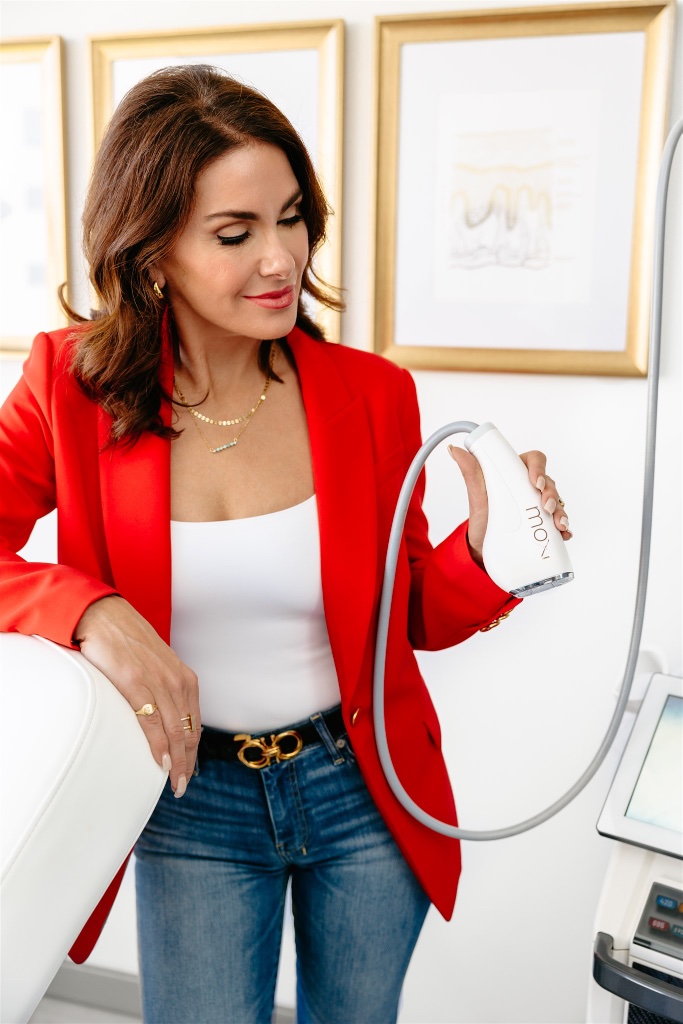
Written by
Amy Robbins, MSNA, APRN, CRNA, FNP-BC

A Quick Summary
Why it happens: Skin and underlying tissues adapt to changes in body size.
Can it improve naturally? Sometimes, but results vary.
Does exercise remove excess skin? Exercise improves muscle conditioning but does not directly remove excess skin.
Can nonsurgical treatments help? Some may improve selected skin laxity concerns.
Can surgery remove excess skin? Selected surgical procedures can remove excess tissue when medically appropriate.
Is treatment required? No. Cosmetic treatment is a personal choice.
Important reminder: Not everyone develops loose skin after weight loss, and loose skin is not a medical problem that must be treated.
Why Does Loose Skin Develop After Weight Loss?
Skin and underlying tissues adapt to changes in body size. When the body changes significantly, the skin may not fully retract to its previous contour. This is not because the skin simply "forgets how to shrink" — it involves changes in skin elasticity, connective tissue, subcutaneous fat, and individual tissue characteristics.
The degree of adaptation varies. Some people experience minimal laxity after weight loss; others notice more. Individual variation is significant, and no single factor determines the outcome.
What Happens to Your Skin When You Lose Weight?
Your skin sits over subcutaneous fat and connective tissues. When you lose weight, the volume beneath the skin decreases. The skin, which has stretched to accommodate a larger body size, may or may not retract fully. The relationship between skin, subcutaneous fat, and connective tissues determines how body contour changes.
Changes in body contour after weight loss are normal and expected. How the skin responds depends on its elasticity, how long it was stretched, and individual factors.
Does the Amount of Weight Lost Matter?
The degree of weight change may influence the appearance of excess skin. Larger weight changes may stretch the skin more, which can affect how much it retracts afterward. However, there is no specific weight-loss threshold that guarantees laxity. Two people who lose the same amount of weight may have very different skin responses.
Does the Speed of Weight Loss Matter?
Rapid weight loss may change body appearance over a relatively short period, giving the skin less time to adapt gradually. However, the rate of weight loss is only one factor. Total weight lost, previous skin stretching, and individual skin characteristics also matter.
Slow weight loss does not guarantee prevention of loose skin. The relationship between rate and skin response is not simple, and individual variation is significant.
Does Age Affect Skin Tightening After Weight Loss?
Skin characteristics change with age. Elasticity and connective tissue may change over time, which can influence how skin responds after weight loss. Environmental factors, including sun exposure, also contribute.
However, not everyone over a certain age develops loose skin. Individual variation is significant, and age alone does not determine the outcome.
Does Genetics Affect Loose Skin?
Inherited characteristics may influence skin structure and elasticity. Some people naturally have more elastic skin; others have skin that is less likely to fully retract after significant changes. Genetics is one factor among several and does not fully predict whether someone will develop loose skin.
Does Sun Damage Affect Skin Elasticity?
Photoaging — cumulative sun exposure over time — can affect skin structure, including collagen and elastin. This may influence skin elasticity and how skin responds after weight loss.
Sun protection supports overall skin health. However, sun protection does not reverse substantial excess skin that has already developed.
Does Collagen Loss Contribute to Loose Skin?
Collagen plays an important structural role in skin, providing firmness and support. Changes in collagen may contribute to reduced skin elasticity, which can influence how skin responds after weight loss. However, collagen is not the only factor — skin elasticity, connective tissue, subcutaneous fat, and individual tissue characteristics all contribute.
For a deeper discussion of collagen's role in skin, see Can You Rebuild Collagen in Your Face? What the Science Says.
Where Does Loose Skin Commonly Appear After Weight Loss?
Loose skin after weight loss may appear in several areas, including the abdomen, upper arms, thighs, neck, and face. Distribution varies between individuals based on where fat was stored, skin elasticity, and anatomy.
Not every area will be affected, and the degree of laxity varies by location. Understanding where your concerns are most noticeable can help guide a productive consultation.
Loose Skin on the Stomach After Weight Loss
Abdominal appearance after weight loss may involve skin laxity, excess skin, remaining subcutaneous fat, and changes in abdominal tissues. Not all abdominal fullness is loose skin — remaining fat and tissue changes can also contribute to how the abdomen looks. Distinguishing these concerns matters for treatment planning.
Loose Skin on the Arms After Weight Loss
Upper-arm skin changes may occur after weight loss. Muscle conditioning through exercise can improve the appearance of underlying support, but it does not remove excess skin. These are different goals — strengthening the muscle beneath and removing the skin on top are not the same.
Loose Skin on the Thighs After Weight Loss
Thigh skin changes are common after significant weight loss. As with other areas, the degree of laxity varies. We do not promise a specific treatment result for thigh laxity — appropriate evaluation and realistic expectations are important.
Loose Skin on the Neck After Weight Loss
Neck skin laxity after weight loss may involve tissue changes and individual anatomy. The neck is an area where skin laxity and volume changes can overlap.
For a detailed discussion, see our article on non-surgical neck tightening options.
Facial Sagging After Weight Loss
Changes in facial appearance after weight loss may involve reduced facial fat, skin laxity, changes in contour, existing facial aging, and individual anatomy. Not all facial changes after weight loss are loose skin — reduced facial fullness is a distinct concern that can coexist with skin laxity.
For a detailed comparison, see Skin Laxity vs Volume Loss: How to Tell the Difference and Why Is My Jawline Losing Definition?.
Can GLP-1 Weight Loss Lead to Loose Skin?
Special Medical Review Required
This section discusses GLP-1 medications and requires qualified medical review before publication.
People who experience substantial weight loss while using GLP-1-based medications may notice changes in skin and body contour. These changes are generally related to the amount and speed of weight loss, not to the medication directly damaging skin or collagen.
It is important to distinguish weight-loss-related changes, age-related changes, and other contributing factors. We do not claim that GLP-1 medications directly cause loose skin independent of weight loss without supporting evidence. For a broader discussion, see when weight loss changes the face.
What Is "Ozempic Face"?
"Ozempic face" is an informal, non-medical term that has appeared in popular media to describe changes in facial fullness that may occur with significant weight loss. It is not a clinical diagnosis.
Changes in facial fullness can occur with any significant weight loss, not only with GLP-1 use. Not everyone using GLP-1 medications experiences these changes. We avoid stigmatizing or fear-based language and do not imply that all people using GLP-1 medications experience facial aging.
Does Facial Volume Loss Look Like Loose Skin?
Reduced facial fullness and skin laxity can coexist after weight loss, but they are different concerns. Volume loss involves changes in the underlying fat and tissue support. Skin laxity involves changes in the skin envelope itself. Treatment selection differs because these concerns are addressed differently.
For a full discussion, see Skin Laxity vs Volume Loss: How to Tell the Difference.
Should You Stop Weight-Loss Medication Because of Loose Skin?
No. We do not recommend stopping prescribed medication because of cosmetic concerns. Medication decisions should be discussed with the prescribing clinician, who can weigh the benefits and risks in the context of your individual health. Cosmetic concerns do not replace individualized medical decision-making.
Does Loose Skin Tighten Naturally After Weight Loss?
Some improvement may occur over time after weight loss, but outcomes vary. We do not promise complete tightening. The degree of natural improvement depends on age, genetics, the amount of weight change, skin characteristics, and individual factors.
How Long Does Skin Take to Adjust After Weight Loss?
Skin changes may continue over months after weight stabilizes. There is no universal timeline. Some people notice gradual improvement; others see minimal change.
Waiting for weight stabilization may be relevant to treatment planning, particularly before surgery, because ongoing weight changes can affect results.
Can Exercise Tighten Loose Skin?
Exercise can improve muscle development and body composition, which may change how the body looks. Building muscle in an area may improve the appearance of underlying contour.
However, exercise does not remove excess skin. Muscle development and skin removal are different goals. Exercise supports overall health and body confidence, but it is not a treatment for substantial excess skin.
Can Protein Help Skin Recover After Weight Loss?
Adequate nutrition supports normal tissue health, including skin. Protein is important for overall health. However, we do not claim that high-protein diets reverse loose skin, and we do not prescribe specific diets. General nutrition supports health but does not eliminate substantial excess skin.
Do Collagen Supplements Tighten Loose Skin?
Research on collagen supplements is limited and mixed. Study limitations, product variability, and uncertain relevance to substantial excess skin make it difficult to draw firm conclusions.
We do not claim that collagen supplements remove loose skin. The evidence does not support that guarantee.
Can Skincare Products Tighten Loose Skin?
Skincare products may support hydration, skin appearance, and selected superficial concerns. However, creams do not remove significant excess tissue. Skincare is one component of overall skin health, not a lifting treatment. Massage and dry brushing also do not permanently eliminate excess skin.
Can Loose Skin Be Tightened Without Surgery?
Selected nonsurgical treatments may improve some aspects of skin laxity in appropriately selected patients. However, they generally cannot remove substantial excess skin. Nonsurgical and surgical options address different degrees and types of concerns.
General categories of nonsurgical treatments include radiofrequency treatments, selected ultrasound-based treatments, and selected laser technologies. Indications and effectiveness vary, and not all devices work the same way.
How Does Radiofrequency Skin Tightening Work?
Radiofrequency (RF) skin tightening generally works by delivering controlled energy to tissue, which may stimulate collagen-related remodeling and support skin firmness. Clinical improvement varies between individuals and devices.
Not all RF devices produce equivalent results. Mechanisms, indications, and outcomes differ. RF treatments do not remove substantial excess skin.
Can XERF Help With Loose Skin After Weight Loss?
XERF is an energy-based treatment offered at Youthful Magnolia that may support collagen production and skin quality in appropriately selected patients. The general mechanism involves controlled energy delivery to support skin remodeling.
XERF does not remove excess skin, replace body contouring surgery, or treat every body area. Appropriate treatment goals, individualized candidacy, and safety considerations are discussed at consultation. We do not claim XERF is appropriate for every body area, and we do not invent treatment depths, settings, or timelines.
Explore the XERF service page to learn more.
Can Facial Balancing Help After Weight Loss?
Facial volume changes after weight loss may affect contour independently of skin laxity. Facial balancing may address selected volume-related concerns in appropriate patients by considering overall facial proportions and individual anatomy.
However, filler does not remove excess skin. Volume restoration and skin tightening are different goals. Explore facial balancing to learn more.
Can Sculptra Help With Facial Changes After Weight Loss?
Sculptra is an injectable biostimulatory treatment that works gradually to support collagen production and restore facial volume in appropriately selected patients. Current official prescribing information and clinical evidence support its role in facial volume restoration.
Sculptra does not tighten significant excess skin, and not every post-weight-loss patient is a candidate. Explore the Sculptra service page to learn more.
When Is Surgery More Effective for Excess Skin?
Substantial excess skin may not respond adequately to nonsurgical treatments. Surgical removal may be considered when desired and medically appropriate. Procedures such as abdominoplasty, panniculectomy, arm lift, and thigh lift remove excess tissue.
Youthful Magnolia does not offer these surgical procedures. Procedures, indications, and risks differ, and evaluation by an appropriately qualified surgeon is important. Excess skin can sometimes contribute to functional concerns, including irritation or hygiene difficulties, though medical necessity and insurance coverage vary.
We do not present nonsurgical treatments as substitutes for medically indicated surgical care. When surgical evaluation may be more appropriate, we discuss that honestly.
Loose Skin After Weight Loss: Comparing Your Options
The table below summarizes general approaches to loose skin after weight loss. It is educational only and does not recommend a specific treatment for any individual. Not all treatments listed are available at Youthful Magnolia.
| Approach | Primary Goal | What It May Help | What It Cannot Reliably Do | Important Considerations |
|---|---|---|---|---|
| Time and natural adjustment | Allow skin to adapt after weight changes | Mild laxity in some individuals | Cannot reliably eliminate substantial excess skin | Outcomes vary; patience alone does not guarantee tightening |
| Exercise and muscle conditioning | Improve muscle tone and body composition | Underlying contour, overall health, body confidence | Does not remove excess skin | Muscle development and skin removal are different goals |
| Skincare | Support hydration and skin appearance | Surface texture, moisture, general skin health | Cannot remove significant excess tissue | Useful as support, not as a lifting treatment |
| Radiofrequency treatments | Support collagen remodeling and skin firmness | Selected mild to moderate laxity in appropriate patients | Cannot remove substantial excess skin or replace surgery | Candidacy, treatment area, and realistic expectations matter |
| Selected laser treatments | Address particular skin quality concerns | Surface texture, tone, selected skin quality | Does not significantly tighten substantial excess skin | Device selection and verified indications vary |
| Facial volume restoration | Address reduced facial fullness after weight loss | Facial contour and balance in appropriate patients | Does not tighten or remove excess skin | Volume loss and skin laxity are different concerns |
| Surgical excess skin removal | Remove substantial excess tissue | Significant excess skin when medically appropriate | Not a nonsurgical option; carries surgical risks | Performed by qualified surgeons; not offered at Youthful Magnolia |
This table is for educational purposes only and does not replace a professional assessment. Not all treatments listed are offered at Youthful Magnolia.
How Much Loose Skin Can Nonsurgical Treatments Improve?
Results depend on the degree of laxity, treatment technology, treatment area, individual skin characteristics, treatment plan, and patient expectations. We do not promise dramatic lifting. Nonsurgical treatments may produce noticeable improvement for selected patients, but they do not produce the same degree of correction as surgery.
Treatment plans and durability vary. We only provide specific counts or timelines when supported by verified sources and medical approval. No nonsurgical treatment produces permanent results.
Should You Wait Until Your Weight Is Stable?
Weight stability may be relevant to treatment planning, particularly before surgery, because ongoing weight changes can affect results. For nonsurgical treatments, timing depends on the treatment, individual goals, and medical circumstances.
There is no universal waiting period. A consultation can help determine appropriate timing for your specific situation. We do not provide a universal yes-or-no recommendation about treating loose skin while still losing weight.
Common Myths About Loose Skin After Weight Loss
MYTH: Loose skin always disappears if you wait long enough.
FACT: Improvement varies, and significant excess skin may persist without intervention.
MYTH: Exercise removes excess skin.
FACT: Exercise affects muscle and body composition, not surgical skin removal.
MYTH: Collagen supplements eliminate loose skin.
FACT: Current evidence does not support that collagen supplements remove substantial excess skin.
MYTH: All skin-tightening devices produce the same results.
FACT: Mechanisms, indications, and outcomes differ between devices and treatment areas.
MYTH: Nonsurgical treatments replace excess skin surgery.
FACT: They address different degrees and types of concerns. Nonsurgical options cannot remove substantial excess skin.
MYTH: Everyone who loses weight develops loose skin.
FACT: Individual experiences vary based on age, genetics, amount of weight change, and skin characteristics.
MYTH: Loose skin means weight loss was unsuccessful.
FACT: Skin changes do not determine the value of someone's health progress.
Amy's Perspective on Skin Changes After Weight Loss
Author & Medical Reviewer
Amy Robbins, MSNA, APRN, CRNA, FNP-BC
[AMY REVIEW REQUIRED]
Suggested draft for Amy to review: "After weight loss, people may notice changes in their skin or facial contours that they didn't expect. The first step is understanding whether the concern involves skin laxity, changes in facial volume, or significant excess skin. Those concerns aren't all treated the same way, and setting realistic expectations is an important part of choosing the right approach."
This commentary will be published only after Amy explicitly reviews and approves it.
Post-Weight-Loss Skin Consultations at Youthful Magnolia in Fort Worth
At Youthful Magnolia in Fort Worth, our approach to post-weight-loss skin changes begins with individualized assessment. We focus on understanding patient goals, reviewing weight-related changes, distinguishing skin laxity from volume loss, discussing appropriate available nonsurgical services, explaining treatment limitations, and referring for surgical or medical evaluation when appropriate.
We do not offer excess skin surgery, and we do not imply all body areas can be treated with any single device. Explore our medical weight management, XERF, and facial balancing services, or book a consultation to learn more.
Noticing Skin Changes After Weight Loss?
Weight loss can change skin firmness, facial fullness, and body contours in different ways. At Youthful Magnolia in Fort Worth, a personalized consultation can help you discuss your concerns and explore appropriate available nonsurgical options.
Frequently Asked Questions
References & Further Reading
Skin Elasticity and Post-Weight-Loss Tissue Changes
Peer-reviewed dermatology and plastic surgery literature · Clinical Literature
https://www.aad.org ↗Age-Related Changes in Skin Collagen and Elastin
Peer-reviewed dermatology literature · Clinical Literature
https://www.aad.org ↗Body Contouring After Massive Weight Loss
American Society of Plastic Surgeons · Professional Organization
https://www.plasticsurgery.org ↗Radiofrequency Skin Tightening: Evidence and Limitations
Peer-reviewed aesthetic medicine literature · Clinical Literature
https://www.aad.org ↗Collagen Supplementation: A Review of the Literature
Peer-reviewed nutrition and dermatology research · Clinical Literature
https://www.ncbi.nlm.nih.gov ↗GLP-1 Receptor Agonists: Prescribing Information
FDA-approved product labeling · Regulatory Documentation
https://www.fda.gov ↗Sculptra: Prescribing Information
FDA-approved product labeling · Regulatory Documentation
https://www.fda.gov ↗Facial Changes After Weight Loss and GLP-1 Use
Peer-reviewed medical literature · Clinical Literature
https://www.aad.org ↗Exercise and Body Composition After Weight Loss
Peer-reviewed obesity medicine research · Clinical Literature
https://www.ncbi.nlm.nih.gov ↗Author & Medical Reviewer
Amy Robbins, MSNA, APRN, CRNA, FNP-BC
Board-certified Family Nurse Practitioner and founder of Youthful Magnolia in Fort Worth, Texas.
Related Treatments
Continue Learning
Get Started
Understanding the cause is the first step.
Book a consultation at Youthful Magnolia in Fort Worth. We'll discuss your concerns, review your skin and facial anatomy, and help you understand which available services, if any, may be appropriate for you.
Request a Consultation