
Can You Treat Red and Brown Acne Marks at the Same Time in Fort Worth? What to Know About Post-Acne Skin Recovery
A modern Fort Worth guide to understanding red acne marks, brown acne marks, and why smarter post-acne treatment planning matters.
 Amy Robbins, MSNA APRN CRNA FNP-BC 14 min read July 2026Post-Acne Recovery
Not every lingering mark after a breakout is the same thing — and the patients who recover most gracefully are the ones who understand what their skin is actually showing them.
If you are dealing with lingering marks after acne in Fort Worth, you have probably noticed that some of them look red or pink, some look brown or tan, and some seem to involve a change in skin texture. You may have assumed they are all the same thing — just "acne marks" — and that they will all eventually fade with time or the right product. But redness, pigment, and scarring are fundamentally different conversations, and the smartest treatment approach depends entirely on which one is actually present.
Post-acne recovery is often more nuanced than "treat the acne and wait." Some marks reflect lingering vascular redness that the skin may resolve on its own. Some represent pigment that was deposited during inflammation and may need a targeted strategy to address. And some are true scars — structural changes in the skin that require a completely different treatment conversation. Treating all of these the same way is one of the most common mistakes in post-acne care.
At Youthful Magnolia, we approach post-acne skin with more precision and less guesswork. The first step is always identifying what kind of mark is present — because that determination shapes everything that follows, from treatment selection to sequencing to realistic expectations.
Section 01
Why red acne marks and brown acne marks
are not the same thing.
When a breakout heals, the skin goes through a recovery process — and the visible trace that remains depends on how your skin responded to the inflammation. Some patients are left with pink or red marks. Others develop brown or gray-brown discoloration. Some experience both. And some develop textural changes that go beyond color entirely.
Red marks and brown marks come from different post-inflammatory processes. Red marks — often referred to as post-inflammatory erythema — tend to reflect lingering redness and vascular changes in the skin. The skin may still look flushed or inflamed even though the active breakout has resolved. Brown marks — often associated with post-inflammatory hyperpigmentation — reflect pigment that was produced in response to the inflammation. These are fundamentally different biological mechanisms, even though both can follow the same acne breakout.
This distinction matters because the treatment strategies for redness and pigment are not the same. A treatment that helps calm vascular redness may do nothing for pigment deposition — and a treatment that targets pigment may not address lingering redness at all. This is why one treatment category does not fit every post-acne case, and why the first question should never be "what treatment should I get?" but rather "what is my skin actually showing?"

The first question is never which device to use — it is what the skin is actually showing. Redness, pigment, and texture each require a different conversation.
Section 02
What red post-acne marks
usually mean.
Red acne marks — clinically known as post-inflammatory erythema — are one of the most common concerns patients bring to a consultation. They appear as pink, red, or flushed spots that linger after a breakout has resolved. What distinguishes them from brown marks is that they are not pigment-based. They reflect lingering redness and vascular changes in the skin.
When the skin experiences inflammation from acne, the small blood vessels near the surface may dilate and remain visible even after the acne itself has healed. This creates the characteristic pink or red appearance. For some patients, these marks may fade on their own over time as the skin recovers and the vascular changes resolve naturally. For others, the redness may persist longer than expected — particularly in patients who tend toward sensitivity or who have ongoing low-grade inflammation.
This changes the treatment conversation significantly. Red marks are not pigment, and treating them as if they were — with aggressive pigment-focused treatments — can sometimes make the skin more inflamed, not less. For many patients with red post-acne marks, the smarter first step may be calming the skin, supporting barrier function, and allowing the skin to settle before considering more active interventions.
It is also worth noting that persistent redness can sometimes overlap with other conditions, such as rosacea or chronic sensitivity. This is why a thorough assessment matters — not every red mark is simply "post-acne redness," and understanding the full picture is essential to building the right plan.
Section 03
What brown post-acne marks
usually mean.
Brown acne marks are a different story. These marks — which may appear brown, tan, or gray-brown — typically reflect pigment that was produced in response to inflammation. When the skin experiences an acne breakout, the inflammatory process can stimulate melanocytes (the cells responsible for pigment production) to produce excess melanin in the affected area. Even after the acne heals, that pigment may remain.
This is closely related to a phenomenon known as post-inflammatory hyperpigmentation — a process where the skin deposits pigment in response to injury or inflammation. In the context of acne, the "injury" is the breakout itself. Brown marks that linger after the breakout resolves are often a manifestation of this process.
The treatment planning for brown marks is different from the approach to redness. Pigment-focused strategies — which may include targeted skincare, chemical peels, or, for select patients, advanced pigment-focused technologies — may be part of the conversation. However, pigment treatment must always be approached with restraint. Aggressive treatment of pigment can sometimes trigger more pigmentation, particularly in patients with higher Fitzpatrick skin types. This is why formal skin type assessment and a calibration-first approach are essential.
It is also important to distinguish brown acne marks from other pigment concerns. Not all brown marks are post-inflammatory hyperpigmentation — some may overlap with sun damage, melasma, or other pigment presentations. A consultation can help differentiate and ensure the right strategy is applied to the right concern.
Brown marks reflect pigment. Red marks reflect redness. The distinction sounds simple — but it changes everything about how treatment should be planned.
Section 04
Why acne scars are
a different conversation.
One of the most important clarifications we make in consultation is the difference between a mark and a scar. Patients frequently use the word "scar" to describe any lingering trace of acne — but in clinical terms, true acne scars involve a physical change in skin texture, not just color.
True acne scars may appear as indentations — such as rolling, boxcar, or ice-pick scars — where tissue was lost during the inflammatory process. They may also appear as raised tissue, where the skin produced excess collagen in response to inflammation. In both cases, the concern is structural rather than pigmentary. The skin surface itself has changed.
This is a fundamentally different conversation from treating red or brown marks. A mark of color — whether red or brown — may fade with time, skincare, or pigment-focused strategies. A textural scar does not fade on its own. It requires treatments designed to support collagen remodeling, resurfacing, or structural improvement over time. For a deeper look at this, our guide to the best treatment for acne scars and large pores in Fort Worth explores texture-focused treatment in more detail.
In practice, many patients have a combination — some red marks, some brown marks, and some true textural scarring. This is precisely why assessment matters before any treatment begins. Treating a textural scar with a pigment-focused approach will not address the texture. Treating a red mark with a resurfacing approach may cause unnecessary irritation. Understanding what is actually present is the foundation of an intelligent plan.
Red Marks vs. Brown Marks vs. Scars
Three different conversations
Not every mark left behind by acne is the same thing. Understanding the difference between redness, pigment, and texture is the foundation of any intelligent post-acne recovery plan.
Red Acne Marks
Post-inflammatory erythema
Red, pink, or flushed marks that linger after a breakout resolves. These often reflect lingering redness and vascular changes in the skin rather than pigment deposition. The skin may still look inflamed even though the active acne is gone. Treatment planning tends to prioritize calming, barrier support, and patience — not aggressive pigment correction.
Brown Acne Marks
Post-inflammatory hyperpigmentation
Brown, tan, or gray-brown marks that develop after inflammation triggers excess pigment production. These are pigment-based marks, not vascular. They may overlap with post-inflammatory hyperpigmentation (PIH), and treatment planning may involve pigment-focused strategies — always calibrated to skin tone and the depth of the pigment.
True Acne Scars
Textural change, not just color
True acne scars involve a physical change in skin texture — such as indentation, rolling depressions, or raised tissue. These are not marks of color but structural changes. They require a fundamentally different treatment conversation that may include resurfacing, collagen-stimulating modalities, and a longer-term layered plan.
Educational comparison for informational purposes — actual diagnosis requires in-person assessment by a qualified provider.
Section 05
Can red and brown acne marks be treated
at the same time?
The short answer is sometimes yes — but not always in the same way, and not always at the same time. Because red marks and brown marks involve different underlying processes — one vascular, one pigment-based — treating them simultaneously requires a thoughtful, layered approach rather than a single treatment that claims to address everything.
In some cases, a patient's skin may benefit from a phased recovery plan. Phase one might focus on calming the skin and supporting barrier function — particularly if there is still active redness or sensitivity. Phase two might introduce pigment-focused strategies once the skin has stabilized. Phase three, if needed, might address any textural concerns through resurfacing or collagen-stimulating treatments. The sequence matters as much as the selection — because applying pigment treatment to skin that is still inflamed can sometimes worsen the very marks we are trying to improve.
For other patients, a more integrated approach may be appropriate — where skincare guidance supports both calming and pigment correction simultaneously, and in-office treatments are sequenced to address different concerns at different intervals. The right approach depends on the individual's skin type, the specific character of their marks, their treatment history, and their timeline.
This is why we resist the idea of a one-size-fits-all "acne mark treatment." The question is never simply "can these be treated together?" — it is "what does this specific skin need, in what order, and at what pace?" That is a conversation, not a prescription.
Why sequence matters
Treating pigment on skin that is still inflamed can sometimes trigger more pigmentation. Treating redness with pigment-focused tools may increase irritation. The order in which concerns are addressed is part of the strategy — not an afterthought. A phased plan that respects the skin's recovery process often produces better outcomes than trying to address everything at once.
Section 06
What treatment categories may fit
post-acne recovery.
Post-acne recovery is not a single treatment — it is a spectrum of approaches, each suited to a different phase of recovery or a different type of mark. These categories are not interchangeable, and the right combination depends on what the skin is actually showing.
Skin-calming and barrier support
For skin still showing redness and sensitivity after breakouts, the first priority may be calming the skin and supporting its barrier function. This might include gentle, non-aggressive skincare guidance, soothing treatments, and a period of stabilization before any pigment-focused work begins. Not every post-acne mark needs immediate intervention — sometimes the skin needs to settle first.
Gentle skin-renewal treatments
For patients whose skin has stabilized but still shows uneven tone, gentle skin-renewal treatments may support smoother, more even-looking skin. These may include medical-grade facials or light resurfacing approaches that encourage turnover without overwhelming recovering skin.
Acne-aware peels and facials
For patients with a mix of active breakouts and lingering marks, acne-aware peels and facials may play a supporting role. Treatments like BioRePeel can complement a recovery plan by addressing surface tone and texture while respecting the fact that the skin is still healing. The right peel is always selected based on the specific character of the skin — not applied generically.
Pigment-focused conversations
For patients whose primary concern is brown marks and pigment deposition, a pigment-focused conversation may be appropriate. This might involve targeted treatment strategies calibrated to skin tone, the depth of pigment, and whether the discoloration overlaps with post-inflammatory hyperpigmentation. Pigment planning is always restraint-first — aggressive treatment of pigment can sometimes make it worse.
Texture-focused treatments
When true textural scarring is present — indentations, rolling scars, or raised tissue — texture-focused treatments may be part of the plan. This might include microneedling, resurfacing, or collagen-stimulating approaches designed to support structural improvement over time. Texture correction is almost always a longer, layered process.
Advanced device-based treatment
For select patients whose marks have not responded to foundational care, advanced pigment- or texture-focused technologies may become part of the conversation. Newer skin-renewal platforms may broaden options for stubborn post-acne marks. However, not every patient needs advanced treatment right away — and a consultation helps determine whether a device-based approach is genuinely appropriate.
An important note
No single category addresses every post-acne concern. A patient with red marks may need a completely different plan from one with brown marks — and a patient with textural scarring may need a layered resurfacing strategy that has little in common with either. For patients whose pigment concerns overlap with melasma or stubborn pigment, our guide to why treatment has to be smarter than just a laser explains why restraint matters.
Section 07
Amy Robbins on post-acne recovery —
and how to think about it more intelligently.
One of the most common things I see in consultation is a patient who has been treating their post-acne marks the same way for months — sometimes years — without results. Usually, it is because they are treating the wrong thing. They are using pigment-focused products on red marks, or aggressive exfoliants on skin that is still inflamed, or resurfacing treatments on discoloration that would have resolved with patience and barrier support.
Not every lingering acne mark is a scar. Not every brown mark is the same kind of pigment. And not every red mark needs active treatment — some need time, calming, and a skincare strategy that supports the skin's own recovery process. The most important step in post-acne treatment planning is identifying what the skin is actually showing, because that determination shapes everything that follows.
Redness and pigment should not automatically be treated the same way. The best treatment plan depends on what the skin was left with after the breakout resolved — and that requires looking at the skin, not just at the patient's acne history. Better results come from matching the treatment to the mark, not just to the diagnosis of "acne."
I also want patients to understand that post-acne recovery is often a phased process. Some skin needs to calm down first. Some pigment needs targeted treatment. Some texture needs a longer-term plan. Trying to rush all of these into a single treatment or a single timeline usually leads to frustration — and sometimes to skin that is worse than when you started.
When I'm treating post-acne skin, I'm not just asking whether the breakout is gone. I'm asking what the skin was left with — redness, pigment, texture, or some combination — because that completely changes the treatment plan.
Amy Robbins
MSNA · APRN · CRNA · FNP-BC · Founder, Youthful Magnolia
Section 08
When advanced pigment- or texture-focused
technologies may enter the conversation.
For many patients, post-acne recovery begins with foundational care — skincare guidance, calming strategies, gentle renewal treatments, and patience. But for some patients, marks may persist beyond what foundational care can address. In those cases, the conversation may expand to include more advanced treatment options.
For select patients, advanced pigment- or texture-focused technologies may become part of the discussion. Newer skin-renewal platforms may broaden options for stubborn post-acne marks that have not responded to foundational approaches. This might include picosecond laser technology — which uses ultra-short pulses of energy to target pigment and support skin renewal — or other device-based treatments designed to address pigment, texture, or both.
However, not every patient needs advanced treatment right away — and not every patient needs it at all. Some post-acne marks resolve with time and supportive care. Some respond well to gentler interventions like medical-grade peels or facials. The decision to pursue advanced device-based treatment should always follow a thorough assessment and a clear rationale — not an assumption that newer or more powerful technology is inherently better.
If you are curious whether an advanced platform like Picofy picosecond laser may be appropriate for your post-acne concerns, or whether a different approach from our broader laser treatment platform makes more sense, a consultation helps determine whether more advanced device-based treatment is appropriate for your specific skin and goals. For a deeper comparison of how picosecond technology stacks up against chemical peels for pigment, our guide to picosecond laser vs. chemical peel for pigment may be helpful.
And for patients concerned about pigment recurrence — the frustrating pattern of pigment returning after treatment — our guide to why pigment comes back after treatment explains why long-term pigment planning matters more than any single treatment session.

Advanced technology is not the starting point for every patient — but when foundational care is not enough, newer platforms may broaden the conversation.
Section 09
What a consultation
at Youthful Magnolia may include.
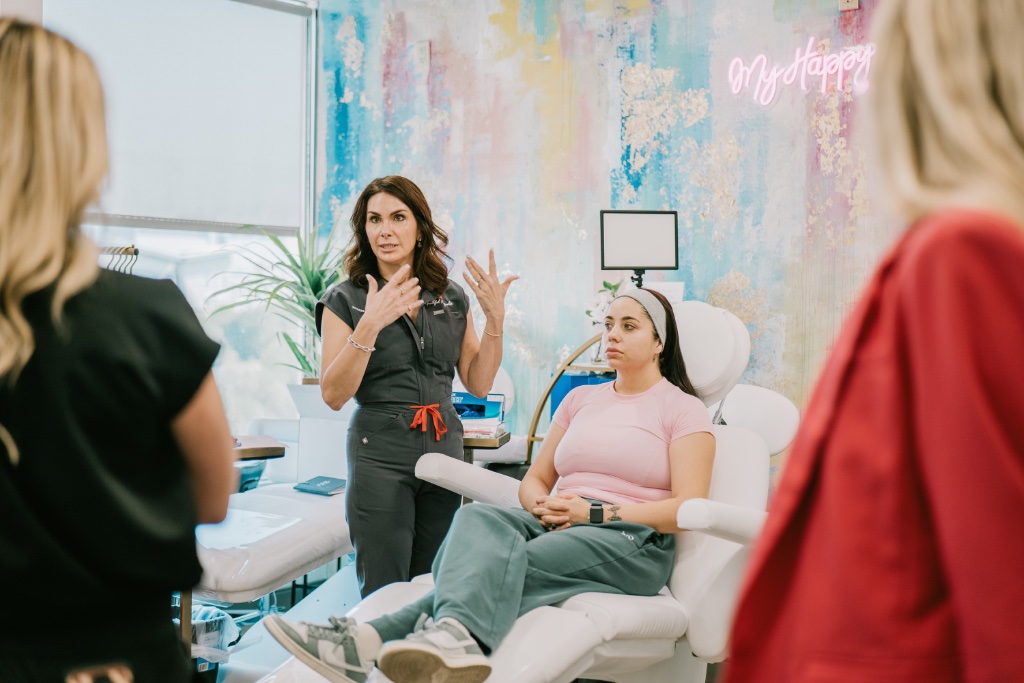
A consultation is an assessment — a thoughtful, individualized evaluation of your skin, your acne history, and your post-acne concerns. It is not a sales pitch for a single device or treatment. It is a conversation designed to determine what your skin actually needs.
In-person skin evaluation
We examine your skin directly — not from a photo. We assess tone, texture, the specific character of your post-acne marks, and your overall skin health. Direct visual assessment is the foundation of any responsible treatment plan.
Review of acne history
We discuss your acne history — when breakouts started, whether they are still active, what treatments you have tried, and how your skin has responded. This context helps us understand the trajectory of your skin recovery.
Identification of mark type
We determine whether your marks are primarily red (vascular), brown (pigment-based), textural (true scarring), or a combination. This distinction is the single most important factor in building an effective plan.
Fitzpatrick skin type classification
Your skin tone is formally assessed before any treatment plan is developed. This is critical for safety — particularly for pigment-focused treatments and any device-based intervention. Treatment parameters must be calibrated to your skin type.
Review of goals and expectations
We discuss what you want to achieve and whether those goals are realistic for your specific marks. If complete resolution is unlikely, we tell you. If improvement over time is the more honest target, we frame the plan around that.
Phased treatment planning
The outcome of the consultation is a plan — not a prescription. A plan that may include skincare guidance, in-office treatments, or — for select patients — advanced device-based care. The plan is sequenced in the right order for your skin, with realistic expectations at each phase.
Section 10
Why Fort Worth patients
choose Youthful Magnolia.
Fort Worth patients choose Youthful Magnolia because we approach post-acne recovery differently. We are not a volume practice. We do not apply the same treatment to every patient who walks through the door. We are a founder-led clinic where every treatment plan begins with understanding the person in front of us — their skin, their concerns, their history, and their goals.
Amy Robbins built Youthful Magnolia on the principle that advanced technology is only as good as the thinking behind it. That principle guides every consultation, every treatment plan, and every follow-up. When we recommend a treatment for post-acne marks — whether it is a calming facial, a medical-grade peel, or an advanced laser platform — it is because we have assessed your skin, considered the alternatives, and determined that this is genuinely the right approach for your specific concern.
Our patients value the experience as much as the outcomes: a calm, unhurried environment where questions are welcomed, expectations are set honestly, and the focus is always on natural-looking, strategic results. We do not chase trends. We do not overpromise. We build plans that are designed to produce real, sustainable improvement — at the right pace, with the right tools, and with the right plan behind them.
If you are in Fort Worth and dealing with lingering red marks, brown marks, or uneven post-acne skin, we would welcome the conversation.

Better outcomes come from matching the treatment to the mark — with a plan that respects the skin's recovery process.
Common Questions
Post-acne recovery —
questions answered honestly.
What is the difference between red acne marks and brown acne marks?
Are red acne marks scars?
Are brown acne marks the same as melasma?
Can red and brown acne marks be treated at the same time?
What is the best treatment for post-acne marks?
How do I know if I have acne scars or just lingering marks?
Can lasers help acne marks?
When do advanced pigment or texture treatments enter the conversation?
What should a post-acne consultation include?
Where can I treat post-acne marks in Fort Worth?
How long do post-acne marks take to fade?
Is it safe to treat acne marks on darker skin tones?
Related Treatments
Picofy Picosecond Laser
An advanced pigment- and texture-focused platform that may become part of the conversation for select post-acne recovery plans.
Laser Treatments
Explore our full laser platform — the foundation of light-based skin renewal at Youthful Magnolia.
Facials & Skin
Gentle, skin-supportive treatments that may play a role in the calming and renewal phases of post-acne recovery.
BioRePeel
A medical-grade peel that complements post-acne recovery by supporting surface tone and texture with minimal disruption.
Customized Facial
A fully personalized facial that may be adapted for skin in the calming or stabilization phase of post-acne recovery.
Microneedling
A collagen-stimulating treatment that may support texture improvement when true scarring is part of the picture.
Book a Consultation
Begin the conversation. A consultation is the right first step toward understanding what your post-acne skin needs.
Related Articles
Youthful Magnolia · Fort Worth, TX
Ready for a more thoughtful
post-acne skin plan?
If you're dealing with lingering red marks, brown marks, or uneven post-acne skin, our team can help you understand what kind of recovery your skin may need and what a smarter treatment plan could look like.