
Is HALO® TRIBRID™ Good for Acne Scars, Pores, and Texture? A Fort Worth Guide to Advanced Resurfacing
A modern Fort Worth guide to whether HALO TRIBRID may be the right resurfacing option for acne scars, enlarged pores, rough texture, and broader skin-quality concerns.
 Amy Robbins, MSNA APRN CRNA FNP-BC 16 min read June 2026Laser & Light
Patients searching for the right resurfacing treatment often arrive at the same cluster of concerns: acne scars, enlarged pores, rough texture, uneven skin quality.
The search usually goes something like this: find the best laser for acne scars. Or the best treatment for enlarged pores. Or the most effective option for uneven skin texture. And the expectation is that one answer will cover all three.
The reality is more layered — in the most literal sense. Acne scars, enlarged pores, and rough texture are often related, but they are not the same issue. Some texture problems live entirely at the skin's surface. Some scar patterns reach deeper into the dermis. Some pore concerns are structural, some are textural, some are both. The right resurfacing approach depends on what is actually happening in the skin — not what the patient read in a list of laser options.
HALO TRIBRID is a multi-layer resurfacing platform that may be relevant for patients with these kinds of overlapping, multi-level concerns. But "may be relevant" is not the same as "is always the right choice." At Youthful Magnolia, we approach this conversation with strategy and evaluation — not a default protocol — and this article is designed to help you understand why that distinction matters.
Section 01
Why acne scars, pores, and texture
are often connected — but not the same.
These three concerns are frequently discussed together because they all affect the visual and tactile quality of the skin's surface — its smoothness, refinement, and overall appearance. But each has its own origin, its own structural location in the skin, and its own treatment logic.
Acne scars are structural changes in the skin caused by the healing response after acne — particularly after inflammatory lesions that disrupted the dermis. Some are atrophic (depressed), some are textural, some create a rough, uneven surface, and some are shallow enough to live primarily in the epidermis. Their depth and pattern determine what can realistically be improved and through which mechanism.
Enlarged pores are influenced by multiple factors: skin texture, collagen quality, sebum production, and surface irregularity. Pore appearance is affected by the surrounding skin structure — when texture is uneven or skin quality is reduced, pores appear more prominent even if their actual size has not changed. Resurfacing that improves surface texture and stimulates collagen renewal may improve how pores look and feel, even without targeting pores specifically.
Rough or uneven texture can arise from multiple causes: post-acne healing, sun damage, cumulative skin-quality decline, dehydration, and loss of collagen and elastin. Some texture concerns are superficial — living entirely in the outer skin layer. Some reflect deeper structural changes in the dermis.
Understanding this layered reality is the foundation of any meaningful resurfacing conversation. A treatment that addresses only the surface may not reach the structural changes underneath. A treatment calibrated only for depth may miss the surface irregularities that are most visible. A thoughtfully planned multi-layer approach may cover more of the concern picture — which is precisely where HALO TRIBRID enters the conversation.
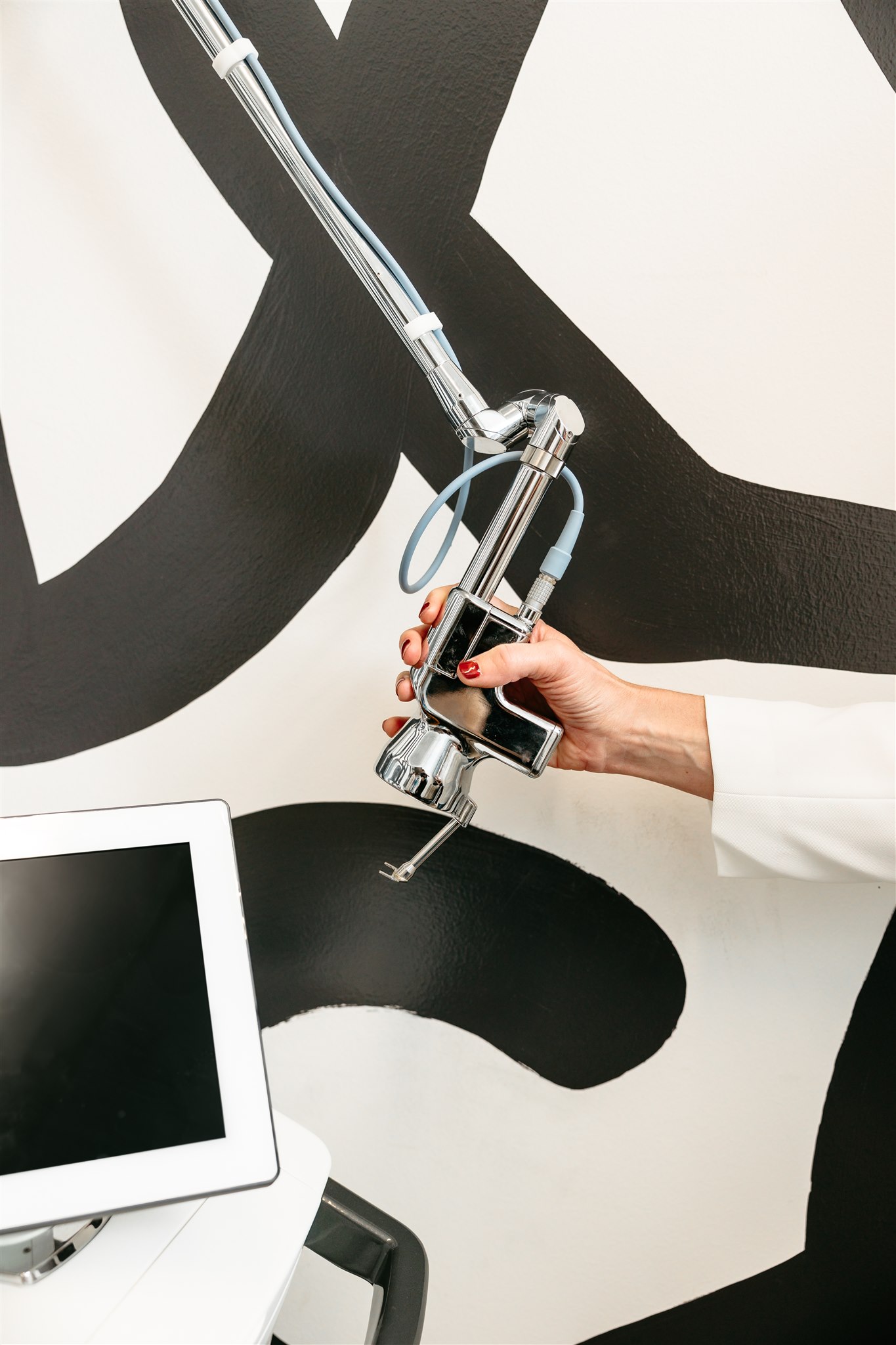
Understanding what is actually happening in the skin — not just naming the concern — is what makes resurfacing planning strategic rather than generic.
Section 02
What HALO® TRIBRID™ actually is —
a patient-friendly explanation.
HALO TRIBRID is Sciton's triple-wavelength resurfacing platform — the newest addition to their resurfacing line, and an evolution of the well-known HALO laser. Where traditional resurfacing treatments address the skin at one layer, HALO TRIBRID is designed to address three distinct layers in a single coordinated treatment session.
In practical terms, it combines three resurfacing wavelengths that correspond to technologies across Sciton's HALO, MOXI, and erbium resurfacing platforms:
The Three Wavelengths — In Plain Language
2940 nm
Ablative Erbium
Surface renewal
Removes the outermost skin layer to drive fresh-skin renewal — addressing texture, surface irregularities, and the resurfacing effect that is most immediately visible.
1927 nm
Non-Ablative / MOXI
Tone + pigment
Targets the superficial tone and pigment layer without fully removing the outer skin — relevant for dyschromia, early sun damage, and uneven radiance alongside texture concerns.
1470 nm
Non-Ablative / HALO
Depth + collagen
Delivers energy into the dermis to stimulate collagen and elastin production — the deeper renewal mechanism that addresses skin quality from the inside out.
For patients whose skin concerns span all three layers — surface texture, superficial tone, and deeper collagen quality — HALO TRIBRID's coordinated multi-layer approach may offer a more comprehensive resurfacing conversation than single-wavelength or dual-wavelength options. This is where it becomes particularly relevant to the acne-scar, pore, and texture discussion.
Section 03
Why HALO TRIBRID may be relevant
for acne scars, pores, and texture.
The reason HALO TRIBRID enters the acne-scar, pore, and texture conversation is not because it is the newest or most powerful laser available. It is because the concerns themselves are multi-layered — and a more layered resurfacing approach may address more of the picture simultaneously for patients whose concerns span the surface, the tone layer, and the deeper structural dermis.
At the surface
Textural irregularity from post-acne healing, rough patches, uneven skin surface. This is where the ablative erbium component of HALO TRIBRID does its primary work — renewing the outer skin layer and improving surface quality directly.
In the superficial dermis
Tone irregularities — PIE (post-inflammatory erythema), PIH (post-inflammatory hyperpigmentation), early discoloration — often coexist with acne-related texture. This is the layer the 1927 nm MOXI component addresses.
In the dermis
Collagen and elastin quality — the structural layer that supports pore appearance, skin firmness, and overall skin quality. This is where the 1470 nm non-ablative component works, stimulating renewal from within.
In the pattern of concern
Many patients with post-acne skin have concerns that live simultaneously across all three of these layers — surface roughness, superficial pigment change, and underlying structural quality. This is where multi-layer resurfacing may be particularly relevant.
For patients where all four of those layers are part of the concern picture, HALO TRIBRID's ability to address them in a coordinated single session may produce a more comprehensive improvement than treating each layer separately — or than a single-layer resurfacing approach would achieve.
Section 04
What types of concerns
may be part of the resurfacing conversation.
Not all acne-related concerns are addressed the same way — and not all of them are suitable for HALO TRIBRID. Here is how the different concern types relate to the treatment planning conversation.
Post-acne roughness
The most common presentation: skin that feels rough, slightly uneven, or textured after a history of acne — without deep atrophic scarring. The damage is primarily at the surface and upper dermis. Resurfacing treatments — including both HALO and HALO TRIBRID — are often relevant here.
Treatment consideration
May benefit from resurfacing. HALO TRIBRID is one option; standard HALO or ProFractional may also be appropriate depending on the specific texture pattern and the patient's recovery tolerance.
Enlarged or prominent pores
Pore appearance is driven by multiple factors — surface texture, collagen quality, and the structural integrity of the skin around pore openings. When surrounding texture is rough or skin quality has declined, pores appear more prominent. Addressing the texture and collagen environment through resurfacing may visibly refine pore appearance.
Treatment consideration
Resurfacing may help. HALO TRIBRID's surface and depth components both contribute to the mechanisms most relevant for pore refinement. The right approach depends on whether texture, collagen, or both are driving the concern.
Uneven or irregular texture
Rough, uneven texture without deep scarring may arise from post-acne healing, cumulative sun exposure, or age-related collagen decline. The surface layer is the primary location of concern, but collagen quality at the dermal level contributes to how smooth and even the surface appears.
Treatment consideration
Surface and depth resurfacing are both potentially relevant. HALO TRIBRID, standard HALO, or ProFractional may all be part of the conversation depending on texture severity, skin type, and the patient's goals.
Shallow acne-scar patterns
Shallow atrophic or rolling scars that exist primarily in the upper dermis — not the deep dermis or subcutis — may be candidates for resurfacing conversations. These are the acne scars most likely to show meaningful improvement through laser resurfacing, including HALO TRIBRID.
Treatment consideration
HALO TRIBRID may be relevant for shallow to moderate atrophic scarring, particularly when post-inflammatory pigmentation is also part of the picture. Deeper scar patterns often need a more targeted ablative approach such as ProFractional.
Mixed texture plus tone concerns
Patients with both textural roughness and pigment irregularity — post-inflammatory erythema, hyperpigmentation, early sun damage — have a concern profile that spans the tone layer alongside the surface and depth. This is where HALO TRIBRID's third wavelength adds specific relevance.
Treatment consideration
HALO TRIBRID may be particularly well-suited for this presentation. The multi-layer approach may address both the textural and tone components more comprehensively in a single session than single-modality options.
Texture plus fine lines or sun damage
Patients who have accumulated texture concerns alongside visible aging — fine lines, early wrinkles, cumulative sun damage — have a concern profile that spans surface, tone, and depth. For this broader pattern, HALO TRIBRID's comprehensive resurfacing approach may address more of the picture simultaneously.
Treatment consideration
Strong candidate for HALO TRIBRID evaluation, particularly if downtime tolerance supports a more intensive resurfacing session. Texture, tone, depth, and aging concerns together may benefit from the multi-layer approach.
Section 05
Amy Robbins' expert
perspective on these concerns.
When a patient sits across from me and describes their skin in terms of acne scars, pores, and texture, the first thing I do is look at the actual pattern — not the patient's self-diagnosis, and not the device I might be predisposed to recommend.
What I find is that the concern pattern is almost never as uniform as the patient describes. Some of what they call "acne scars" are texture changes. Some are pigment changes. Some are structural depressions. Some are shallow and some are not. The pore concern is often directly connected to the surrounding texture. And the texture itself may live at the surface, in the upper dermis, or in both — depending on the individual's skin history.
HALO TRIBRID is a clinically interesting tool for this population because its triple-wavelength design corresponds to three of the layers where these concerns are most active. Surface renewal through the ablative erbium. Tone and pigment support through the 1927 nm MOXI wavelength. Collagen renewal and structural support through the 1470 nm non-ablative depth component. For a patient whose skin is presenting concerns at all three of those levels, treating them in a coordinated single session has real clinical value.
But the conversation I have with every patient considering any form of resurfacing is the same: what is your skin actually doing, what do you want to address most, and what can your life accommodate in terms of recovery? The answers to those three questions determine the plan — not the device name.
"When patients ask whether HALO TRIBRID is good for acne scars, pores, and texture, the real answer is: it may be — if that broader resurfacing approach truly matches the skin in front of us. The right plan always starts with pattern, not popularity."
Amy Robbins
MSNA · APRN · CRNA · FNP-BC · Founder, Youthful Magnolia
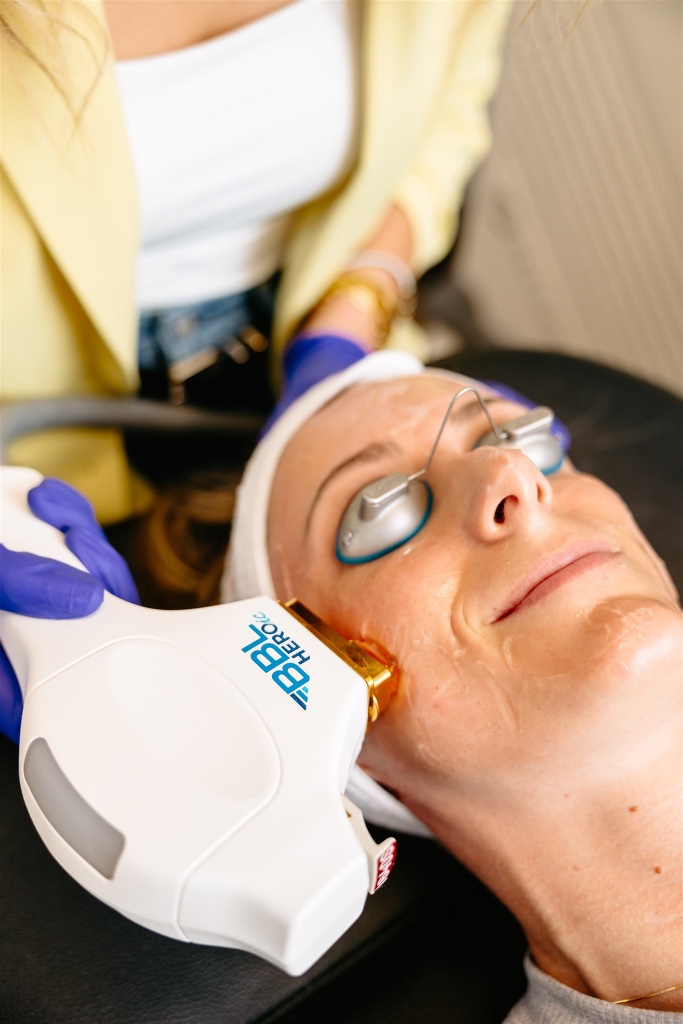
Every resurfacing plan at Youthful Magnolia begins with what the skin is actually showing — not with what the device is capable of.
Section 06
When HALO TRIBRID may be
the right resurfacing choice.
Multiple overlapping concerns
Patients with texture, pore visibility, post-acne pigment, and skin-quality changes all presenting simultaneously may benefit from HALO TRIBRID's ability to address more of the skin's concern layers in one coordinated session.
Post-acne skin with tone and texture both present
When acne history has left both textural irregularity and pigment changes — PIE, PIH, or early discoloration — alongside roughness, the multi-layer approach may address both more effectively than a single-modality treatment.
Patients ready for meaningful resurfacing
HALO TRIBRID involves a real recovery commitment. Patients who are informed about what resurfacing entails and who are prepared for the recovery arc are the strongest candidates for a productive HALO TRIBRID conversation.
Patients stepping up from gentler treatments
Those who have already tried MOXI or standard HALO and want to address more of their concern picture more comprehensively may find HALO TRIBRID a natural next step in their resurfacing strategy.
Skin that spans multiple resurfacing layers
If the direct evaluation reveals concerns at the surface, tone, and depth layers simultaneously — not just one — then a treatment designed for multi-layer addressing may be more appropriate than a focused single-modality option.
Patients with cumulative sun damage alongside texture
Fort Worth's climate produces cumulative UV exposure across multiple skin layers. For patients with sun damage alongside acne-related texture concerns, the triple-wavelength approach may address more of the picture simultaneously.
Section 07
When another treatment may
still be the better choice.
Appropriate restraint is part of what makes resurfacing planning trustworthy. HALO TRIBRID is not the right answer for every patient with acne scars, pores, and texture — and understanding when it is not is as important as understanding when it is.
Mild texture without depth or tone concerns
May consider instead
MOXI or standard HALO
Clinical rationale
For patients with early or mild texture concerns — without meaningful depth-level change or tone irregularity — MOXI or a conservative HALO treatment may deliver comparable surface improvement with a simpler recovery profile.
Deep atrophic scarring or ice-pick scars
May consider instead
ProFractional or surgical options
Clinical rationale
Deep atrophic scarring that reaches deep into the dermis typically requires a more targeted ablative approach than HALO TRIBRID's fractional design. ProFractional resurfacing, subcision, or surgical intervention may be more appropriate. HALO TRIBRID is better suited to the shallow-to-moderate scar range.
Patients not ready for meaningful downtime
May consider instead
MOXI, ClearSilk, or a lighter approach
Clinical rationale
HALO TRIBRID requires a real recovery commitment. Patients who cannot manage several days of visible healing in their schedule are not appropriate candidates regardless of their concern profile.
Isolated pore or texture concern without broader skin change
May consider instead
Targeted single-modality resurfacing
Clinical rationale
A patient with one specific isolated concern — texture only, or pore appearance only, without tone, depth, or structural co-concerns — may not gain meaningful additional benefit from HALO TRIBRID's triple-wavelength scope.
Amy Robbins · Founder, Youthful Magnolia
"Not every patient with texture and pores needs HALO TRIBRID. The right resurfacing choice is the one that matches the actual concern pattern — not the one that is most comprehensive. Doing more than necessary is not a clinical strategy. It is a shortcut that skips the planning."
Section 08
What downtime and recovery
may look like.
Recovery from HALO TRIBRID is one of the most consequential variables in the treatment decision — and one that deserves a clear, honest conversation before treatment begins. Sciton's official post-care materials indicate that mild swelling and redness in treated areas may subside in approximately 3 to 4 days. Actual recovery is shaped by several factors:
Treatment intensity
HALO TRIBRID can be calibrated to different levels of depth and density. A more corrective setting involves more visible healing. A more conservative setting produces less downtime.
Area treated
Coverage, placement, and the specific zones treated all affect the recovery experience. Full-face resurfacing involves a different arc than a smaller targeted zone.
Individual skin response
Skin type, baseline sensitivity, Fitzpatrick classification, and individual healing rate all influence how visible and how long the recovery period is.
Post-care adherence
Patients who follow provider-specific aftercare — appropriate moisturization, SPF protection, avoiding active ingredients — consistently have smoother and faster recoveries.
Recovery planning is not a footnote. It is part of what makes a resurfacing plan genuinely suited to the patient.
Section 09
What a consultation at Youthful Magnolia
may include.
Direct skin evaluation
Amy evaluates the skin directly — texture pattern, pore quality, acne-scar type and depth, tone irregularities, Fitzpatrick classification, and overall skin health. What she observes shapes everything that follows.
Acne history and skin pattern discussion
Understanding where the acne occurred, how long ago, what type of acne it was, and what changes have persisted provides important context for interpreting what the skin is currently showing.
Downtime tolerance assessment
A direct, practical conversation about what recovery the patient can realistically manage. This is a primary variable in determining the appropriate treatment and intensity.
HALO TRIBRID vs other options
A clear explanation of how HALO TRIBRID compares to HALO, MOXI, ProFractional, and other resurfacing options in the context of the specific concern pattern — not a generic comparison, but one grounded in the evaluation results.
Personalized treatment sequencing
Advanced resurfacing is rarely a single event. The consultation may include a staged plan — what to address first, what to layer in over time, and how to build toward the best cumulative outcome.
Honest expectations and realistic outcomes
Every consultation ends with the patient understanding what their treatment can realistically deliver for their specific skin — not an optimistic promise, but a clinically informed projection.
Section 10
Why Fort Worth patients choose
Youthful Magnolia for advanced resurfacing.
Amy Robbins evaluates every patient personally — no delegated resurfacing consultations
Deep Sciton platform expertise across HALO, MOXI, BBL, ProFractional, and HALO TRIBRID
Treatment plans built around the skin — not around a device or a protocol
Long-view strategy: sequencing, staging, and cumulative skin-health planning
Honest communication about what resurfacing can and cannot deliver
Regenerative philosophy that supports laser results with systemic skin health
Premium boutique experience in Fort Worth's most intentional aesthetics practice
Natural-looking outcomes rooted in clinical precision, not aggressive over-treatment
Common Questions
HALO TRIBRID for acne scars, pores, and texture —
answered honestly.
Is HALO TRIBRID good for acne scars?
Can HALO TRIBRID help enlarged pores?
Does HALO TRIBRID improve skin texture?
Is HALO TRIBRID too aggressive for mild texture?
How does HALO TRIBRID compare to HALO for acne scars?
Can HALO TRIBRID help post-acne roughness?
How much downtime does HALO TRIBRID have?
How do I know if HALO TRIBRID is right for my skin?
What if I have pores and texture but no major acne scars?
Can HALO TRIBRID also address sun damage alongside acne scars and texture?
Where can I get HALO TRIBRID for acne scars, pores, and texture in Fort Worth?
Related Services
Laser Treatments
Explore the full Sciton-based laser menu at Youthful Magnolia.
Sciton TriBrid
The HALO TRIBRID triple-wavelength resurfacing platform.
HALO Laser
Hybrid fractional resurfacing for texture, tone, and skin renewal.
MOXI
Non-ablative tone and early texture support for all skin types.
ProFractional
Ablative fractional erbium for deeper scar and texture correction.
BBL
BroadBand Light for tone, redness, and long-term skin maintenance.
Facials & Skin
Non-laser skin treatments to complement your resurfacing plan.
Book a Consultation
Begin with a personalized evaluation from Amy Robbins.
Your Provider
Amy
Robbins
MSNA · APRN · CRNA · FNP-BC
Book a Consultation"The best resurfacing outcome for acne scars, pores, and texture is not the most aggressive one. It is the most accurate one — matched to what the skin is actually showing, not to what the patient fears or hopes."
— Amy Robbins, Founder · Youthful Magnolia
Youthful Magnolia · Fort Worth, TX
Ready to find out whether HALO TRIBRID
fits your skin concerns?
If you're dealing with acne scars, enlarged pores, rough texture, or skin that doesn't feel as refined as it once did, our team can help you decide whether HALO TRIBRID is the right resurfacing path for your goals.