Perimenopause Skin Changes: Why Your Skin Suddenly Feels Different
Hormonal fluctuations during perimenopause may contribute to changes in hydration, sensitivity, breakouts, and appearance. But not every skin change in midlife is hormonal.
Can perimenopause change your skin? Yes. Hormonal fluctuations during perimenopause may contribute to changes in skin hydration, sensitivity, acne, and other aspects of skin health. Estrogen plays a role in skin physiology, including collagen and moisture regulation. However, not every skin change in midlife is caused by perimenopause. Sun exposure, medications, underlying medical conditions, skincare products, genetics, and normal aging can also contribute. A qualified healthcare professional can help evaluate persistent or concerning symptoms.
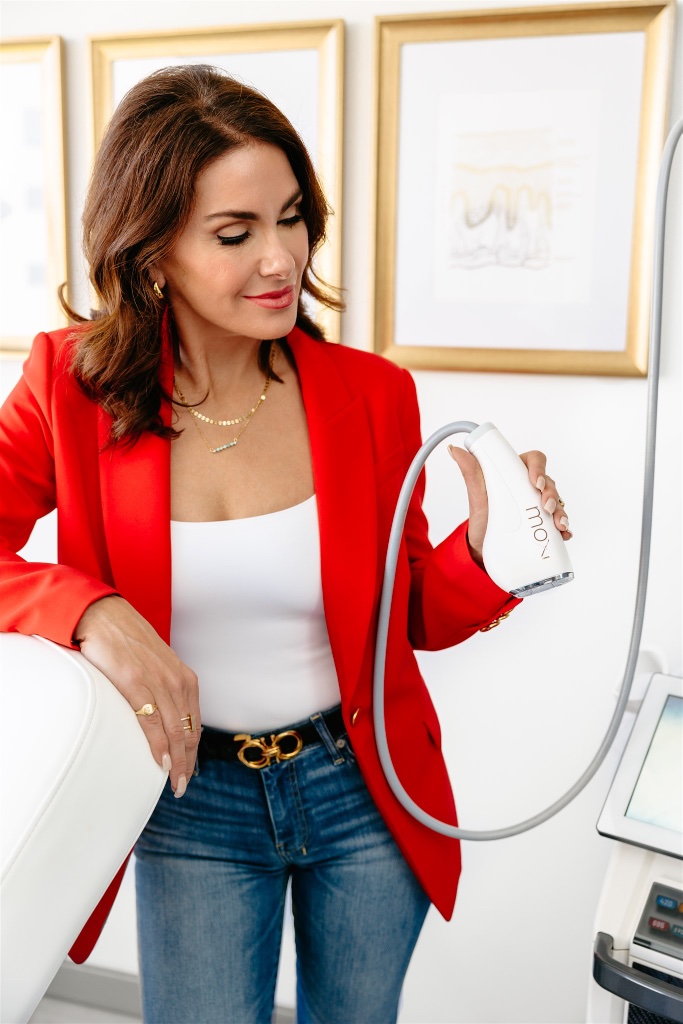
Written by
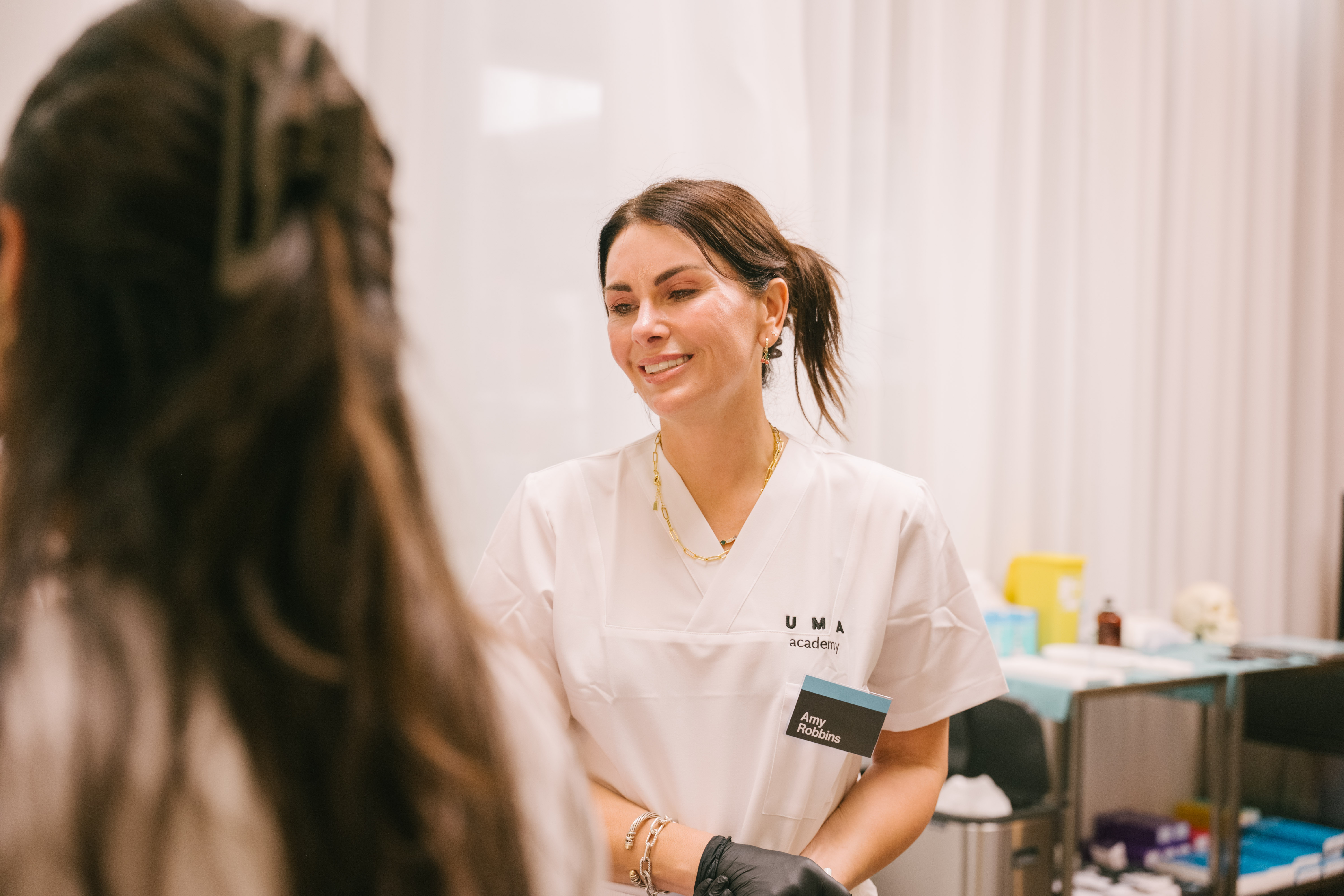
Amy Robbins, MSNA, APRN, CRNA, FNP-BC
Perimenopause Skin Changes at a Glance
Commonly Discussed Concerns
- Dryness
- Increased sensitivity
- Acne or breakouts
- Changes in skin texture
- Changes in elasticity
- Pigmentation concerns
Potential Contributing Factors
- Hormonal fluctuations
- Skin barrier changes
- Aging
- Sun exposure
- Other medical or environmental factors
Important: Symptoms alone cannot confirm perimenopause or establish their cause. Discuss persistent or concerning changes with a qualified clinician.
What Is Perimenopause?
Perimenopause is the transitional phase leading up to menopause. During this time, menstrual cycles may become shorter, longer, heavier, lighter, or less predictable. Hormone levels — particularly estrogen — can fluctuate, sometimes significantly, rather than declining in a straight line.
The experience of perimenopause varies widely. Some women notice significant symptoms; others notice relatively few. The timing and intensity of changes differ from person to person, and there is no universal starting age. Skin symptoms alone cannot diagnose perimenopause — a healthcare professional evaluates the overall clinical picture, including menstrual patterns, symptoms, and medical history.
Perimenopause should not be diagnosed from skin symptoms alone. If you are experiencing changes that concern you, discussing them with a qualified healthcare professional is the appropriate next step.
How Does Perimenopause Affect Your Skin?
Hormonal fluctuations during perimenopause may influence several aspects of skin physiology, including hydration, barrier function, oil production, collagen-related processes, elasticity, and sensitivity. Estrogen receptors are present in the skin, and changes in estrogen levels may affect how skin cells function.
However, the relationship between hormones and skin is complex. Not every skin change during midlife is caused by perimenopause, and research in this area is ongoing. Some changes are well-established in clinical literature; others remain less clearly understood. It is important to distinguish what is known from what is still being studied.
Factors such as cumulative sun exposure, genetics, skincare habits, medications, and underlying medical conditions can also affect skin health — sometimes independently of hormonal status.
What Does Estrogen Do for Your Skin?
Estrogen plays a role in several aspects of skin physiology. It may influence skin hydration, collagen-related processes, skin thickness, and elasticity. Estrogen receptors in the skin suggest that hormonal changes can affect skin function at a cellular level.
However, estrogen is not the only determinant of skin health. Collagen, elastin, hyaluronic acid, skin barrier lipids, genetics, sun exposure, and aging itself all contribute. Oversimplifying estrogen as the sole factor in skin aging would be inaccurate. Skin health reflects the interplay of many systems, not a single hormone.
Why Does Skin Become Drier During Perimenopause?
Changes in skin hydration are among the most commonly discussed skin concerns during perimenopause. Possible contributing factors include changes in skin barrier function, reduced moisture retention, aging, environmental conditions such as dry or cold weather, and skincare routines that may not adequately support the barrier.
Hormonal fluctuations may play a role, but persistent dryness can also have causes unrelated to hormones — including underlying medical conditions, medications, and environmental exposure. A healthcare professional can help evaluate whether perimenopause is contributing or whether other factors are involved.
Can Perimenopause Cause Acne?
Hormonal fluctuations during perimenopause may contribute to adult acne in some women. Breakouts during this time may appear around the lower face, jawline, or chin — areas sometimes associated with hormonal patterns. Changes in oil production may also play a role.
However, not every adult breakout is hormonally driven. Acne can have many causes, including stress, skincare products, medications, dietary factors, and underlying conditions. Individual variation is significant — some women experience breakouts during perimenopause, while others do not.
Do not assume every breakout is hormonal. Persistent or significant acne should be evaluated by a dermatology professional, who can help identify contributing factors and appropriate approaches.
Why Is My Skin Suddenly More Sensitive?
Increased skin sensitivity can result from changes in the skin barrier, dryness, product irritation, environmental factors, and other medical causes. When the skin barrier is compromised, skin may react more easily to products, weather, or environmental triggers.
Perimenopause may contribute to barrier changes, but attributing all sensitivity to hormonal changes would be inaccurate. Other causes — including contact dermatitis, rosacea, eczema, and product-related irritation — should be considered. A healthcare professional can help identify the underlying cause.
Does Perimenopause Cause Collagen Loss?
Collagen is a structural protein that provides support and firmness to the skin. Collagen changes occur as part of the normal aging process, influenced by age, sun exposure, genetics, and other factors. Hormonal changes, including changes in estrogen, may also influence collagen-related processes.
We do not present a specific percentage of collagen loss unless supported by a credible source and correctly tied to the population and life stage studied. Perimenopause and postmenopause are not interchangeable — research findings from postmenopausal women should not be automatically applied to perimenopausal women without appropriate context.
Can Perimenopause Affect Skin Elasticity?
Skin elasticity refers to the skin's ability to stretch and return to its original position. Elasticity depends on collagen, elastin, and the overall structure of the skin. Age-related changes in these proteins can reduce elasticity over time.
Hormonal influences may play a role, but elasticity does not depend on estrogen alone. Sun exposure, genetics, and intrinsic aging all contribute. Suggesting that elasticity depends only on hormones would be an oversimplification.
Does Perimenopause Cause Facial Sagging?
Facial appearance can change during midlife for multiple reasons — including skin laxity, facial volume changes, structural aging, weight changes, and individual factors. Hormonal changes are not the sole cause of facial sagging.
Understanding the difference between skin laxity (changes in skin firmness) and volume loss (changes in facial fullness) can help you have a more informed conversation about your concerns. For a detailed educational framework, see our article on skin laxity vs. volume loss.
Can Perimenopause Affect Facial Volume?
Facial volume and contour can change with age and other factors. Changes in facial fat distribution, soft tissue fullness, and structural support can all affect how the face looks over time.
Perimenopause does not directly cause every instance of volume loss. It is important to distinguish between skin changes, fat distribution changes, and structural facial aging — each of which may require different approaches. A professional assessment can help clarify which factors are contributing.
Why Does Skin Texture Change in Your 40s?
Skin texture can change during midlife for several reasons. Dryness can make skin feel rougher. Skin cell turnover may slow with age. Cumulative sun exposure can affect texture over time. Individual variation is significant — not all texture changes are hormonal.
Texture changes may also reflect broader age-related processes rather than perimenopause specifically. A skincare professional can help assess whether texture changes are related to dryness, sun damage, or other factors.
Can Perimenopause Cause Dark Spots or Melasma?
Hormonal influences may play a role in pigmentation for some women. Melasma — a pattern of pigmentation often associated with hormonal factors and sun exposure — can appear or change during midlife. Sun exposure is also a major factor in the development of dark spots.
Not every dark spot is melasma. New or changing pigmented lesions should be evaluated by a healthcare professional. Do not assume a dark spot is hormonal or cosmetic without proper evaluation. Energy-based treatments should not be used for undiagnosed lesions.
For a broader discussion of pigmentation concerns, see our article on melasma and stubborn pigment.
Does Perimenopause Cause Facial Redness?
Facial redness can have many causes, including skin sensitivity, rosacea, irritation, environmental factors, and other medical conditions. Perimenopause may contribute to barrier changes that increase reactivity, but persistent redness should not be assumed to be hormonal.
Rosacea, contact dermatitis, and other dermatological conditions can cause redness independently of hormonal status. A dermatology professional can help identify the cause and appropriate approach.
Can Perimenopause Affect Your Skin Barrier?
The skin barrier is the outermost layer of the skin that helps retain moisture and protect against irritants, allergens, and environmental factors. When the barrier is compromised, skin may feel dry, tight, sensitive, or more reactive to products.
Hormonal changes may influence barrier function, but other factors — including harsh skincare products, over-exfoliation, weather, and aging — can also affect the barrier. Gentle skincare that supports moisture retention and avoids unnecessary irritation is generally recommended.
Why Does Makeup Look Different During Perimenopause?
Changes in dryness, texture, and skin sensitivity can affect how makeup sits on the skin. Drier skin may make foundation appear patchy or settle into fine lines. Increased sensitivity may affect product tolerance. Adjusting skincare and makeup products — particularly prioritizing hydration and barrier support — may help.
Can Perimenopause Make Your Skin Look Dull?
Skin dullness can result from dryness, texture changes, cumulative sun exposure, and skin barrier changes. These factors can affect how light reflects off the skin's surface. Hormonal changes may contribute, but dullness is not solely a hormonal issue.
No treatment can promise to restore a specific appearance. Addressing underlying factors — such as dryness or sun damage — through appropriate skincare and professional guidance may help improve skin quality over time.
Are Perimenopause Skin Changes Permanent?
Outcomes vary. Some concerns — such as dryness or sensitivity — may improve with appropriate skincare or medical management. Others may reflect broader age-related changes that are part of the natural aging process.
No treatment can guarantee specific outcomes, and individual results vary. A realistic approach involves understanding what may be contributing to your concerns and exploring appropriate options with a qualified professional.
How Can You Support Your Skin During Perimenopause?
Evidence-based skincare fundamentals include:
- Gentle cleansing that avoids stripping the skin barrier
- Appropriate moisturizing to support hydration and barrier function
- Broad-spectrum sun protection applied daily
- Avoiding unnecessary irritation from over-exfoliation or harsh products
- Consistent skincare rather than frequent product switching
- Medical evaluation when persistent or concerning symptoms arise
Do not start prescription treatments without proper clinical context. A healthcare professional can help determine what is appropriate for your individual situation.
What Skincare Ingredients May Help?
Evidence-based skincare categories that may be discussed for midlife skin include:
- Moisturizers: Support hydration and barrier function. Look for ingredients that help retain moisture.
- Barrier-supporting ingredients: Ceramides, hyaluronic acid, and other ingredients that help maintain the skin barrier.
- Sunscreen: Broad-spectrum protection is foundational for skin health at every age.
- Retinoids: May be discussed with a professional for selected concerns. Not appropriate for everyone.
Not every ingredient is appropriate for everyone. A dermatology professional can provide personalized guidance based on your skin type, concerns, and medical history. We do not prescribe individualized regimens through this article.
Should You Change Your Skincare Routine in Your 40s?
Skincare needs may change over time. However, adjustments should be based on actual skin concerns rather than age alone. If your skin has become drier, more sensitive, or more reactive, adjusting your routine to address those specific concerns may be appropriate.
Not everyone in their 40s needs the same skincare approach. Individual variation is significant, and what works for one person may not work for another. A professional can help guide appropriate adjustments.
Can Professional Skin Treatments Help With Perimenopause-Related Concerns?
Some cosmetic treatments may address selected skin concerns — such as texture, tone, pigmentation, or skin firmness — depending on individual candidacy. However, cosmetic treatments do not correct the underlying hormonal transition.
Cosmetic treatments and hormone therapy serve different purposes. Cosmetic treatments may address selected skin concerns but do not reverse or treat perimenopause. Treatment decisions should be based on individual assessment, not on the assumption that skin changes require cosmetic intervention.
Categories that may be discussed where clinically relevant include professional facials, skin resurfacing, selected light-based treatments, selected collagen-focused treatments, and facial volume restoration. Only services that Youthful Magnolia actually offers are described here. Not all treatments are appropriate for all patients.
Where Do MOXI and HALO Fit Into Skin Rejuvenation?
MOXI and HALO are laser technologies that may address selected skin concerns — such as tone, texture, and pigmentation — depending on candidacy. These devices do not treat perimenopause itself, and their appropriateness depends on individual skin type, concerns, and professional assessment.
For more information, see our MOXI laser and HALO laser service pages.
Can Skin Tightening Help With Changes in Skin Firmness?
Noninvasive skin-tightening treatments may be discussed for selected patients experiencing changes in skin firmness. These treatments use energy-based approaches to support collagen and may be appropriate depending on individual candidacy.
XERF is one such technology that may be discussed where appropriate. However, skin tightening does not reverse hormonal changes, and results vary by individual. See our XERF laser service page for more information.
Can Facial Balancing Address Age-Related Volume Changes?
Facial volume restoration may be discussed for selected patients experiencing age-related changes in facial fullness or contour. Individualized assessment is essential — not everyone experiencing perimenopause needs or is appropriate for filler.
Appropriate candidacy, risks, and limitations should be discussed with a qualified provider. See our facial balancing and Sculptra pages for more information.
What About Hormone Therapy and Skin Health?
Hormone therapy has established clinical uses in menopause care. Decisions about hormone therapy depend on individual symptoms, medical history, risks, and benefits — and should be made with a qualified healthcare professional.
Skin appearance alone should not be presented as a sufficient reason to start systemic hormone therapy. Cosmetic treatments and hormone therapy serve different purposes. We do not recommend a specific hormone regimen, and this article does not constitute medical advice.
If you are interested in discussing women's wellness or hormonal health, Youthful Magnolia offers women's wellness consultations through our virtual care platform. Whether hormone therapy is appropriate for you is a decision to be made with a qualified provider.
When Should You See a Healthcare Professional?
Consider speaking with a healthcare professional if you experience:
- Persistent or severe skin symptoms
- New or changing pigmented lesions
- Significant acne that does not respond to over-the-counter approaches
- Unexplained rashes or persistent irritation
- Symptoms affecting your daily life or confidence
- Questions about whether perimenopause may be contributing to changes you are experiencing
You do not need to wait until symptoms are severe to have a conversation. Early evaluation can help identify contributing factors and appropriate approaches.
Common Myths About Perimenopause and Skin
Myth: Every skin change in your 40s is caused by hormones.
Fact: Multiple factors can contribute — sun exposure, skincare, genetics, medications, and normal aging all play a role.
Myth: Perimenopause always causes acne.
Fact: Experiences vary. Some women notice breakouts; others do not. Not every adult breakout is hormonally driven.
Myth: Collagen loss begins only when menopause starts.
Fact: Skin aging is influenced by multiple processes over time, and collagen changes can begin earlier than menopause.
Myth: A cosmetic treatment can reverse perimenopause.
Fact: Cosmetic treatments do not reverse the hormonal transition. They may address selected skin concerns but do not correct underlying hormonal changes.
Myth: Everyone needs hormone therapy for skin changes.
Fact: Treatment decisions require individual medical assessment. Skin appearance alone is not a sufficient reason to start systemic hormone therapy.
Amy's Perspective on Skin Changes in Midlife
Amy Robbins
MSNA, APRN, CRNA, FNP-BC · Founder
"When someone notices that their skin suddenly feels different in their 40s, I think it's important to look at the whole picture. Hormonal changes may play a role, but so can sun exposure, skin barrier changes, and normal aging. Understanding what's actually happening helps us make thoughtful decisions about skincare and treatment."
[AMY REVIEW REQUIRED — Draft Direction, Not Approved Quote]
Skin Rejuvenation and Women's Wellness at Youthful Magnolia in Fort Worth
At Youthful Magnolia, our approach to skin concerns in midlife begins with individualized consultation. We assess your skin, listen to your concerns, and help you understand what may be contributing to the changes you are experiencing. Treatment selection is based on your actual concerns and goals — not on assumptions about age or hormones.
We believe in realistic expectations, appropriate treatment selection, and coordination with medical care when needed. Our practice offers skin rejuvenation services, facial rejuvenation treatments, and women's wellness consultations through our virtual care platform. We do not provide specialized menopause medical care — but we can help you explore appropriate options and refer you to a qualified provider when necessary.
Frequently Asked Questions
Sources and References
Estrogen and Skin: A Review of the Literature
American Academy of Dermatology · Professional Organization
Perimenopause and Menopause: Clinical Guidance
The Menopause Society (formerly NAMS) · Clinical Guidelines
Hormonal Changes and Skin Health
American College of Obstetricians and Gynecologists · Professional Organization
Skin Barrier Function and Aging
Peer-reviewed dermatology literature · Clinical Literature
Melasma: Clinical Overview and Management
American Academy of Dermatology · Professional Organization
References are provided for educational purposes. This article does not constitute medical advice and should not replace evaluation by a qualified healthcare professional.
Noticing Changes
in Your Skin?
Skin changes during midlife can have multiple contributing factors. At Youthful Magnolia in Fort Worth, a consultation can help you explore appropriate options for your skin concerns and determine when medical evaluation may be helpful.