Why Am I Getting Acne in My 30s and 40s?
Acne was supposed to be a teenage problem. Then, somewhere in your thirties, deep tender bumps started showing up along the jaw before your period, or breakouts that never fully happened at 16 arrived at 38. For many adults it feels like a mistake, and the first reaction is to attack it with the teenage playbook — harsher cleansers, more exfoliation, more spot treatment — which usually makes it worse.
The direct answer: adult acne is common, especially in women, and it is a different condition from teenage acne. In adults it is driven mostly by how the skin's oil glands respond to normal hormone fluctuations — which is why it clusters on the jaw, chin and around the mouth and flares with the menstrual cycle — layered with genetics, a damaged skin barrier from over-treatment, comedogenic products, stress and poor sleep, certain medications, and sometimes an underlying medical condition such as polycystic ovary syndrome. Some of what looks like adult acne is not acne at all: rosacea and perioral dermatitis are the usual impostors. Sorting out which of these applies to you is the step that determines whether the right next move is a skincare change, a facial, a prescription, or a hormonal evaluation.
This guide explains why adult acne happens, how it differs from the teenage kind, what mimics it, and what kinds of approaches may and may not help.
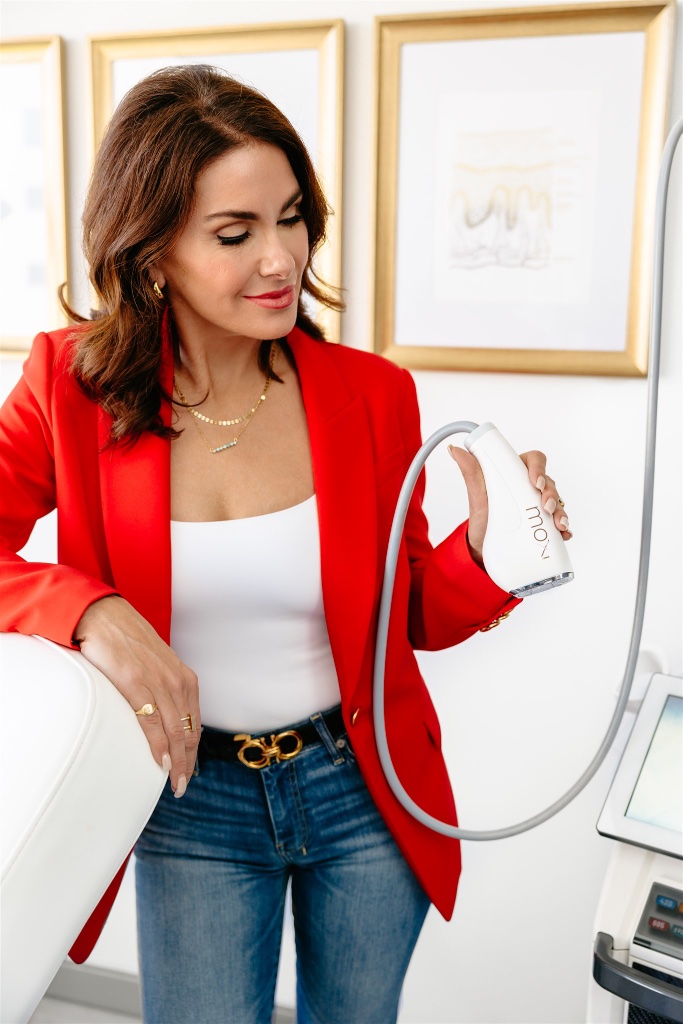
Written by
Amy Robbins, MSNA, APRN, CRNA, FNP-BC
A Quick Summary
How common it is: published reviews put adult female acne somewhere between roughly one in eight and one in two women, depending on how it is counted, with more women than men affected after 25.
Three patterns: persistent (continued from the teens), late-onset (new after 25), and recurrent (came back after years clear). Persistent is the most common.
Main drivers: oil-gland sensitivity to androgens, menstrual and perimenopausal hormone shifts, genetics, barrier damage from over-treatment, products, stress and sleep, medications, and sometimes PCOS or other medical conditions.
Important distinction: adult acne, rosacea and perioral dermatitis look alike and are treated differently.
When to see a clinician: cystic or scarring acne, acne with irregular periods or excess hair growth, sudden onset after a medication change, or anything that has not responded to a simplified routine in two to three months.
Adult Acne Is Not Teenage Acne
Teenage acne is driven by the surge of androgens at puberty, tends to cover the forehead, nose and cheeks with blackheads, whiteheads and pustules, and is often oily across the whole face.
Adult acne — reviews define it as acne in people over 25 — looks different. It concentrates on the lower third of the face in what dermatologists sometimes call a "beard" or "mask" distribution: the jawline, chin and around the mouth, sometimes down onto the neck. Lesions are more often deep, tender papules and nodules than scattered blackheads, there are usually fewer of them, and the skin between them may be normal or even dry. It is mostly mild to moderate in severity, often flares in the week before a period, and tends to leave more dark marks and scars because adult skin heals more slowly and is more prone to post-inflammatory pigment.
That difference matters because the teenage strategy of drying everything out tends to damage adult skin without clearing the breakouts.
Why Adult Acne Happens
Oil glands responding to hormones
All acne starts in the pilosebaceous unit — the hair follicle and its oil gland. Androgens (testosterone and related hormones, present in women as well as men) tell the gland to make more oil. In adult acne the hormone levels are usually normal; what differs is how sensitive the glands in the lower face are to them. Oil, shed skin cells and bacteria then block and inflame the follicle.
Because the cycle changes the balance between estrogen and androgens, many women notice breakouts in the days before a period. Perimenopause can do the same thing in reverse: as estrogen falls, the relative influence of androgens rises, and women who have been clear for decades can develop lower-face acne in their forties. Our guide to perimenopause skin changes covers that transition.
Starting, stopping or changing hormonal contraception
Combined contraceptives suppress androgen activity, which is why some are prescribed for acne. Stopping them, or switching to a progestin-only method or a hormonal IUD, removes that suppression and can trigger acne within months. This is one of the most common "why now?" explanations and one of the easiest to miss.
Genetics
Around half of adult women with acne have a first-degree relative who had it too. If a parent or sibling broke out into adulthood, you are more likely to as well, regardless of how careful your routine is.
A damaged skin barrier
This is the modern contributor. Adults who treat early breakouts with acids, retinoids, scrubs and benzoyl peroxide all at once strip the skin's protective lipid layer. The barrier-damaged skin becomes inflamed and reactive, and that inflammation produces more bumps — a cycle of irritation acne that looks like the original problem getting worse. If your skin stings, flakes and breaks out at the same time, the barrier is part of the story; see why your skin is suddenly dry and sensitive.
Products that clog or irritate
Heavy moisturizers, oil-based makeup and primers, hair products that migrate to the hairline and jaw, and some sunscreens can occlude follicles. Fragrance and essential oils can irritate. Masks and chin straps add friction and heat. Surveys of adult acne find cosmetic triggers in a meaningful share of cases.
Stress and sleep
Stress hormones influence oil production and inflammation, and poor sleep worsens both. Stress does not cause acne from nothing, but in someone who is predisposed it reliably makes it worse — which is why breakouts cluster around deadlines, travel and life upheaval.
Diet
The evidence here is moderate and still developing. High-glycemic eating patterns and, in some studies, dairy have been associated with acne. The effect is not universal, and restrictive diets are not a treatment. It is reasonable to notice patterns in your own skin without turning food into a rule.
Medications and supplements
Some medications are known to trigger or worsen acne — certain corticosteroids, some anticonvulsants and mood medications, some testosterone-containing therapies, and high-dose B vitamins among them. Protein powders and some "muscle" supplements are a frequent and overlooked trigger. Never stop a prescribed medication on your own; raise it with the prescriber.
Underlying medical conditions
When adult acne comes with irregular or absent periods, excess facial or body hair, thinning scalp hair, or difficulty with weight, the pattern may point to polycystic ovary syndrome or another condition that affects androgen levels. A meaningful minority of adult women with acne are found to have an underlying hormonal contributor when evaluated. That evaluation is a physician's job and should come before cosmetic treatment.
Is It Actually Acne? The Common Impostors
- Rosacea. Persistent central-face redness and flushing with small red bumps and pustules, often triggered by heat, sun, alcohol or spicy food, usually without blackheads. Very common in adults over 30 and frequently mis-treated as acne; acne treatments often make rosacea worse.
- Perioral dermatitis. Clusters of small bumps and scaling around the mouth, nose or eyes, often after prolonged use of steroid creams, heavy occlusive products or fluoride toothpaste.
- Folliculitis. Inflamed hair follicles, sometimes from shaving, waxing, heat, or an infection, that can mimic pustular acne along the jaw and neck.
- Fungal (malassezia) folliculitis. Uniform itchy small bumps, often on the forehead, chest or back, worse with sweat and heat, that do not respond to acne treatment.
If what you have does not match the lower-face adult-acne pattern, or has not responded to standard acne care, a dermatologist can tell these apart. This article does not diagnose any of them.
Why Adults Scar and Mark More
Two things change with age. Skin repairs more slowly, so inflammation lingers and is more likely to leave a textural scar. And post-inflammatory pigment — the red or brown mark left behind — forms more readily and fades more slowly in adult skin, especially in deeper skin tones. Picking makes both worse, and surveys suggest most adults with acne do pick. For what the marks are and how they differ from scars, see acne scars vs post-acne marks and post-inflammatory hyperpigmentation.
What Helps: Matching the Cause to the Approach
There is no one adult-acne treatment because there is no one adult acne. The table pairs the main patterns with the general category of approach that may be discussed and what it cannot do. It is educational and does not recommend a treatment for any individual.
| What You May Be Noticing | Likely Contributor | General Approach Categories That May Be Discussed | What That Category Does Not Address |
|---|---|---|---|
| Deep, tender jaw and chin bumps that flare before your period | Hormone-responsive oil glands | Dermatology or primary-care evaluation; prescription topical or hormonal options exist and are a clinician's decision; gentle, non-stripping skincare; aftermath care for marks | Facials and light treatments do not change the hormonal driver |
| Acne that started after a contraception change | Loss of androgen suppression | Conversation with the prescriber; time; gentle routine | Cosmetic treatment alone |
| Acne plus irregular periods, excess hair, or weight change | Possible PCOS or other hormonal condition | Physician or women's wellness evaluation first | Any aesthetic treatment until evaluated |
| Breakouts with stinging, flaking and redness | Barrier damage from over-treatment | Simplify to cleanser, moisturizer, sunscreen for 2–4 weeks; reintroduce one active at a time; gentle in-office options such as a customized facial or red light therapy once calm | Hormonal acne; conditions such as rosacea |
| Clogged, congested skin tied to products or hair care | Comedogenic or occlusive products | Product audit; non-comedogenic, fragrance-free choices; professional extraction within a facial | Deep cystic lesions |
| Red or brown marks and texture left after breakouts clear | Post-inflammatory marks and scars | Sun protection; light-based treatment such as BBL for red marks in appropriate skin types; microneedling for selected textural scars; see our acne marks treatment guide | Active breakouts; the underlying cause |
| Central-face redness and flushing, no blackheads | Possible rosacea | Dermatologist evaluation | Acne treatments, which can worsen it |
This table is for educational purposes only and does not replace a professional assessment. Not all treatments listed are offered at Youthful Magnolia.
For choosing an in-office treatment once breakouts are controlled, see our guides to the best facial for acne-prone skin and BBL for acne.
What Treatments Cannot Do
- No facial, light treatment or laser changes the hormonal signal that drives most adult acne. They address congestion, inflammation and aftermath, not the cause.
- Energy-based treatment on inflamed, barrier-damaged skin can prolong irritation and increase post-inflammatory pigment. A good provider will wait.
- Skincare alone rarely controls moderate hormonal acne; a prescription is often the appropriate tool, and that is a clinician's decision.
- Nothing cosmetic treats PCOS or another medical contributor.
- Scar and pigment treatments work best once new breakouts have stopped; treating aftermath while the cause continues is a cycle.
When Adult Acne Needs Medical Evaluation
See a dermatologist or your physician before any cosmetic conversation if:
- Breakouts are deep, painful, cystic or leaving scars.
- Acne comes with irregular periods, excess facial or body hair, scalp thinning, or unexplained weight change.
- It began after starting or stopping a medication, including hormonal contraception.
- It has not improved after two to three months of a simplified routine.
- The pattern looks more like rosacea or dermatitis than acne.
- It is affecting your mood or confidence — adult acne carries a real emotional cost, and effective treatment exists.
This article does not diagnose or prescribe. Acne in adults is a medical condition with medical treatments, and aesthetic care is most useful alongside them, not instead of them.
Common Myths About Adult Acne
MYTH: Adults get acne because they do not wash their face enough.
FACT: Over-washing is far more common in adult acne than under-washing. Adult acne is hormonal and inflammatory, not dirt.
MYTH: It is just teenage acne that never left.
FACT: Adult acne has a distinct lower-face pattern, deeper lesions, and a stronger hormonal link.
MYTH: If my hormone tests are normal, it is not hormonal.
FACT: In most adult acne, hormone levels are normal; the oil glands are more sensitive to them. Testing is for finding conditions such as PCOS, not for confirming hormonal acne.
MYTH: The strongest products work fastest.
FACT: Aggressive routines damage adult skin and create irritation breakouts on top of the original ones.
MYTH: A facial will clear hormonal acne.
FACT: Facials can help congestion and aftermath. They do not change the hormonal driver.
MYTH: Acne means something is wrong with your diet.
FACT: Diet can influence acne in some people; it is rarely the sole cause, and restriction is not a treatment.
Consultations at Youthful Magnolia in Fort Worth
At Youthful Magnolia in Fort Worth, a consultation for adult breakouts starts with the pattern and the timeline — where the lesions are, when they flare, what changed, and whether the skin barrier is intact — before any treatment is discussed. If the pattern suggests a hormonal driver or a medical condition, the honest recommendation is an evaluation first; if the skin is reactive, it is recovery first. Aesthetic treatment comes in for congestion, marks and texture, when the timing is right.
If you would like help understanding your breakouts and what order to approach them in, book a consultation. You can also read about our customized facial, BBL, and women's wellness services.
Not sure if it's hormonal, your products, or something else?
A consultation can help you sort the pattern, identify whether a medical evaluation should come first, and plan the aftermath care that adult skin needs.
Frequently Asked Questions
References
Adult female acne: clinical and therapeutic particularities (review)
Exp Ther Med. 2022;23(2):151 · Peer-Reviewed Review
https://pmc.ncbi.nlm.nih.gov/articles/PMC8753972/ ↗Adult-onset acne: prevalence, impact, and management challenges
Clin Cosmet Investig Dermatol. 2018;11:59–69 · Peer-Reviewed Review
https://pmc.ncbi.nlm.nih.gov/articles/PMC5798558/ ↗Emerging issues in adult female acne
J Clin Aesthet Dermatol. 2017;10(1):37–46 · Peer-Reviewed Review
https://pmc.ncbi.nlm.nih.gov/articles/PMC5300732/ ↗Unveiling the nuances of adult female acne: a comprehensive exploration of epidemiology, treatment modalities, dermocosmetics, and the menopausal influence
Int J Womens Health. 2024 · Peer-Reviewed Review
https://pmc.ncbi.nlm.nih.gov/articles/PMC11034510/ ↗Menopause, skin and common dermatoses. Part 2: skin disorders
Clin Exp Dermatol. 2022 · Peer-Reviewed Review
https://pmc.ncbi.nlm.nih.gov/articles/PMC10092853/ ↗This article is for educational purposes and does not provide a diagnosis or replace an individual medical evaluation.
Author
Amy Robbins, MSNA, APRN, CRNA, FNP-BC
Board-certified Family Nurse Practitioner and founder of Youthful Magnolia in Fort Worth, Texas.
Related Services
Related Articles
Get Started
Understanding the cause is the first step.
Book a consultation at Youthful Magnolia in Fort Worth. We'll look at the pattern, the timeline, and the condition of your skin barrier, and help you understand which available services, if any, may be appropriate for you.
Request a Consultation